





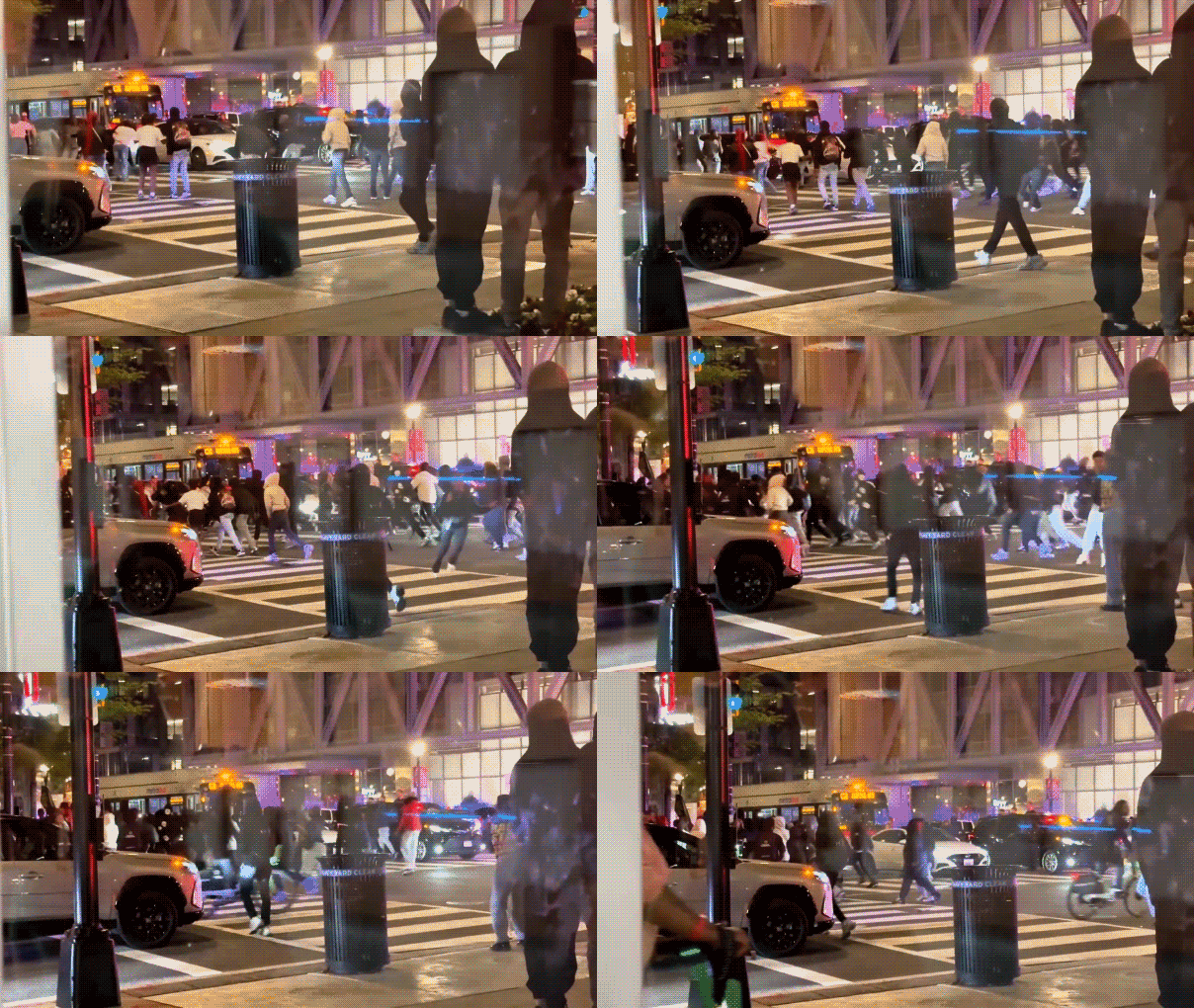
The sun hung low over the Potomac River as a lively group of teenagers descended on the Navy Yard waterfront in Washington, D.C., transforming a serene evening into a chaotic scene that left residents and visitors on edge. What began as playful gatherings among friends from across the city quickly escalated, drawing hundreds of youths who swarmed the streets, blocking intersections and disrupting the peace. Elissa De Souza, a local activist, captured the frenzy on her phone, posting the video to X with a caption that echoed the frustrations of many: “What should’ve been a great night out in Navy Yard turned into something we’re seeing far too often.” Her footage showed dozens of teens, some skipping and dancing, others shouting and high-fiving, creating a hive of energy that blocked traffic and startled passersby. For many in the neighborhood, it wasn’t just noise—it was a reminder of the growing sense of unease that has plagued the area. Families out for dinner at waterfront restaurants watched nervously from their tables, wondering if their children were among the crowd, while small business owners who had invested in revitalizing the bustling spot felt their efforts undermined. One local mom, Sarah Thompson, who lives nearby with her teenage daughter, described the scene as heartbreaking. “It’s like watching your community turn into a movie set for something unsafe,” she said. “These kids are just being kids, but when it spills over like this, it scares everyone.” As the video went viral, it sparked online debates about youth culture, policing, and the challenges of urban living. Some sympathized, pointing out that the teens might simply be seeking fun in a city where boredom and limited activities for youth can lead to such outbursts. Others condemned the disruption, sharing stories of canceled plans and heightened anxiety. The Navy Yard, once a historic shipyard, has evolved into a trendy hub with shops, eateries, and parks, attracting families and young professionals. But incidents like this oneThreaten to tarnish its image, making residents question if such viral “takeovers” are isolated events or part of a troubling trend. Eyewitnesses reported laughter blending with honking horns, and while most teens appeared harmless, a few acted out, jumping on cars or ignoring pleas to move. It was a human spectacle, full of the raw, unfiltered energy of adolescence amplified by social media encouragement, where challenges to authority become viral sensations. Yet beneath the surface, De Souza’s plea highlighted a deeper concern: the erosion of safe spaces for all, where “a peaceful meal” feels increasingly out of reach.
In response to mounting complaints, the Metropolitan Police Department (MPD) sprang into action, enforcing a temporary juvenile curfew in the Navy Yard over the weekend—a proactive measure straight out of a playbook for urban youth gatherings. From Friday to Sunday, officers patrolled the area with extra vigilance, setting up visible checkpoints and walking beats to ensure calm. The curfew, imposed under emergency powers, targeted anyone under 18, banning groups of nine or more from congregating in the designated zone between 8 p.m. and 11 p.m., unless part of a supervised event like a school outing or religious gathering. This wasn’t about curtailing freedoms wholesale; police emphasized exemptions for family barbecues or community sports. The goal, they explained, was to nip potential chaos in the bud, preventing the kind of flash mobs that had plagued D.C. in recent months, where simple hangouts spiraled into property damage or confrontations. For officers on the ground, it meant long hours under the floodlights, engaging with teens through megaphones and one-on-one conversations. One patrol officer, Manuel Reyes, who has been with MPD for over a decade, shared his perspective: “These kids are navigating a tough world—schools out, friends calling, social media buzzing. We don’t want to criminalize fun, but safety comes first. I’ve seen fathers pulling their sons aside, moms reminding them of curfews. It’s educational out here.” Families appreciated the stepped-up presence, with parents like Jamal Harris, father of two boys, saying it gave him peace of mind. “I drive my sons here sometimes, but knowing police are watching makes it okay to let them roam a bit.” However, critics argued the curfew unfairly targeted minority youth, echoing broader debates about systemic biases in law enforcement. Advocates pointed out that without more affordable recreation options, such restrictions might push gatherings underground, fostering resentment. Despite the measures, the weekend brought a mix of successes and slips, underscoring the delicate balance between intervention and empathy in keeping a vibrant city safe.
Saturday night, as the curfew kicked in, a few unruly pockets tested the limits, with reports of teens briefly engaging in disorderly antics before dispersing peacefully under police direction. Video from onlookers captured nervous glances but no major clashes, a testament to officers’ calm de-escalation tactics. No criminal offenses were logged within the curfew zone, and MPD made zero arrests tied to the gatherings, avoiding the escalations that have marred similar events elsewhere. It was a quiet victory, proving that proactive policing could steer youthful energy without heavy-handed crackdowns. Yet, just outside the zone at the nearby Waterfront Metro station, Metro Transit Police stepped in, arresting four individuals for unrelated matters, likely minor disputes that escalated. Details remained scarce, but transit officers described a tense scene where verbal arguments turned physical, highlighting how these gatherings can radiate outward. Sunday followed a similar pattern, with officers noting six curfew violations—mostly teens lingering past 11 p.m.—and opting for warnings over penalties to encourage compliance. These numbers, shared by Milwaukee police in a public statement, painted a picture of manageable incidents rather than rampant lawlessness. For residents like elderly couple Mary and Robert Kline, who have called Navy Yard home since the 90s, it was reassuring. “We’ve seen worse in our time, but it’s good they’re handling it humanely,” Mary said. “Kids today have no places to go; parks are nice, but curfews make sense when things get rowdy.” The outcomes underscored MPD’s commitment not just to enforcement but to community dialogue, with officers partnering with local leaders for youth outreach programs. Parents, too, played a role, texting curfew reminders to their groups, turning potential fireworks into fizzling fade-outs. It humanized the response, showing police as partners rather than adversaries in D.C.’s evolving social fabric.
Steering the ship through these turbulent waters, Interim Chief of Police Jeffrey W. Carroll articulated the department’s nuanced approach in a heartfelt statement that resonated with empathy. “MPD is committed to doing everything possible to keep D.C. residents and visitors safe,” he declared, “and that includes supporting spaces to enable youth to gather to enjoy our city.” His words bridged the gap between authority and understanding, acknowledging that while disruptions can’t be ignored, neither can the underlying needs of teenagers craving connection in a fast-paced capital. Carroll’s background as a seasoned officer who rose through the ranks gave his message authenticity, emphasizing prevention over punishment. For many, it was a breath of fresh air amid polarized views on law and order, reminding everyone that safety isn’t a zero-sum game. The citywide juvenile curfew, a standing rule from 11 p.m. to 6 a.m., reinforced this, urging parents and guardians to stay vigilant as spring break drew crowds of out-of-towners. Schools were promoting awareness campaigns, with counselors meeting with teens about responsible socializing. Experts like child psychologist Dr. Lena Patel weighed in, explaining that such takeovers often stem from peer pressure and the thrill of breaking routine. “It’s about belonging,” she said in a local interview. “Urban kids, especially in diverse D.C., feel the pull of group dynamics amplified by TikTok challenges.” Residents echoed this, with young adult entrepreneur Carlos Medina sharing his experience: “I remember being that age, chasing thrills. Now, as a dad, I see how important it is to provide alternatives.” The statement from Chief Carroll injected hope, envisioning a city where youth aren’t hurdles but integral parts of its vibrancy. It humanized the mandate, turning policy into people-powered solutions like community centers with late-night programs. Yet, questions lingered about equity, as urban areas like Navy Yard, with its mix of affluent and working-class residents, bore the brunt while suburban counterparts escaped scrutiny.
These “teen takeovers” aren’t new to Washington, D.C., but they’ve surged in frequency, exposing systemic gaps in youth engagement and urban planning. Across the district, from Dupont Circle to U Street, similar gatherings have flared, often spurred by social media hype where hashtags like #DCTakeover go viral, drawing teens from surrounding areas for impromptu parties. They typically start innocently—friends meeting for ice cream or live music—but balloon into crowds of 50 to 200, leading to traffic jams, littering, and occasional mischief like spraying graffiti or blocking sidewalks. Activists and parents describe a pattern of late-night escalation, where boredom meets opportunity, fueled by loosened school schedules during breaks. For Donovan, a 17-year-old from Ward 6, it was about evading monotony. “School’s boring, and home is cramped. We head to places like Navy Yard to feel alive,” he admitted to a reporter. But for older residents, it evokes memories of the 1960s riots, albeit milder, raising fears of regression. Community leaders are calling for more investment in youth programs—free gyms, art workshops, and job training—to channel that energy productively. Councilmember Jamie Raskin proposed a task force to study root causes, gathering input from teens, parents, and police. Stories abound: a single mom of three expressed relief at the curfews but worry over her kids’ isolation, while a group of high schoolers organized a peaceful protest march instead, turning disruption into dialogue. Economic Impacts hit hard; small businesses reported 20% drops in evening foot traffic, costing livelihoods. Yet, human stories shine through—teens volunteering at clean-ups, officers mentoring athletes, families reuniting over curfew discussions. It’s a tapestry of challenges, where understanding breeds progress, and D.C.’s spirit endures.
In wrapping up, the Navy Yard incident serves as both a mirror and a call to action for the nation’s capital, where the threads of youth exuberance, communal safety, and societal responsibility intertwine. Authorities like MPD stand ready to adapt, balancing firmer measures with compassionate outreach, but real change demands collective effort. Parents, educators, and policymakers must forge partnerships, creating inclusive spaces where teenagers can thrive without turning streets into battlegrounds. For Elissa De Souza and locals like her, the hope is for evenings where shared spaces foster unity, not division. As spring break winds down, with citywide vigilance in place, D.C. looks toward a future where viral takeovers fade into controlled fun. It’s about raising a generation that respects boundaries while embracing joy—a human endeavor requiring heart and innovation. Open channels for listening, investing in recreation, and fostering dialogue can transform potential conflicts into celebrations of community. As Chief Carroll emphasized, safety isn’t just policing; it’s enabling dreams. For every disrupted dinner, there’s a chance for restoration, teaching that a vibrant city is built on understanding its youngest voices. In the end, these events remind us of our shared humanity, urging us to guide rather than suppress the wild, wonderful spirit of youth. With empathy at the helm, Washington can navigate these storms, emerging stronger, safer, and more united. The journey isn’t simple, but it’s profoundly worthwhile, one conversation, one policy, one empowered teen at a time. Let’s commit to listening to the stories behind the scenes, humanizing the headlines into stories of growth, resilience, and hope.