







The air across Colombia’s bustling urban hubs and quiet rural valleys carries a palpable sense of exhaustion, a quiet but fierce yearning for stability that has recently culminated in a political earthquake. In the wake of the first-round presidential election, the unexpected dominance of Abelardo de la Espriella—a flamboyant, tough-talking conservative lawyer affectionately nicknamed “El Tigre” (“The Tiger”)—has sent shockwaves through the nation and the broader Latin American landscape. Securing an impressive 43.7% of the vote, far outperforming mainstream polling expectations, de la Espriella’s rise is not merely a political victory but a profound cultural statement. He has effectively captured the raw, deep-seated frustration of a citizenry weary of persistent lawlessness, positioning himself as a fierce political outsider aligned with the populist, iron-fisted, and highly popular governance styles of El Salvador’s Nayib Bukele and former U.S. President Donald Trump. For millions of Colombians who feel increasingly abandoned by the intellectual, theoretical promises of progressive governance, “El Tigre” represents a fierce protector—a blunt instrument of order in a society teetering on the edge of chaos. His success signals a dramatic departure from the idealistic rhetoric of the left, bringing the harsh, uncompromising realities of public security and national sovereignty back to the absolute center of public life. As the country prepares for a high-stakes, polarized runoff on June 21, the election stands as a historic referendum on the very soul of Colombian governance, illustrating a society-wide shift where the basic, fundamental demand for physical safety has eclipsed all other political promises. People are no longer seeking elaborate social experiments; they are crying out for the simple peace of mind to walk their streets without fear, a sentiment that de la Espriella has harnessed with masterclass precision to reposition conservative politics not as an elite, academic ideology, but as a populist, visceral lifeline for a nation desperate for survival.
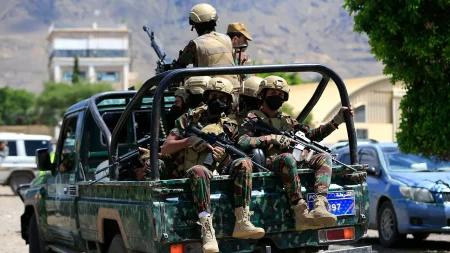
To truly understand this dramatic political pivot, one must look closely at the daily realities of the Colombian people, who have spent years navigating an increasingly volatile domestic landscape that directly threatens their livelihoods and security. Under the current administration of President Gustavo Petro, the ambitious yet highly controversial “Total Peace” policy—which aimed to dismantle systemic violence through continuous dialogue and structural negotiations with various armed groups, guerrilla factions, and cartel networks—has largely collapsed under the weight of its own compromises. Instead of ushering in a new era of national reconciliation, these suspended military operations and political concessions have inadvertently allowed criminal syndicates, residual guerrilla factions, and drug cartels to drastically expand their illicit operations, leaving vast stretches of the country under the de facto control of armed militants. Innocent communities, hard-working rural farmers, and urban laborers have found themselves caught in the crossfire of a security vacuum, exposed to rising rates of extortion, kidnapping, and terrorizing turf wars, while the country simultaneously struggles to cope with a massive, compounding Venezuelan refugee crisis that has pushed the state’s thin governance capacity to its absolute limit. The tragic loss of over eighty lives in northeast Colombia alone following the failure of localized peace talks serves as an undeniable reminder of the devastating human cost of a failed, non-confrontational approach to armed conflict. This compounding crisis has fermented a deep, collective desperation among voters, who increasingly feel that their government has prioritized the comfort of armed insurgents over the safety of law-abiding citizens, creating a fertile soil for de la Espriella’s uncompromising message. The average citizen has grown tired of diplomatic concessions and theoretical solutions; they see their country slipping away and hunger for a leadership that establishes firm, unyielding boundaries against those who operate outside the law, recognizing that peace without justice is merely a temporary truce.
The upcoming electoral duel between de la Espriella and his leftist rival, Ivan Cepeda—a prominent, intellectual senator backed by Petro’s powerful and deeply entrenched political coalition—represents a stark ideological schism that will define Colombia’s trajectory for several generations to come. De la Espriella’s campaign strategy relies on a scorched-earth rhetoric toward transnational criminal organizations, offering a polar-opposite alternative to Cepeda’s deeply entrenched focus on social justice, human rights, and systemic economic reform. Reaching directly into the playbook of contemporary conservative hardliners, “El Tigre” has openly pledged to build massive, high-security mega-prisons resembling the counter-gang facilities developed by Nayib Bukele in El Salvador, deploy specialized military forces to aggressively reclaim sovereign territories, and give transnational drug cartels a brutal, straightforward ultimatum: surrender immediately to the state or face complete eradication. On the other hand, Cepeda champions a vision of Colombia that prioritizes addressing the root socioeconomic causes of violence, representing the continuation of Petro’s progressive ideals of agrarian reform, wealth redistribution, environmental transition, and diplomatic engagement with marginalized, conflict-affected populations. This runoff is far more than a simple choice between two contrasting political candidates; it is an existential, psychological debate on how a traumatized society recovers, contrasting the visceral, immediate relief of an iron-fisted, confrontational military crackdown with the slow, complex, and highly controversial process of systemic peace-building through social dialogue. The choice will force Colombians to decide whether they believe their society can be reformed through patience and concession, or whether basic stability must first be asserted through the absolute, uncompromising application of state force. This clash of visions ensures that the election will be determined not just by political party lines, but by how voters balance their yearning for immediate justice with their hopes for long-term reconciliation and a lasting end to systemic bloodshed.
This dramatic political pivot in Colombia is not happening in an isolated vacuum, but rather serves as the latest, and perhaps most crucial, domino to fall in a sweeping regional backlash against leftist governance across the Latin American landscape. Over the past decade, a powerful wave of progressive leaders swept into executive power across the continent on grand promises of wealth redistribution, social inclusivity, and systemic reform, only to struggle under the crushing realities of economic stagnation, rampant inflation, institutional corruption, and skyrocketing crime rates. From the historic, anti-establishment victory of Javier Milei in Argentina to the rise of security-first leadership in Ecuador, Chile, Bolivia, Honduras, and Costa Rica, Latin American voters are systematically rejecting leftist ideologies in favor of conservative pragmatism, sovereignty, and public order. Policy analysts point to this broader regional reckoning as a clear sign that the public’s patience with state dysfunction, rising illicit economies, and weak executive authority has officially expired, replacing idealistic social aspirations with a primal, non-negotiable desire for basic security, the rule of law, and economic survival. Latin Americans are making a collective, undeniable declaration that no progressive social agenda, no matter how noble or well-intentioned, can succeed if citizens are too afraid to leave their homes, open their businesses, or let their families walk through their neighborhoods without fear. Colombia’s election thus stands as a critical bellwether for the entire continent, proving that even in a nation historically marked by deep socioeconomic divisions and a desire for social change, the universal human need for order and physical safety will ultimately override the utopian promises of the political left. This growing impatience with ineffective, soft-on-crime policies has created a transcontinental fraternity of voters who are united in their demand for a return to strong, sovereign states that prioritize security above all else, marking a historic decline of the pink tide.
The geopolitical ramifications of this impending Colombian runoff stretch far beyond national borders, carrying profound implications for United States foreign policy, immigration patterns, and the broader stability of the Western Hemisphere as a whole. Under a potential second Trump administration, a Colombian government led by a security-focused ally like de la Espriella would represent a monumental diplomatic victory, offering a reliable, pro-American partner in a region increasingly influenced by adversarial global players such as China and Russia, alongside criminalized regimes like Venezuela. For decades, the bilateral relationship between Washington and Bogotá has served as the key cornerstone of regional security, particularly concerning joint counternarcotics operations, military intelligence sharing, and migration management; however, these joint efforts faced significant strain under Petro’s progressive, non-confrontational approach toward coca cultivation, environmental treaties, and armed groups. A return to a conservative, law-and-order administration in Bogotá would revitalize cooperative efforts to disrupt the flow of illegal narcotics and deadly synthetic drugs into American communities, dismantle dangerous transnational human trafficking networks, and re-establish strong, democratic institutions capable of managing the compounding, chaotic pressures of regional migration. As Melissa Ford Maldonado of the America First Policy Institute deeply analyzes, restoring Colombia’s commitment to security cooperation is a critical, long-overdue step toward stabilizing the entire hemisphere, transforming the country from a source of regional vulnerability into a fortress of democratic resilience. By choosing to actively confront criminal cartels rather than negotiating with them, de la Espriella’s platform aligns perfectly with a U.S. foreign policy that directly links American domestic safety to the containment of criminal networks abroad, illustrating how the outcome of this ballot will ultimately touch the streets of American cities, influence American border security, and redefine the geopolitical balance of power across the Americas for the decade ahead.
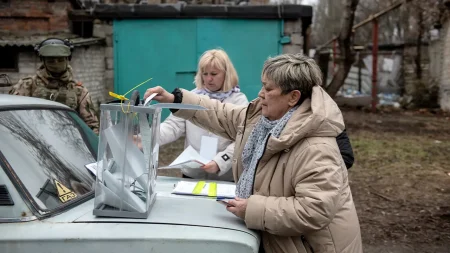
As the critical runoff date of June 21 rapidly approaches, the people of Colombia stand at a monumental, historical crossroads, carrying the weight of their troubled history on their shoulders as they prepare to cast their final, highly consequential, and eagerly anticipated ballots. This upcoming vote is not merely a bureaucratic electoral exercise, but a profound psychological moment for a resilient population that has endured decades of civil conflict, drug violence, and the fractured, unfulfilled promises of peace agreements. The choice before them is stark and uncompromising: either reaffirm the peaceful, albeit deeply flawed, volatile, and dangerous, path of dialogue and social restructure represented by Cepeda, or embrace the aggressive, iron-fisted, and highly confrontational sovereignty promised by de la Espriella, who firmly believes that criminal syndicates must be vigorously confronted rather than catered to. In a world where democratic institutions are increasingly tested by the rapid rise of complex, transnational criminal networks, Colombia’s final decision will reverberate throughout the global community, offering a definitive answer on whether a modern society can truly heal through concession and negotiation, or if order must first be established through absolute, unyielding state strength. Ultimately, the resilience of the Colombian spirit remains undiminished, and as the nation moves toward this defining moment, it does so with the eyes of the world watching, waiting to see if “El Tigre” will successfully lead them into an era of security, or if the dream of a negotiated peace will find a way to survive the storm. This election is a testament to the enduring human quest for safety, serving as a powerful reminder that before any society can dream of social progress, environmental reform, or economic equity, its people must first feel safe and secure within their own homes, establishing a foundation of law, order, and mutual respect that allows humanity to truly flourish and build a better tomorrow.