




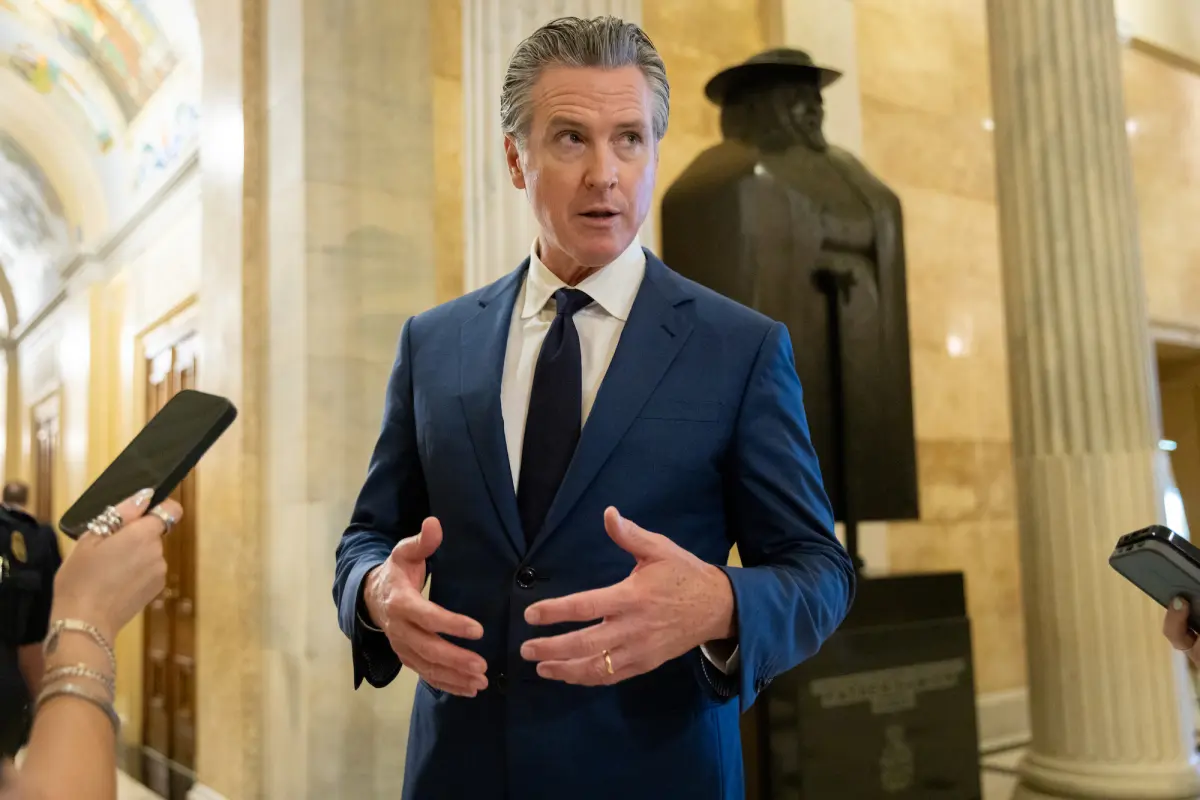
The landscape of California’s ambitious yet deeply embattled high-speed rail initiative underwent a profound political transformation during a recent high-stakes board meeting, marking a defining moment in what has arguably become the most closely watched and heavily criticized public works project in modern American history. With the strategic appointment of Steve Kawa as the new chair of the California High-Speed Rail Authority, Governor Gavin Newsom has placed one of his most trusted and longest-serving political strategists at the helm of a bullet train project that has spent decades oscillating between visionary promise and bureaucratic gridlock. Kawa’s relationship with Newsom is deeply rooted, stretching back to the late 1990s and including a highly influential tenure as chief of staff during Newsom’s transformative days as the mayor of San Francisco. By stepping into this primary leadership post previously occupied by Tom Richards, Kawa is inheriting a massive infrastructure endeavor whose projected costs had, at one point of extreme estimate, threatened to balloon to an incomprehensible $231 billion before planners were forced to scale down its scope and realign its targets. During his inaugural remarks upon receiving the gavel, Kawa made no effort to mask his close ideological alignment with the governor, expressing a profound mutual belief that this massive transit system will ultimately deliver generational wealth, physical unity, and environmental sustainability to a state choked by freeway congestion and carbon emissions. However, this consolidation of political power at the top occurs at a critical juncture when public patience is wearing dangerously thin; many skeptics view the leadership transition not as a catalyst for actual engineering progress, but as a calculated political chess move designed to insulate the state’s executive branch from the escalating fallout of a project that has historically overpromised and underdelivered, leaving Kawa with the monumental task of reshaping public trust.
Nowhere was the tension between practical governance and rapid execution more palpable than in the board’s immediate approval of a massive $3.5 billion track-and-systems construction contract, a decision that laid bare deep-seated anxieties regarding the project’s financial transparency and procurement methods. The multi-phase agreement authorizes a joint venture comprising construction giants Kiewit, Stacy Witbeck, and Herzog to begin the monumental physical work of laying actual steel tracks and installing complex overhead electrical systems across the expansive agricultural landscape of the Central Valley. While the authority’s board ultimately passed the contract without formal opposition, the proceeding was far from harmonious, punctuated by sharp, probing questions from board member Jeffrey Worthe, who openly challenged the wisdom of locking the state into a multi-billion-dollar obligation with a single responsive bidder. Worthe voiced the collective anxieties of many taxpayers when he questioned whether committing such an astronomic sum under a sole-bidder scenario was a prudent use of public funds, famously pointing out that a transcontinental rail line is vastly different from a simple household kitchen remodel and demands the highest tier of financial scrutiny. Authority staff defended the process by explaining that although two bids had been received during the competitive procurement phase, the competing proposal’s financial package was never even opened because the rival firm was disqualified on a technicality—specifically, failing to place a licensed California engineer in a key oversight position. This bureaucratic exclusion left the state with no actual price comparison, forcing them to rely entirely on internal, theoretical cost estimates to justify a $3.5 billion payout, a move that critics suggest exemplifies a systemic culture of rushing major financial decisions to maintain an appearance of progress, regardless of the potential long-term premium paid by the public.
Alongside the massive hardware acquisition, the board pushed forward with the controversial adoption of its newly revised 2026 business plan, a dense document that outlines the economic future of the high-speed rail but has simultaneously ignited a firestorm of dissent among local authorities and state fiscal watchdogs. This updated blueprint charts a staggeringly expensive path forward, projecting that the initial, isolated 171-mile passenger segment running through the Central Valley from Merced to Bakersfield will now cost an estimated $34.8 billion to complete and operate. Even more daunting is the price tag for the broader “Phase 1” network, which is designed to eventually connect the San Francisco Bay Area to the Los Angeles basin through a series of complex tunnels and mountain passes, now officially pegged at a breathtaking $126 billion. Proponents of the plan argue that these spiraling costs are the natural result of unprecedented inflation, supply chain complexities, and the inherent friction of pioneering true high-speed rail technology on American soil. They assert that the Central Valley line must be established first as a working proof-of-concept to attract the crucial federal grants and private investments needed to fund the rest of the statewide network. To the working-class families and agricultural industries of the Central Valley, however, these numbers represent more than just abstract accounting; they represent decades of disrupted farmlands, eminent domain battles, and local roads closed for construction, all for a train that many residents fear they will never realistically afford to ride or benefit from in their everyday lives, leaving them to bear the physical burdens of construction while the coastal elite reap the promised ecological rewards.
The disconnect between elite state-level planners in Sacramento and the local communities hosting the physical tracks was highlighted during the meeting by emotional pleas from regional representatives who feel increasingly marginalized by the authority’s administrative machine. Jay Schlosser, executive director of the Kern Council of Governments, stood before the board to urge a delay in the approval process, pleading for more time so that local municipal agencies could properly evaluate major, late-stage changes to the alignment and urban planning designs within Kern County. Schlosser lamented that decades of close, collaborative partnership between local cities and the rail authority had been severely damaged by a series of recent high-level staff departures and leadership shakeups within the agency, which resulted in a breakdown of meaningful communication and left local planning departments entirely in the dark. He cautioned the board that while his verbal pleas might soon be forgotten in the fast-paced political arena, the destructive, uncoordinated decisions written into the official business plan would permanently impact the geography, economy, and lives of Kern County residents for generations to come. This sentiment of local disenfranchisement was echoed by Marcus Detweiler of the California Special Districts Association, who issued a stark warning that the revised business plan still contains deeply problematic mechanisms concerning local land-use authority and controversial tax-increment financing models that could strip funding away from vital local services like fire protection, water management, and community parks. These local testimonies painted a vivid picture of a detached bureaucracy eager to meet state mandates and political deadlines at the direct expense of the very communities whose daily environments are being permanently reshaped by concrete overpasses.
As the authority chose to ignore these local pleas and swiftly voted to transmit the controversial business plan to the state Legislature, a fierce political backlash erupted from conservative lawmakers and fiscal hawks who view the entire enterprise as a runaway train of financial irresponsibility. State Senator Tony Strickland, who serves in a prominent oversight role as vice chair of the Senate Transportation Committee, launched a blistering rhetorical assault against the board’s decision, colorfully declaring that putting cosmetic updates on a fundamentally flawed project would never alter its trajectory of chronic overpromising, hyper-inflated spending, and abysmal project delivery. Strickland argued that the time has come for Sacramento to stop dragging out the inevitable, urging his legislative colleagues to finally “rip the Band-Aid off,” terminate the high-speed rail program entirely, and redirect those billions of dollars toward practical, immediate infrastructure needs—such as repairing crumbling local highways, upgrading existing commuter rail lines, and securing drought-resilient water systems that offer tangible benefits to working families today. This aggressive political stance was mirrored on social media by Assemblymember Kate Sanchez, who took to public platforms to mock the authority’s leadership shuffle, dryly questioning whether installing a close political ally of the governor at the helm would actually result in a single operating train or if the state was simply upgrading the administrative committee of the world’s most expensive, non-functional group project. This biting political theater resonates deeply with a growing segment of the California electorate who feel a sense of profound fatigue, having voted to fund this fast-rail dream nearly two decades ago in a 2008 ballot initiative, only to witness a continuous cycle of rising costs and shifting completion dates.
Despite the fierce public skepticism and ongoing political warfare, the California High-Speed Rail Authority remains resolutely focused on its long-term operational timeline, arguing that the newly minted construction contract is the key to finally beginning track-laying work by 2026 and meeting strict federal guidelines to have fully functional testing infrastructure in place by the end of 2029. Under the newly authorized leadership of CEO Ian Choudri, the agency is racing against both the clock and a looming threat of federal funding clawbacks, hoping that the physical manifestation of steel on gravel in the Central Valley will finally silence critics who have long dismissed the project as a pipe dream. The path forward for Steve Kawa and his board is fraught with immense peril, as they must balance the high-minded environmental aspirations of a progressive state aiming for carbon neutrality against the cold, hard realities of construction delays, legal challenges, and a deeply divided public. The ultimate success or failure of this massive endeavor will not be measured by the eloquence of political speeches in Sacramento or the administrative reshuffling of board chairs, but by whether a high-speed passenger train actually glides across the California landscape carrying everyday citizens at two hundred miles per hour. Until that day arrives, the bullet train will remain one of the most compelling and controversial experiments in American infrastructure—a high-stakes gamble on the future of human mobility, where billions of taxpayer dollars hang in the balance, and where the line between a historic triumph of human engineering and a legendary fiscal disaster remains razor-thin.