






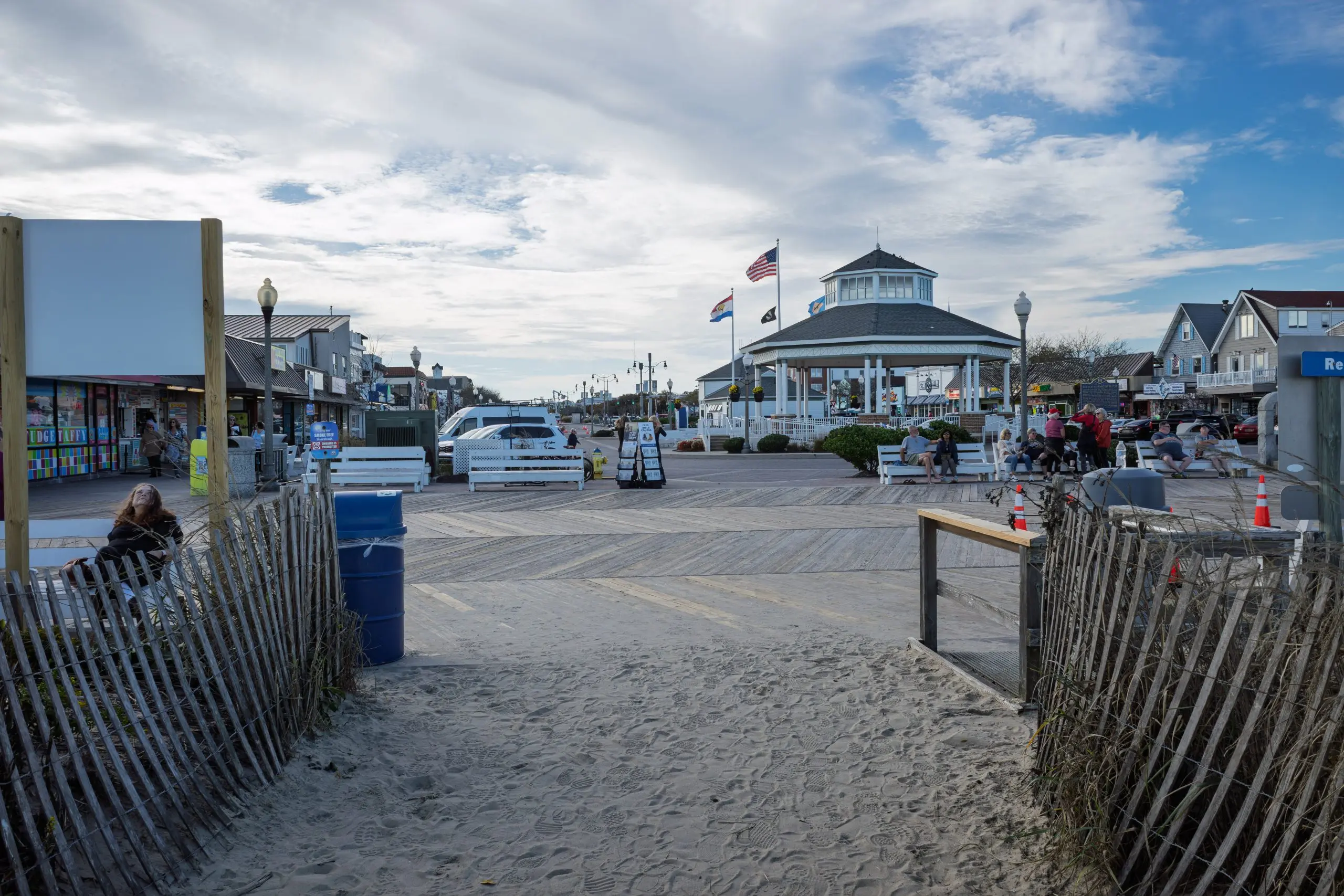
The transition from spring to summer along the Mid-Atlantic coast is usually marked by the gentle hum of rolling waves, the sweet aroma of boardwalk popcorn, and the anticipation of peaceful sunny days. However, on May 19, the picturesque coastal town of Rehoboth Beach, Delaware, became the stage for a chaotic modern phenomenon known as a social media “beach takeover.” Hundreds of teenagers and young adults, drawn by viral posts circulating online, flooded the sandy shores and boardwalk, creating a spontaneous gathering that quickly overwhelmed local resources. As the crowd swelled, local business owners, anxious about safety and potential property damage, shuttered their doors early while police officers scrambled to manage incidents of rowdy behavior, underage drinking, and drug use. Amidst the frenzy to restore order and find those responsible for organizing the massive event, the Rehoboth Beach Police Department arrested four Delaware State University students—Xander Nicholl, 19; Angelin Clauvil, 21; Eric Barnett, 21; and Keyon Scott, 22. These young scholars suddenly found themselves transformed from ordinary college students planning their summer breaks into high-profile criminal defendants, publicly accused of facilitating a riot and second-degree conspiracy.
For these four young people, the days following their arrests were undoubtedly filled with an overwhelming sense of dread, representing a nightmare scenario that any college student or parent would fear. To be young, black, or brown and pursuing higher education at an institution like Delaware State University—a proud Historically Black University (HBCU)—means carrying a unique set of expectations, dreams, and vulnerabilities. Facing serious felony-level charges like inciting a riot and criminal conspiracy is not just a legal hurdle; it is an existential threat to one’s future, capable of dismantling years of academic dedication, jeopardizing financial aid, and permanently tarnishing reputations before a career even begins. The digital age ensures that an arrest mugshot and a sensationalized headline remain permanently accessible online, acting as a digital scarlet letter that persists long after the police tape is cleared. As their names were broadcast across regional news outlets, these students were forced to sit with the crushing weight of public judgment, while their families grappled with the terrifying reality of a criminal justice system that often moves too quickly to penalize and too slowly to understand the intricacies of youth culture in a digital world.
The trajectory of this harrowing ordeal took a sudden and dramatic turn when the Delaware Department of Justice, led by Attorney General Kathy Jennings, stepped in and dropped all charges against the four students. In a swift and definitive move, state prosecutors cited an absolute “no factual basis” to support the severe allegations that these young men and women had legally organized or facilitated the chaotic beach gathering. The decision highlight’s a major disconnect between local law enforcement’s initial panic and the objective legal standards required to strip citizens of their liberty. While the dismissal brought an immense, tearful wave of relief to the students and their loved ones, it also exposed the profound flaws of the rush-to-judgment policing tactics that frequently occur during high-stress public incidents. The state’s intervention served as a quiet reminder that being present at a viral event, or sharing information on social media, does not make someone a criminal mastermind behind a riot. Yet, the quiet withdrawal of charges rarely receives the same sensationalized, front-page media spotlight as the initial, humiliating arrests, leaving the students to pick up the pieces of their disrupted lives in the shadow of an unfair public narrative.
Compounding the emotional complexity of the situation was the bureaucratic friction that emerged between different levels of government in the wake of the state’s decision. Surprisingly, the City of Rehoboth Beach claimed they were completely left in the dark about the dismissal, stating in a public communication that they had not been contacted by the state’s Department of Justice regarding the dropped charges. This communication breakdown revealed a defensive stance by local municipal authorities, who signaled a clear reluctance to let the matter rest, asserting that not all relevant facts and circumstances had been fully reviewed. Local officials, under pressure from an anxious year-round resident population and wealthy business owners who demand a pristine, strictly controlled environment for tourism, often cling to punitive narratives to project an image of absolute control and safety. By expressing skepticism over the state’s dismissal and calling for further explanation, the city highlights a recurring systemic struggle where local municipal governments prioritize public relations and tough-on-crime posturing over the constitutional protections and legal realities recognized by higher state legal authorities.
Recognizing the deeper cultural, systemic, and racial undertones of the arrests, the City of Rehoboth Beach reached out to Fleur McKendall, the president of the NAACP Delaware State Conference of Branches, to initiate a dialogue. The involvement of the NAACP underscores the reality that policing in vacation destinations is often highly racialized, where large groups of minority youth are frequently perceived as inherently threatening, suspicious, or illegal, while similar large gatherings of affluent white youth are dismissed as rowdy but harmless spring break celebrations. Historically, Black college students visiting coastal towns have faced heightened scrutiny, and when spontaneous events go awry, they are disproportionately targeted as scapegoats to satisfy a public demand for accountability. By seeking out a meeting with civil rights leaders, the city acknowledged, perhaps implicitly, that the optics of arresting four black HBCU students on flimsy riot charges had deeply damaged their relationship with the broader Delaware community. Although the city noted they had not yet received a response to their invitation, the looming presence of civil rights advocates ensures that the actions of the local police will remain under close scrutiny, pushing the town to address systemic biases rather than hiding behind standard bureaucratic excuses.
Ultimately, the short-lived prosecution of Xander Nicholl, Angelin Clauvil, Eric Barnett, and Keyon Scott serves as a cautionary tale about the intersection of youth culture, modern technology, and the legal system. In the age of viral algorithms, social media flyers can organically spread to thousands of young people within hours, creating decentralized events that have no singular coordinator, leader, or instigator. Traditional law enforcement frameworks, which are built to look for top-down organizational hierarchies, struggle to comprehend this decentralized digital reality, often resulting in the unfair targeting of easily identifiable participants as the supposed “ringleaders.” Moving forward, society must grapple with how to manage public spaces and youthful energy without defaulting to draconian criminal charges that can instantly ruin innocent lives. True community safety and justice are not achieved through reactionary arrests and administrative defensiveness, but through careful investigation, open communication between state and local leaders, and a willingness to protect young people rather than criminalizing their presence in public spaces.