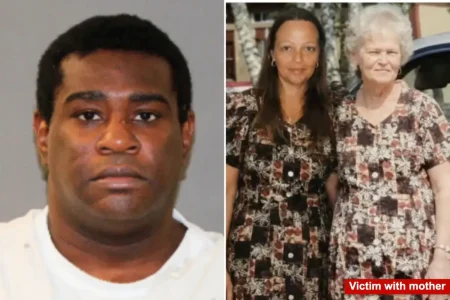







In the humdrum rhythm of a typical August afternoon, Christen Phillips was just doing her job, proving herself to be a dedicated and hardworking mother of three. She had strapped on her seatbelt and waded into the traffic of Jacksonville, North Carolina, not out of a sense of adventure, but out of a necessity to provide for her family. As a DoorDash driver, her days were measured in miles, minutes, and the frantic anticipation of hungry customers waiting for their meals. It was a humble, sometimes thankless gig, but one that offered flexibility and a modest paycheck to help make ends meet. On this particular day, she found herself idling at an intersection, the sun baking down on the hood of her car, waiting impatiently for the driver ahead of her to inch forward. Growing frustrated with the brief delay, she tapped her horn—a reflexive, almost subconscious action, a universal language of automotive annoyance shared by drivers everywhere. It was a sound meant to convey a simple message: “Hey, the space is open, let’s move along.” There was no anger, no malice, just a fleeting moment of everyday impatience that anyone on the road can relate to. But the man behind the wheel of the vehicle ahead, a 44-year-old named Stanley Shockley, interpreted that tiny blare of the horn not as a harmless prompt, but as a deep, personal offense—a challenge to his very existence. Instead of continuing down the road and forgetting the incident, he shifted his gears, and his intentions turned dark. The vehicle moved aside, but not to drive away. It began to follow her, silently threading through the traffic behind her, transforming an everyday interaction into a sinister game of cat and mouse. Phillips, totally unaware that her life was about to change forever, continued her route, never realizing that a complete stranger had just locked onto her as a target for unfathomable violence.
The chase concluded when Phillips pulled up to her delivery destination, a residential home where a customer was eagerly awaiting their food. She gathered the order, exited her vehicle, and completed the drop-off with the practiced efficiency of a seasoned courier, completely oblivious to the danger lurking nearby. Turning to walk back to her car, the mundane world shattered into a nightmare. Shockley had parked nearby, lying in wait for her to finish her task. He sprang from his vehicle, brandishing a small wooden bat, a weapon of blunt-force trauma that would cause devastating damage to her body. Phillips never saw it coming. In a state of terrifying ambush, he attacked her, swinging the bat with brutal, merciless force directly at her head and face. The attack was swift, savage, and utterly without warning, leaving no room for defense or escape. For Phillips, the event exists only as a void in her memory, a black hole of terror that her mind mercifully blotted out to protect her from the full horror of the moment. She doesn’t recall the swing, the impact, or the moment she crumpled to the ground in a heap of broken bone and blood. In a subsequent, deeply vulnerable social media post, she would write, “I don’t remember it at all. I woke up an unverified amount of time later.” She was left bleeding profusely, unconscious on the hot pavement, alone except for her attacker who had already fled the scene, leaving her for dead. The sheer randomness of the assault, triggered solely by a honk, underscores the terrifying fragility of public safety in modern society. She was not targeted for a robbery, nor for a personal grudge; she was targeted simply because her existence had momentarily annoyed a man who decided that a woman’s life was worth trading for a petty grievance.
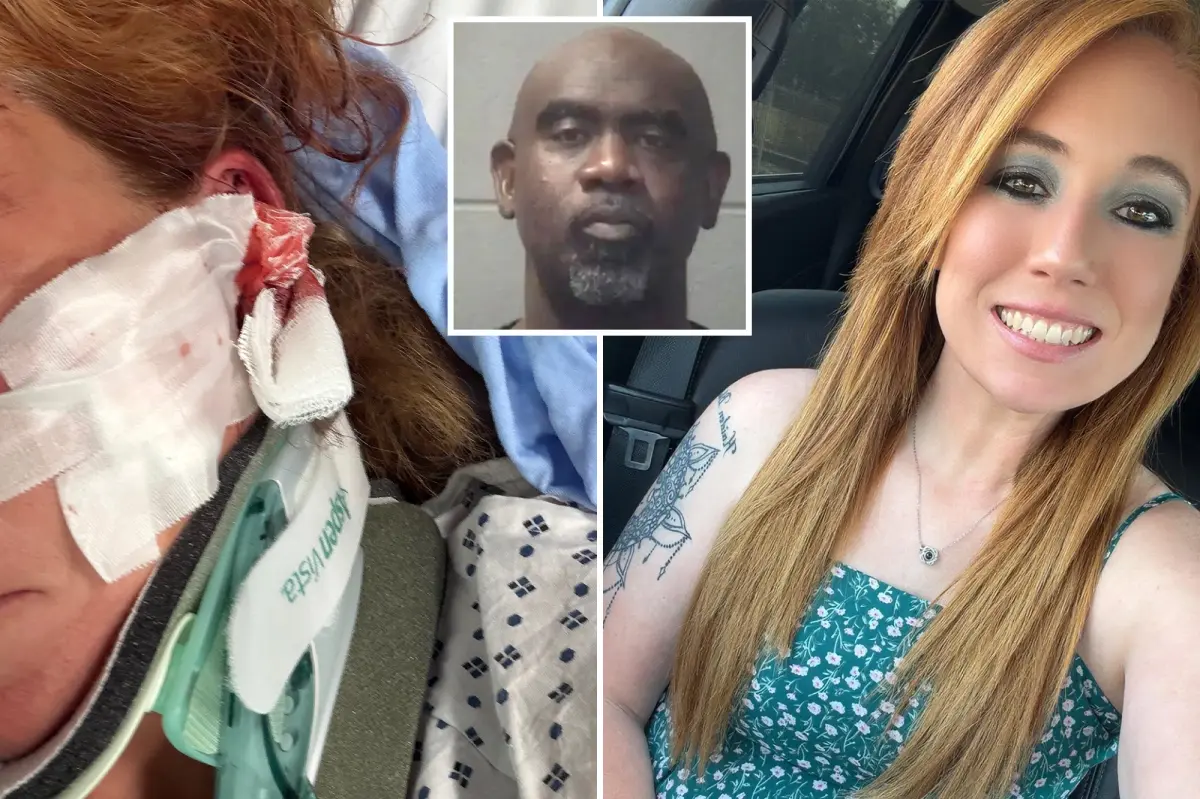
The aftermath of the attack was staggering, a brutal lesson in the fragility of the human body. When Phillips finally regained consciousness, she was greeted by a blinding, pounding pain and the metallic, coppery taste of blood flooding her mouth. Her head was throbbing, and she could feel warm, viscous fluid trickling down her neck and soaking her clothes. In a miraculous act of sheer willpower and adrenaline, she managed to drive herself to a nearby hospital after waking up, an act of self-preservation that is almost incomprehensible given the severity of her injuries; the fact that she was able to function at all, let alone operate a vehicle, is a testament to her incredible inner resolve. Upon reaching the emergency room, medical staff discovered the true, horrific extent of the damage. They informed her that she had sustained multiple skull fractures, a catastrophic brain bleed, and a fractured left cheekbone. The force of the blow had been so intense that blood and cerebral spinal fluid were draining from her left ear for hours, a clear and terrifying sign of the traumatic connection between her skull and her brain cavity. The physical pain was excruciating, but the psychological shock was equally profound; she had gone from driving a car, handing over a warm meal, to fighting for her life in a matter of minutes. Now, she lies confined to a hospital bed, a mother separated from her children, enduring a grueling and uncertain recovery. The skull fractures require intense monitoring to prevent further swelling, the brain bleed poses a long-term neurological risk that could have lasting cognitive consequences, and the fractured cheekbone will require painful reconstructive surgery to restore her face. Her life has been irrevocably altered by a random act of rage, leaving a family shattered by the consequences of a driver’s horn.
The hunt for the perpetrator began immediately, with the Onslow County Sheriff’s Office launching a comprehensive and meticulous investigation into the assault. Sheriff Chris Thomas acknowledged the unsettling nature of the crime, noting that a case like this can make ordinary citizens deeply uneasy because it highlights the unpredictable, lurking violence that can exist just beneath the surface of daily life. In a public statement, he praised the community for providing numerous tips and leads, which proved crucial in narrowing down the suspect list and moving the investigation forward. “Our detectives follow every lead, carefully work through the evidence, and continue to pursue answers even when the investigation presents challenges,” Sheriff Thomas explained, highlighting the painstaking, unglamorous grunt work that goes into solving such complex cases. After days of canvassing the area, reviewing surveillance footage from nearby homes and businesses, and cross-referencing vehicle information, detectives were able to identify Stanley Shockley as the prime suspect. He was taken into custody on a Monday, just days after the brutal attack, ending the immediate threat he posed to the public. Shockley was formally charged with assault with a deadly weapon with intent to kill, inflicting serious injury, a heavy charge that carries the potential for a significant prison sentence, reflecting the state’s intent to hold him fully accountable for the near-fatal savagery he unleashed on a defenseless woman. For Phillips and her family, the swift arrest brought a sliver of relief, knowing that the man who shattered her skull would not be walking free, posing a threat to other innocent people. The decisive action by law enforcement also sent a strong message to the broader community: they would not tolerate acts of senseless violence, and their detectives were relentless in their pursuit of justice.
The corporate world also reacted to the horrific event, acknowledging the broader implications for the modern workforce. A spokesperson for DoorDash, the platform Phillips worked for, released a heartfelt statement to Fox News Digital, expressing their horror and their profound relief that she was safe. “What this Dasher went through is horrific, and we’re relieved she’s safe and on the road to recovery. We’re grateful to law enforcement for making an arrest and will continue to assist their investigation in any way we can.” The statement reflects a growing awareness that gig economy workers, who operate independently and without the traditional safety net of a physical office or a manager present, are significantly more exposed to volatile and dangerous situations than employees in a standard workplace. They enter strangers’ neighborhoods, interact with individuals who are sometimes under the influence, agitated, or unpredictable, and drive alone for hours on end, often late into the night. This incident highlights the invisible dangers that these workers face daily, dangers that are often overlooked in the convenience-driven digital economy. While DoorDash’s statement is supportive, it also serves as a stark reminder of the structural vulnerability of this segment of the workforce. Phillips’s ordeal is not just a criminal case; it is a case study in the risks of a digital marketplace that prioritizes speed and convenience, often at the expense of worker safety. As she recovers, the broader conversation must begin about what protections can be offered to these independent contractors, and whether more training, tracking, or safety protocols should be implemented to ensure that a mundane honk never has to lead to a mother being beaten with a bat.
As Christen Phillips begins her long and arduous road to recovery, her story resonates far beyond the borders of Jacksonville, touching a nerve in the collective psyche of a nation that often feels increasingly dangerous and unpredictable. It is a story of resilience in the face of inexplicable cruelty, a stark reminder that life can be altered in a split second by the actions of a stranger. She is not just a statistic; she is a mother who must now learn to walk, talk, and smile again, all while carrying the psychological trauma of knowing a stranger wanted her dead. Her battle is medical, physical, and deeply emotional, requiring a strength she likely never knew she possessed. Yet, amidst the immense pain and uncertainty, there is a thread of hope woven through the narrative. The community rallied around her, tipping off police and showing their support. Law enforcement worked diligently to secure a capture, bringing a measure of justice. DoorDash acknowledged her suffering, and her friends and family have rallied to her side. Most importantly, Phillips has shown a terrifying glimpse of her incredible inner strength—driving herself to the hospital, speaking out publicly to share her story, and facing an uncertain future with courage and determination. The honk was a reflex, but her fight is a choice. As she undergoes intensive rehabilitation, she will have to reconcile the fact that a second of public frustration cost her countless days of suffering and a lifetime of trauma. Her story serves as a poignant cautionary tale about unchecked rage, the fragility of modern life, and the ever-present potential for violence in the most mundane situations. While the legal system will now decide Shockley’s fate, Phillips must decide how to reclaim hers. In the quiet of her hospital room, surrounded by the love and support of her children and loved ones, she clings to the belief that she will heal, that she will emerge from this stronger, and that she will not let a single act of violence define the rest of her life.