




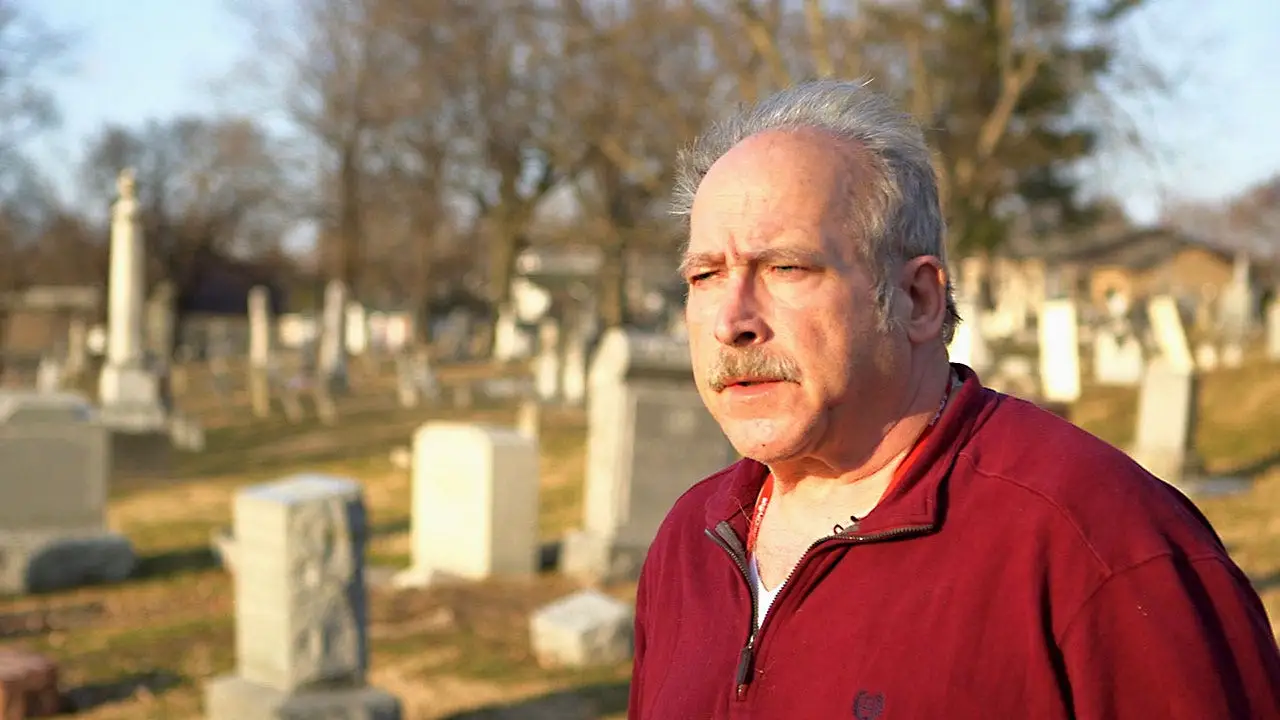
Under the sweltering, oppressive Georgia sun of August 2004, an extraordinary and deeply unsettling mystery began to quietly unravel behind a Burger King restaurant in the small town of Richmond Hill. There, lying near a dumpster in the dirt, was an unconscious, completely naked, and severely sunburned middle-aged man whose body was covered in painful black ant bites. When paramedics rushed him to a local hospital, he awoke into a world he claimed not to recognize, presenting a mind that was an absolute blank slate, entirely stripped of names, faces, family, or personal history. The baffled medical staff, unable to find any identification or clues to his origin, affectionately nicknamed him “B.K. Doe” (Burger King Doe), a temporary label that the mysterious stranger would eventually replace with the self-selected alias of Benjaman Kyle. For more than a decade, this soft-spoken, white-bearded man captured the collective imagination of the American public, appearing on national television programs, profiling in major news outlets, and inspiring dedicated communities of online amateur sleuths who were desperate to help him solve the riddle of his existence. He walked among us as a living ghost, a tragic figure who claimed to suffer from a rare, profound form of retrograde amnesia that prevented him from obtaining a Social Security number, securing legal employment, or opening a bank account. For years, the world poured its collective empathy into Benjaman’s search for his lost life, completely unaware that this vulnerable, tragic persona might have been a masterclass in psychological concealment designed to bury a far darker reality.
The narrative took a sharp, fascinating turn when Eric and Shannon Evangelista, a husband-and-wife team of accomplished storytellers and seasoned investigators, decided to document Benjaman’s journey in their gripping four-part Investigation Discovery docuseries, “The Many Lives of Benjaman Kyle.” Shannon brought to the project a formidable analytical background, having served as a federal criminal defense attorney specializing in organized crime, an assistant district attorney in Orange County, and a prosecutor in the high-stakes Special Narcotics Division of the New York District Attorney’s office. Eric, on the other hand, possessed a sharp journalistic instinct honed over fourteen years as a broadcast news producer and newspaper reporter. Together, they expected to document a heartwarming tale of a lost soul reuniting with a long-lost family, but as their cameras rolled and they began to intimately interview Benjaman, the cozy facade of the tragic amnesiac began to unravel. Eric’s journalistic skepticism was immediately triggered by the highly convenient, selective nature of Benjaman’s cognitive deficits, noting that his amnesia behaved less like a genuine medical condition and more like an outdated, melodramatic plot device from a vintage soap opera. Instead of displaying the frantic, desperate urgency of a man yearning to reclaim his stolen identity, Benjaman actively threw up roadblocks, grew defensive under mild questioning, and showed an intense, deeply suspicious aversion to traveling to any locations or participating in any activities where someone from his past might actually recognize his face.
In 2015, the relentless march of forensic science and genetic genealogy finally pierced the veil of his anonymity, identifying the mysterious “Benjaman Kyle” as William Burgess Powell, a man who had originally hailed from Indiana. But rather than resolving the mystery and bringing peace, this revelation only deepened the darkness surrounding his case, transforming a story of medical tragedy into a complex web of flight, deception, and evasion. Needing expert guidance to navigate the murky waters of Powell’s past, the Evangelistas partnered with Ken Maxwell, a highly decorated, retired FBI assistant special agent in charge of the New York division, whose career was built on tracking down fugitives and analyzing criminal behavior. Maxwell’s deep-dive investigation into cold file archives quickly yielded a monumental breakthrough: a forgotten missing person report filed by the Indiana State Police in August 1976. This historical document revealed that Powell had abruptly fled the city of Lafayette, Indiana, in the middle of a March night in 1976, leaving behind his life and his vehicle, which was later found abandoned in a secluded, rural area. Most telling of all to a seasoned investigator like Maxwell was the fact that the license plates had been systematically stripped from the vehicle before it was dumped—a classic, unmistakable indicator of a calculated flight. Powell was not a victim who had wandered away; he was a man desperately fleeing from an impending threat, stripping away his legal identity decades before he ever claimed to have lost his mind in a Georgia parking lot.
As the production of the docuseries continued and the filmmakers pushed Powell to confront the geography of his youth, his behaviors took on an increasingly bizarre and chilling tone that shattered any remaining illusions of his innocence. During a filmed road trip through the lonely, towering mountain passes of Colorado—a region he admitted remembering from his previous life—Powell looked out over the steep, deadly drop-offs and casually mused that it would be the perfect place to dispose of a human body because it would take years for anyone to ever find it, laughing heartily as he kicked a loose rock down the cliffside. On other occasions, he dropped spontaneous, highly unsettling comments about digging up skulls in quiet cemeteries and dumping bodies, remarks that sent a physical shiver down Shannon Evangelista’s spine and prompted the former prosecutor to realize they were dealing with a psyche that was far more dangerous than simple memory loss. This atmosphere of deceit was further validated when Maxwell analyzed Powell’s actual medical records from the day he was discovered behind the Burger King in 2004. Despite the legendary narrative that Powell had been brutally beaten and left for dead by violent attackers, his physical examinations revealed a startling contrast: there was not a single abrasion, bruise, laceration, or sign of physical trauma on his entire body, save for the localized ant bites, severe sunburn, and skin mites. The initial EMT response and clinical evaluations heavily pointed toward a highly orchestrated, self-induced performance, suggesting his state of absolute vulnerability was a meticulously engineered exit strategy from his previous life.
The deeper the investigative team dug into Powell’s historical associations in 1970s Lafayette, the more the narrative became intertwined with whispers of organized crime, shady dealings, and cold cases. While no public, concrete evidence has emerged linking Powell to any specific homicide, the dark rumors surrounding his youth were highly alarming; multiple acquaintances from his past claimed he was associated with violent, nefarious characters, and some even whispered that he had worked as an underground hitman. Powell’s own brother had publicly expressed deep anxiety about the dangerous clientele of the establishments Powell frequented during those turbulent years, painting a portrait of a man who danced on the very edge of the criminal underworld. Compounding this mystery was the discovery that Powell possessed an advanced, highly sophisticated expertise in early computer systems and technology—an incredibly rare and lucrative skillset in the late 1970s and early 1980s that would have granted him the unique capability to manipulate records, forge identifications, and successfully navigate life entirely off the grid. This technical prowess goes a long way in explaining the most mind-boggling aspect of his entire saga: the absolute, echoing void in his public record between the years 1983 and 2004. For over twenty-one years, during the massive dawn of the digital age and the rise of modern surveillance, William Burgess Powell managed to live as an absolute ghost, leaving behind zero tax records, employment history, bank accounts, or residential footprints.
Ultimately, the man who spent over ten years publicly begging to find his identity chose to execute one final, masterful vanishing act. In December 2016, following his last recorded interactions with the Evangelistas, Powell quietly evaporated from his last known residence, once again severing all connections with the filmmakers, his newly discovered biological family, and everyone who had dedicated years of their lives to solving his mystery. While rumors persist that the now 77-year-old Powell is quietly laying low in a boarding house or working under the table at a convenience store back in the Lafayette area, he has successfully slipped back into the shadows of anonymity, proving that his talent for living invisible remains completely unmatched. For Shannon and Eric Evangelista, along with Ken Maxwell, the release of their documentary is not the final chapter, but rather an urgent, global rallying cry for the public to come forward with the final, missing pieces of this extraordinary, decades-long puzzle. The haunting saga of Benjaman Kyle, or William Burgess Powell, stands as a chilling testament to the lengths a human being will go to erase who they are, leaving us to wonder if we will ever truly know what he was running from, or if the man who became a ghost will remain forever lost to the history he so desperately tried to rewrite.