






The Secret Life of Jellyfish: Ancient Survivors, Coastal Myths, and the Science of Sting First Aid
Ancient Voyagers of the Deep: The Millennia-Spanning Resilience of the Jellyfish
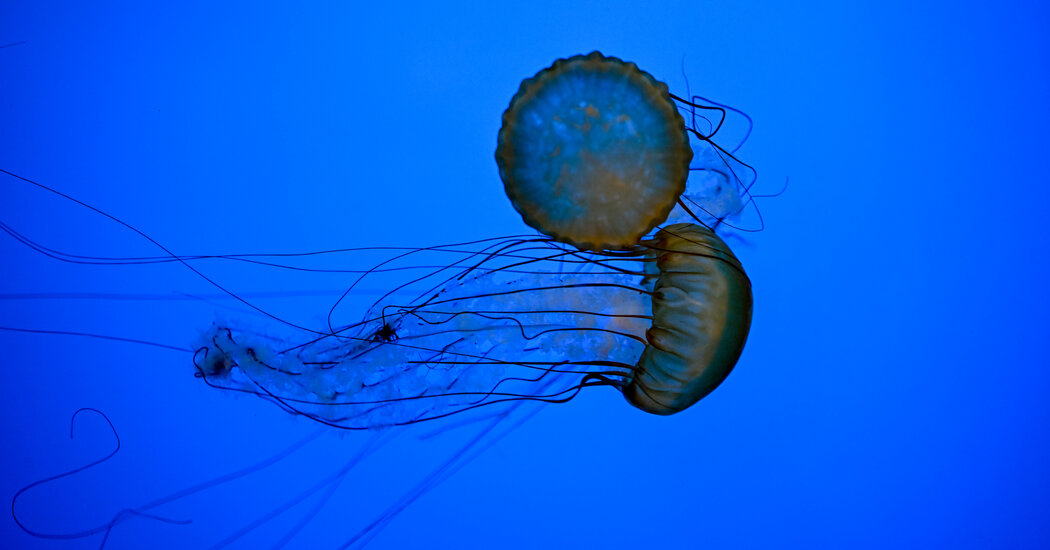
As the summer sun warms ocean waters worldwide, triggering the annual migration of millions of tourists to pristine coastlines, it also heralds the peak season for some of the world’s most mysterious and enduring marine organisms: jellyfish. These ancient, gelatinous wanderers have spent more than 500 million years drifting through the world’s seas, surviving five mass extinction events, outlasting the dinosaurs, and quietly observing the rise and fall of countless ocean ecosystems. To help educate a public that is often both fascinated and terrified by these boneless, bell-shaped creatures, Yana Yanovsky, along with her husband Alex, recently established the pioneering Jellyfish Museum in Pompano Beach, Florida, located just a short drive north of Fort Lauderdale. In their specialized exhibits, visitors are invited to witness the hypnotic, almost meditative rhythm of jellyfish as they pulse their translucent domes—anatomically referred to as bells—to gently propel themselves through their watery habitats. Despite their visual complexity and the vibrant, bioluminescent hues that illuminate their bodies in the ocean depths, jellyfish operate without a brain, heart, bones, blood, or gills. Instead, they are composed of more than 95 percent water, presenting a minimal biological design that relies on a decentralized, simplified network of nerves known as a nerve net. This basic neurological framework allows them to sense light, detect shifts in ambient water temperature, and react dynamically to physical currents. Beyond their mesmerizing physical grace, jellyfish are indispensable keystones of the global marine ecosystem, serving as a primary dietary staple for diverse populations of marine life, including commercially valuable fish species and endangered leatherback sea turtles, which rely on the abundant, gelatinous blooms to survive.
Anatomy of a Chance Encounter: Why Jellyfish Stings Are Never Personal
Despite lingering public anxiety perpetuated by dramatic beachside horror stories and Hollywood thrillers, marine biologists emphasize that jellyfish are entirely passive organisms that never actively hunt, stalk, or target human swimmers. According to official educational advisories published by the National Oceanic and Atmospheric Administration (NOAA), any physical interaction between a human and a jellyfish is completely incidental, as humans are distinctly absent from the dietary preferences of these simple invertebrates. In their natural ocean habitats, jellyfish utilize their trailing, venom-infused tentacles to trap a varied menu of marine prey, which includes microscopic plankton, larval fish, tiny shrimp, and occasionally, weaker species of other jellyfish. As explained by Dr. Heather Bracken-Grissom, a widely respected professor of biological sciences at Florida International University in Miami, these animals cast their stinging tentacles like microscopic, organic driftnets that react mechanically to physical contact. When humans dive, surf, or swim through coastal waters, they inadvertently cross paths with these nearly invisible, trailing appendages, triggering an automatic defense mechanism within the jellyfish’s specialized stinging cells, known as nematocysts. Each nematocyst acts like a miniature, pressurized capsule containing a tightly coiled, venomous barb that fires in a fraction of a millisecond upon touch. Because this envenomation process is entirely mechanical, occurring independently of any conscious thought from the brainless creature, swimmers are simply the accidental victims of an evolutionary trap designed to snare tiny marine prey in the open ocean.
Pop Culture vs. Medical Reality: Debunking the Infamous Urination Myth
Of all the persistent folk remedies surrounding maritime accidents, none has captured the public imagination quite like the widespread myth that urinating on a jellyfish sting will neutralize the venom and instantly alleviate pain. This bizarre first-aid concept achieved global cultural dominance following a classic 1997 episode of the hit television sitcom Friends, in which the character Chandler Bing, played by the late Matthew Perry, reluctantly agrees to urinate on Monica Geller’s leg after she is stung on a beach, citing a pseudo-scientific belief that the ammonia in urine acts as an effective analgesic. However, modern emergency medicine has thoroughly debunked this television-fostered folklore, with medical practitioners warning that applying urine to a fresh wound can actually aggravate your injuries. Dr. Thomas Waters, a leading physician at the Cleveland Clinic, clarified in a comprehensive medical bulletin that while the foundational logic of the myth relies on the idea that ammonia and urea can break down stinging cell structures and encourage them to detach, human urine is historically far too diluted with freshwater to achieve this effect. In fact, because urine is composed of more than 95 percent freshwater, pouring it over a marine sting alters the osmotic balance around the wound, which physically triggers any remaining, unfired nematocysts on the victim’s skin to rupture and release an additional wave of painful toxins. This biological reality was echoed by veteran breaking news reporter Johnny Diaz, who recalled growing up on the sunny shores of Miami Beach and watching lifeguard stations repeatedly address misinformed beachgoers trying to apply this ineffective remedy, proving that this historical misconception has plagued coastal communities since long before television popularized it.
The Chemistry of Relief: Scientific Protocols for Jellyfish Sting First Aid
When resolving a painful encounter with a jellyfish, modern emergency medicine recommends a highly systematic, chemically sound approach to neutralize the venom and safely remove any clinging tentacles. According to Dr. Christopher Bazzoli, an emergency medicine specialist at the Cleveland Clinic, the absolute best first step for treating a sting from any jellyfish species—or their floating look-alikes—is a thorough, gentle wash using clean saltwater. Because marine stinging cells are biochemically accustomed to saltwater, rinses using ocean water will not alter the osmotic pressure surrounding the wound, thereby preventing any remaining, unfired stingers from releasing more venom into the victim’s bloodstream. Following the initial saltwater rinse, applying household vinegar can serve as a powerful secondary line of defense, a protocol strongly endorsed by the University of Florida Health. The mild acetic acid within vinegar rapidly deactivates the thousands of microscopic, unfired stinging cells left resting on the surface of the skin, essentially locking their mechanical triggers before they can cause further damage. Once the venomous cells have been chemically neutralized and physically scraped away—ideally using a rigid object like a plastic credit card rather than bare fingers—patients can focus on systemic pain management and swelling reduction. Dr. Bazzoli advises applying cold ice packs wrapped in clean towels to the affected area to help minimize localized inflammation, while recommending that patients consider taking over-the-counter oral antihistamines to curb allergic skin reactions, alongside anti-inflammatory medications like ibuprofen to soothe throbbing pain.
The Phantom Threat on the Sand: Why Beached Jellyfish Remain Armed and Dangerous
A common and highly dangerous misconception among coastal vacationers is that a jellyfish washed up on the beach, dried by the sun, or clearly dead no longer poses a threat to human health. In reality, the glistening, balloon-like bodies of jellyfish drying on the sand remain fully loaded with highly pressurized stinging cells that can inflict severe, painful stings if stepped on or handled. Even if you are wearing protective water shoes or sandals, accidentally treading on dried tentacles can drive the microscopic, venomous barbs into exposed skin, as the mechanical trigger of a nematocyst does not require a living, breathing organism to function. James Douglass, an esteemed professor of marine science at Florida Gulf Coast University in Fort Myers, Florida, warns that the tiny stinging cells found on microscopic, juvenile jellies can be just as biologically potent as those belonging to massive adult specimens, meaning that even nearly invisible fragments of tentacles drifting in the surf can ruin a beach day. Larger jellyfish species, however, present a heightened level of danger simply due to the sheer volume of their armaments, as their exceptionally long, trailing tentacles can concentrate thousands of venomous impacts onto a victim’s skin in a single, agonizing instant. Beach safety experts urge parents to closely monitor children and pets, who are often naturally drawn to the colorful, gelatinous blobs resting along the high-tide line, and strongly advise against touching, poking, or stepping on any marine debris that resembles jellyfish remnants.
Lethal Tentacles and Global Warnings: Understanding the True Risks of Extreme Envenomation
While the vast majority of jellyfish encounters result in localized, burning pain that gradually subsides within a few hours, certain global species possess highly potent toxins capable of triggering life-threatening medical emergencies. Dr. Heather Bracken-Grissom notes that while fatal stings are statistically incredibly rare worldwide, they are almost exclusively associated with severe systemic allergic reactions, such as anaphylactic shock, which can cause a victim’s airway to restrict rapidly. Furthermore, marine scientists highlight a select group of highly venomous species, most notably the notorious box jellyfish, whose complex cocktail of cardiotoxins, neurotoxins, and dermatoxins can cause human cardiac arrest inside of five minutes. According to clinical data from the Cleveland Clinic, the Australian box jellyfish (Chironex fleckeri), which primarily inhabits the tropical coastal waters of northern Australia and the broader Indo-Pacific Ocean, holds the title of the most venomous marine creature on the planet. For travelers visiting these tropical regions, understanding local marine hazards, swimming only in designated areas protected by stinger nets, and keeping a watchful eye on lifeguard warning flags are critical components of beach safety. Ultimately, respecting these magnificent, prehistoric survivors and entering their ancient aquatic world with education rather than fear allows humans to safely coexist with the ocean’s most enduring gelatinous wonders.