







The modern world is deeply interconnected, meaning that when a conflict erupts in one corner of the globe, the ripples of anxiety, economic distress, and physical danger are felt by ordinary people thousands of miles away. Today, humanity finds itself holding its collective breath as the fragile cease-fire between the United States, Iran, and Israel hangs by a remarkably thin, frayed thread. The initial outbreak of hostilities, which raged violently for over a month before a truce was hammered out in early April, was not just an abstract geopolitical event; it was a deeply human tragedy that claimed lives, displaced families, and plunged millions of innocent civilians into a state of constant, paralyzing terror. Even for those living far from the direct line of fire, the war has hit home in painfully tangible ways, most notably through the skyrocketing costs of heating houses, fueling cars, and buying food. When the warring parties agreed to a temporary halt in fighting to discuss Iran’s nuclear ambitions and the critically important Strait of Hormuz, there was a collective sigh of relief, a brief moment of hope that logic and empathy might prevail over pride and violence. Yet, as the weeks have dragged on, that optimism has slowly curdled into a suffocating dread, as the realization sets in that the peace holding the world back from the brink of a wider, more catastrophic war is dangerously unstable. Behind the sterile press releases lies an intensely human drama of tired negotiators, desperate families, and anxious populations who are fully aware that their safety and economic security depend entirely on the temperaments of a handful of powerful leaders. Consequently, the current diplomatic gridlock is not merely a technical disagreement over treaty terms; it is a profound existential crisis that touches upon the fundamental human desire for safety, stability, and peace. Without a historic breakthrough, the fragile promise of this treaty risks dissolving completely into a devastating new chapter of global ruin.
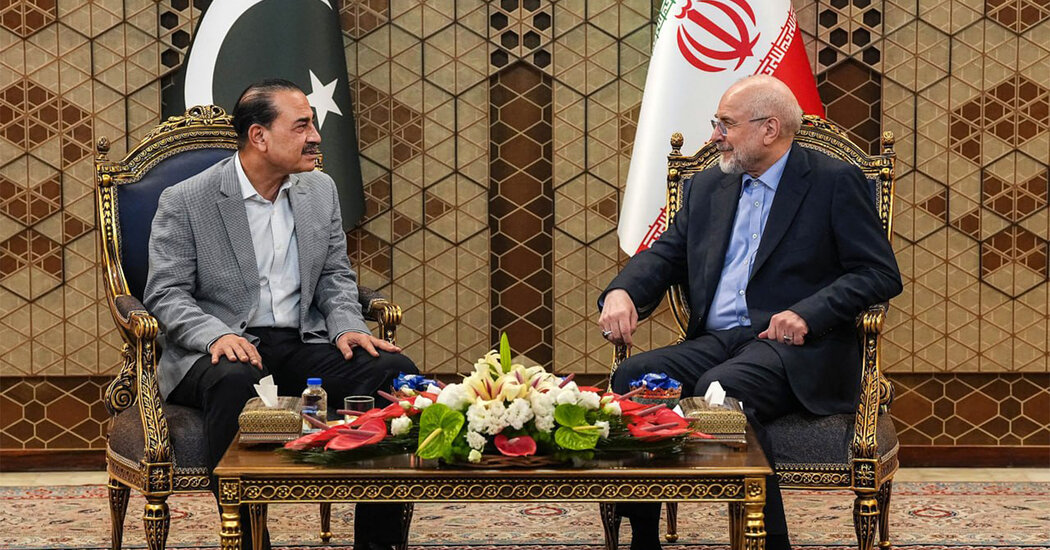
In this atmosphere of extreme tension, the heavy burden of keeping the peace has fallen upon the shoulders of a few dedicated mediators who are working tirelessly behind the scenes to bridge a seemingly impassable gulf. Among them is General Syed Asim Munir, the chief of staff of the Pakistani Army, who has emerged as a central, stabilizing figure in this high-stakes international drama. Traveling to Tehran under heavy security and carrying the immense anxieties of a neighboring nation that cannot afford a regional explosion, General Munir spent a grueling, hyper-intensive twenty-four hours meeting with senior Iranian officials before departing on Saturday afternoon. The physical and psychological toll of this kind of shuttle diplomacy is difficult to overstate; these emissaries are human beings operating on little to no sleep, carrying the heavy knowledge that a single misunderstanding or poorly phrased sentence could result in the loss of thousands of civilian lives. Their efforts were bolstered by a diplomatic delegation from Qatar, a nation that has long served as a vital human bridge between Tehran and Washington. These Qatari and Pakistani diplomats find themselves in the unenviable position of having to translate the aggressive, often hubristic rhetoric of both sides into the practical, compromise-driven language of peace. As they shuttled from highly secured government compounds to private conference rooms, they were not just debating policy points, but actively trying to appeal to the shared humanity and rational self-interest of leaders who are under immense domestic pressure to appear strong. The departure of the Pakistani and Qatari delegations left behind a palpable, heavy silence in the streets of Tehran, a stark reminder that while the machinery of international mediation can facilitate communication, it cannot force rivals to choose the path of reconciliation over the destructive allure of pride. The fate of millions now rests on whether these quiet efforts can spark even a tiny glimmer of mutual trust.
Inside the halls of Iranian power, the human perspective is shaped by a complex mixture of national pride, deep-seated resentment of Western intervention, and the harsh realities of economic survival under crushing international sanctions. This defiant spirit was vividly on display during General Munir’s meeting with Mohammad Bagher Ghalibaf, the speaker of Iran’s parliament and the country’s chief negotiator. Ghalibaf’s rhetoric was intentionally fierce, reflecting the immense pressure he faces from a domestic audience and a military establishment that views any sign of weakness as an invitation to destruction. By boasting that Iran’s military infrastructure had been completely rebuilt and strengthened during the six-week cease-fire, Ghalibaf was not just issuing a sterile threat; he was expressing a fundamental human survival instinct of a nation that feels permanently cornered. His direct warning to President Donald Trump—declaring that if the American leader acted foolishly and restarted the war, the Iranian response would be far more crushing and bitter than the initial conflict—underscores the dangerous psychological game of chicken currently being played. From the perspective of many ordinary Iranians, these warnings are not about aggression, but about protecting their homes, their children, and their sovereignty from what they perceive as an imperialist superpower bent on their destruction. At the same time, this aggressive posturing reveals the immense anxiety gripping the Iranian leadership, who are fully aware of the devastating human and economic toll that a resumed American aerial bombardment campaign would inflict on their already struggling population. The everyday citizens of Iran, navigating depleted markets and the constant fear of sudden airstrikes, find themselves caught in the middle of this rhetorical crossfire. They must somehow balance their natural patriotism with the exhausting reality of living on a knife’s edge, knowing that if Ghalibaf’s predictions of a devastating response come to pass, it will be their neighborhoods, factories, and schools down to the ground that bear the catastrophic brunt. For these vulnerable families, the theatrical posturing of distant politicians is not a game, but a battle for physical survival.
On the other side of this deep geopolitical divide, the decision-making process in Washington is driven by its own complex set of human dynamics, domestic political calculations, and the unique, highly volatile personal style of President Donald Trump. For Trump, the conflict with Iran is both a major international crisis and a deeply personal test of his self-proclaimed negotiating prowess, leading him to constantly alternate between aggressive threats of complete military devastation and public overtures aimed at securing a historic, legacy-defining deal. This weekend, the President took a break from his public posturing to hold a crucial, direct telephone conversation with Sheikh Tamim bin Hamad Al Thani, the emir of Qatar, to discuss the ongoing work of the mediators and examine ways to stabilize the incredibly fragile cease-fire. This call highlighted the immense pressure Trump is under from his own constituency; American voters are highly sensitive to the economic pain caused by the ongoing closure of the Strait of Hormuz, which has sent global energy prices skyrocketing, making it more expensive for ordinary working-class families to heat their homes and commute to work. Furthermore, the specter of another endless, costly war in the Middle East is deeply unpopular with an American public that has grown thoroughly exhausted by decades of military interventions that have cost trillions of dollars and thousands of American lives. This domestic weariness creates a powerful counterweight to Trump’s aggressive impulses, forcing him to balance his desire to project absolute strength and dominance with the practical, political necessity of avoiding a catastrophic conflict that could easily derail the domestic economy and alienate his political base. This tension between his bellicose public image and the pragmatic realities of governance leaves both allies and adversaries guessing, transforming the serious business of international diplomacy into a tense, psychological guessing game where the ultimate prize is not territory, but the avoidance of global economic ruin and the preservation of human life. In this volatile context, every word from the White House carries the power to either calm or inflame the globe.
The core of the impasse, which has rendered six weeks of exhausting, on-and-off negotiations in Geneva and Doha virtually fruitless, lies in the deep human inability to overcome decades of intense mutual suspicion. The truce agreed upon in early April was originally envisioned as a historic opportunity to finally resolve the long-standing dispute over Iran’s nuclear program and to secure the reopening of the Strait of Hormuz, a narrow yet critically important waterway that acts as the lifeblood of the global energy market. Iran’s closure of this vital shipping lane in the early days of the war was a desperate economic gambit that successfully forced the international community to the negotiating table, but it also held the global economy hostage, directly affecting the livelihood of millions of workers worldwide who have absolutely no voice in the conflict. Today, however, the negotiations have degenerated into a grueling war of attrition, with both sides stubbornly digging in their heels and refusing to make the necessary concessions to secure a lasting peace. The human cost of this diplomatic gridlock was made clear during a tense telephone conversation between Iranian Foreign Minister Abbas Araghchi and United Nations Secretary-General António Guterres, in which Araghchi bitterly accused the United States of making “excessive demands” that amounted to a demand for unconditional surrender. When Trump subsequently dismissed Iran’s latest counterproposal as “totally unacceptable,” he effectively shut down a potential path to peace, illustrating how easily the personal pride, rigid ideologies, and stubborn egos of a few highly powerful men can lock two great nations into a dangerous cycle of escalation that neither side can easily escape. The negotiators themselves, staring at each other across conference tables day after day, are physically and emotionally drained, their faces reflecting the profound exhaustion of knowing that they are running out of time, options, and goodwill, while the rest of humanity waits in fear for the talks to collapse completely. The deep frustration of these officials underscores how easily diplomatic weariness can pave the slippery path back to open warfare.
As the weekend draws to a close, the world remains in a state of suspended animation, caught in the terrifying space between a fragile, imperfect peace and the unspeakable horrors of a resumed and potentially much larger war. Military analysts are quick to point out that further American aerial strikes are highly unlikely to force the Iranian leadership to compromise, and would instead only harden their resolve and convince them that survival depends on obtaining a nuclear deterrent. This sober strategic reality means that a return to active hostilities would lead to a prolonged, bloody, and unpredictable conflict that would devastate the Middle East, tank the global economy, and result in the tragic, unnecessary deaths of thousands of soldiers and civilians on both sides. Ultimately, the choice between war and peace is not a mathematical equation or a legalistic treaty negotiation; it is a profound moral decision that rests in the hands of fallible human beings who must choose whether to let their fears and pride dictate the future of our world. The ordinary people of America, Iran, Israel, and the wider global community do not want a war; they want the simple opportunity to build their lives, raise their children, and live in safety without the constant, terrifying threat of destruction hanging over their heads. It is now up to the leaders in Washington and Tehran to listen to this universal human desire, to look past their mutual animosities, and to find the courage to make the difficult compromises necessary to preserve the fragile peace before the final opportunity slips away. Every family in Tehran living under the shadow of potential airstrikes, and every class of citizens struggling under a fractured economy, is silently pleading for wisdom to prevail over pride. The ultimate test of leadership in the coming days will be whether these powerful figures can prioritize the basic human right to life and security over the fleeting gratification of political dominance. Only by embracing their shared humanity can they hope to steer the world away from the precipice of catastrophic global disaster.