




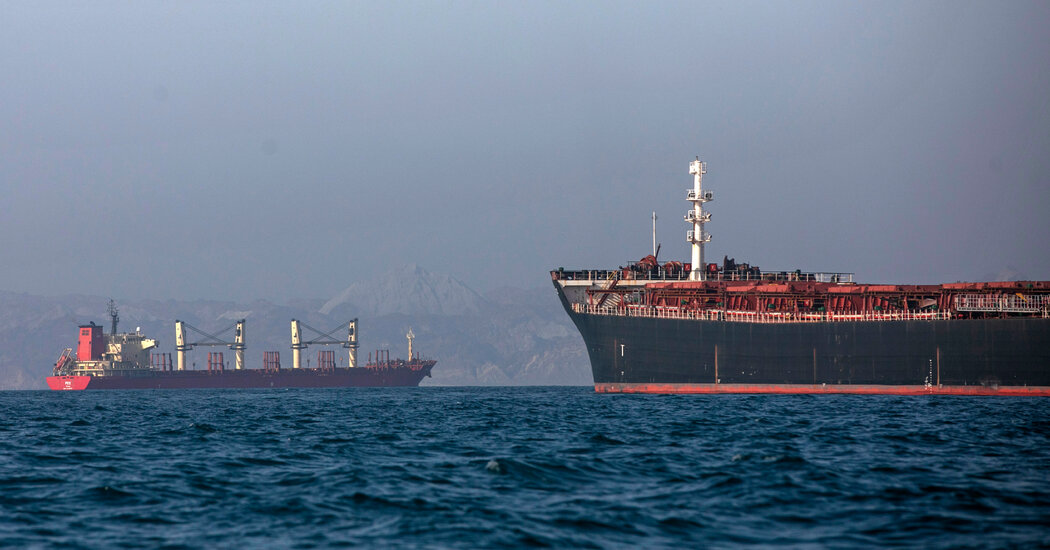
Deep within the sun-drenched, heavy waters of the Persian Gulf, a quiet human tragedy has been unfolding for nearly three months, largely obscured by the louder drums of military action and high-level geopolitical posturing. Approximately 20,000 seafarers—ordinary working-class men and women from countries across the globe, far from their homes and loved ones—remain stranded aboard nearly 1,500 massive commercial vessels, their lives and livelihoods frozen in an agonizing maritime standoff as the war involving Iran drags on. These crews spend their endless, anxious days under a blazing desert sky, surrounded by an eerie stillness where one-fifth of the world’s oil and liquefied natural gas once flowed seamlessly to power the global economy. This sudden paralysis is the direct result of a bold, unprecedented, and highly controversial maneuver by Tehran, which is aggressively attempting to formalize and monetize its physical control over the Strait of Hormuz. By proposing a mandatory transit fee for safe passage through this vital international artery, Iran is attempting to turn a natural geographic choke point into a state-run toll booth to fund its ambitions and pressure its adversaries. For the global shipping industry, and especially for the families of the stranded crews, this is not just an abstract regulatory debate; it is a distressing, terrifying escalation that transforms human lives and global commerce into political leverage. This provocative move has sent shockwaves through the maritime world, introducing a suffocating layer of daily uncertainty for international shipping companies that are desperately trying to navigate both a physical combat zone and a rapidly shifting, hostile legal landscape. What was once a routine, predictable journey through one of the planet’s most critical sea lanes has transformed into a high-stakes capture risk, leaving thousands of innocent, exhausted workers caught directly in the crosshairs of a prolonged confrontation between sovereign nations.
The very foundation of modern global trade and international cooperation relies on a simple, centuries-old, and universally respected promise: the absolute freedom of navigation through international waterways. Iran’s controversial proposal to levy steep fees on ships transiting the Strait of Hormuz directly threatens this cornerstone of international maritime law, drawing fierce, unified opposition from global watchdogs and legal authorities. Arsenio Dominguez, the secretary-general of the United Nations’ International Maritime Organization (IMO), made it abundantly clear in a recent public forum that a toll payment system in these natural waters is entirely unacceptable, firmly stating that his organization will not entertain any discussions that compromise the fundamental right of innocent passage. Under long-standing international conventions, sovereign nations are permitted to charge fees for engineered, man-made transitways like the Panama Canal or the Suez Canal, where substantial domestic resources, engineering marvels, and continuous labor are spent on dredging, lock maintenance, and safe passage operations. However, natural straits used for international navigation must, under international law, remain free, open, and unencumbered for all nations, guarded vigilantly against unilateral commercialization or state-level extortion. Industry analysts, including Michelle Wiese Bockmann from the maritime intelligence firm Windward, view Tehran’s sudden push for transit, security, and environmental fees as highly calculated political posturing aimed at gaining vital diplomatic leverage in its ongoing, high-stakes standoff with the United States. Yet, the implications of allowing such a dangerous precedent to stand are incredibly high; with over 11 billion tons of global trade moved by sea annually, eroding the principle of free transit in Hormuz could trigger a chaotic global domino effect, inviting contested claims, aggressive blockades, and extortionate negotiations over critical waters and choke points all over the world.
For the shipping companies desperately seeking a viable pathway to rescue their multi-million-dollar vessels and protect their stranded crews, Iran’s proposed billing solutions represent a perilous legal minefield. In an effort to bypass traditional financial networks and establish an alternative economic framework, Tehran recently introduced a program called “Hormuz Safe,” which invites shipping operators to pay for state-provided transit insurance using decentralized cryptocurrency, hoping to obscure these illicit transactions from Western regulators. This digital payment plan operates alongside a newly minted regulatory body, the Persian Gulf Strait Authority, which threatens to charge up to $2 million per vessel for safe passage through designated corridors, warning that deviation invites immediate military attack. Complying with these demands is a financial, ethical, and legal impossibility for most legitimate operators in the global shipping community. The United States Treasury Department, along with various European governments, has issued stern, urgent warnings that making any payments to Iranian entities—even under the guise of transit, environmental service, or navigation fees—would constitute a direct, severe violation of international sanctions. Consequently, global maritime insurers are flatly refusing to provide coverage to any vessels that engage with these Iranian schemes, leaving shipowners in an agonizing, seemingly impossible position. On one hand, they face intense moral pressure to free their captive crews and secure their assets; on the other, they face the immediate threat of severe Western legal penalties, complete blacklisting, and the loss of essential liability insurance, which would effectively destroy their commercial viability overnight, ensuring that most shipping firms choose to wait in agonizing limbo rather than pay the ransom.
While Iran aggressively attempts to project absolute authority on global paper and through digital airways, the tactical reality on the water tells a starkly different story of operational desperation and military frustration. Following military strikes by United States and Israeli forces in late February, Iran drastically restricted traffic through the strait, reducing the once-bustling daily flow of over 130 merchant ships to a mere trickle and causing global energy markets to spike in panic. In swift response, the United States military’s Central Command established a powerful maritime security operation, actively redirecting non-compliant traffic, disabling threat vessels, and policing the waters just outside the strait to isolate Iranian commerce. This robust counter-strategy has severely crippled Iran’s own ability to export its domestic crude oil, turning its bold bid for regional dominance into an economic chokehold for Tehran itself. According to maritime data tracking by Kpler, Iran’s primary oil export terminal at Kharg Island is now severely congested, with onshore and offshore storage facilities hovering at over 80 percent capacity, meaning the country will soon run completely out of physical space to store the oil it produces but cannot legally sell. Oscar Seikaly, the chief executive of NSI Insurance Group, notes that Iran’s claims of total control are largely an illusion designed for foreign consumption, since they struggle to secure their own territorial exports under the pressure of the U.S. naval presence. The only actors currently paying fees to Iran’s newly formed Strait Authority are a handful of “shadow fleet” operators linked to China and the United Arab Emirates, who operate on the fringes of the global maritime economy and are willing to take extreme risks to move illicit cargo under the cover of dark.
The true danger of Iran’s unilateral push to monetize the Strait of Hormuz lies in the highly contagious, toxic nature of geopolitical precedents in a fractured, increasingly multipolar world. If a nation can successfully extort the global shipping industry and international navies at one key geographic choke point, it invites resource-rich or strategically positioned governments elsewhere to contemplate similar revenue-generating maneuvers. This anxiety transitioned from a theoretical worry to a startling reality when Indonesia’s finance minister recently made brief, highly controversial public remarks suggesting the possibility of imposing tolls on the Strait of Malacca, a vital waterway bordered by Indonesia and Malaysia that connects the Indian Ocean to the South China Sea. Though the comment was quickly and vigorously retracted by Malaysian diplomats and other Indonesian officials anxious to prevent a major regional diplomatic crisis, the mere mention of such a policy sent shivers through the international trade community. The Strait of Malacca is the beating heart of East Asian trade, and the introduction of tolls there would throw global manufacturing supply chains into absolute disarray, driving up costs for everyday consumers worldwide. It highlighted just how fragile the invisible web of international maritime trust really is, showing that when one nation begins to chip away at the rules-based order, the temptation for others to weaponize their own geography grows exponentially. If the international community allows the open-ocean status of the Strait of Hormuz to be permanently compromised, the rules of global navigation will be rewritten by whoever possesses the biggest guns along the shore, replacing cooperative trade with a fragmented, hostile tribute system.
Ultimately, the high-stakes battle for control over the Strait of Hormuz serves as a poignant reminder that behind the dry language of international maritime law, the fluctuating price of crude oil, and the aggressive posturing of nation-states, there are real human beings bearing the heaviest burden. The 20,000 seafarers currently trapped in the sweltering heat of the Persian Gulf are not pawns in a geopolitical chess game; they are parents, spouses, and children who boarded their ships expecting a standard, honorable tour of duty, only to find themselves hostage to a dangerous state-sponsored standoff. Their ongoing plight demands a unified, compassionate, and resolute response from the global community, one that goes beyond military containment to address the structural crises of international cooperation and human security. The refusal of the International Maritime Organization and world leaders to legitimize Iran’s illegal toll system is a crucial step in defending the global commons, but a lasting diplomatic resolution must also secure the immediate safe release of these stranded workers and restore a sense of predictable peace to the seas. The world’s oceans have long served as the great connectors of human civilization, sustained by a fragile, shared understanding that these waters belong to everyone and to no one all at once. Safeguarding this vital principle is not merely about protecting corporate profits or maintaining economic stability; it is about honoring the lives of those who brave the high seas every day, ensuring that the ancient, sacred promise of safe, free, and unhindered passage remains unbroken for generations to come.