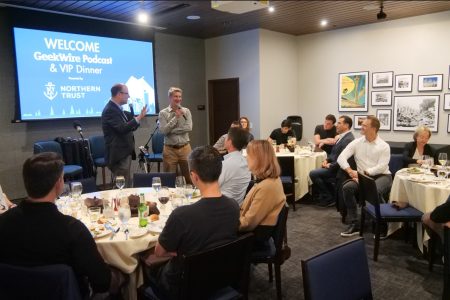






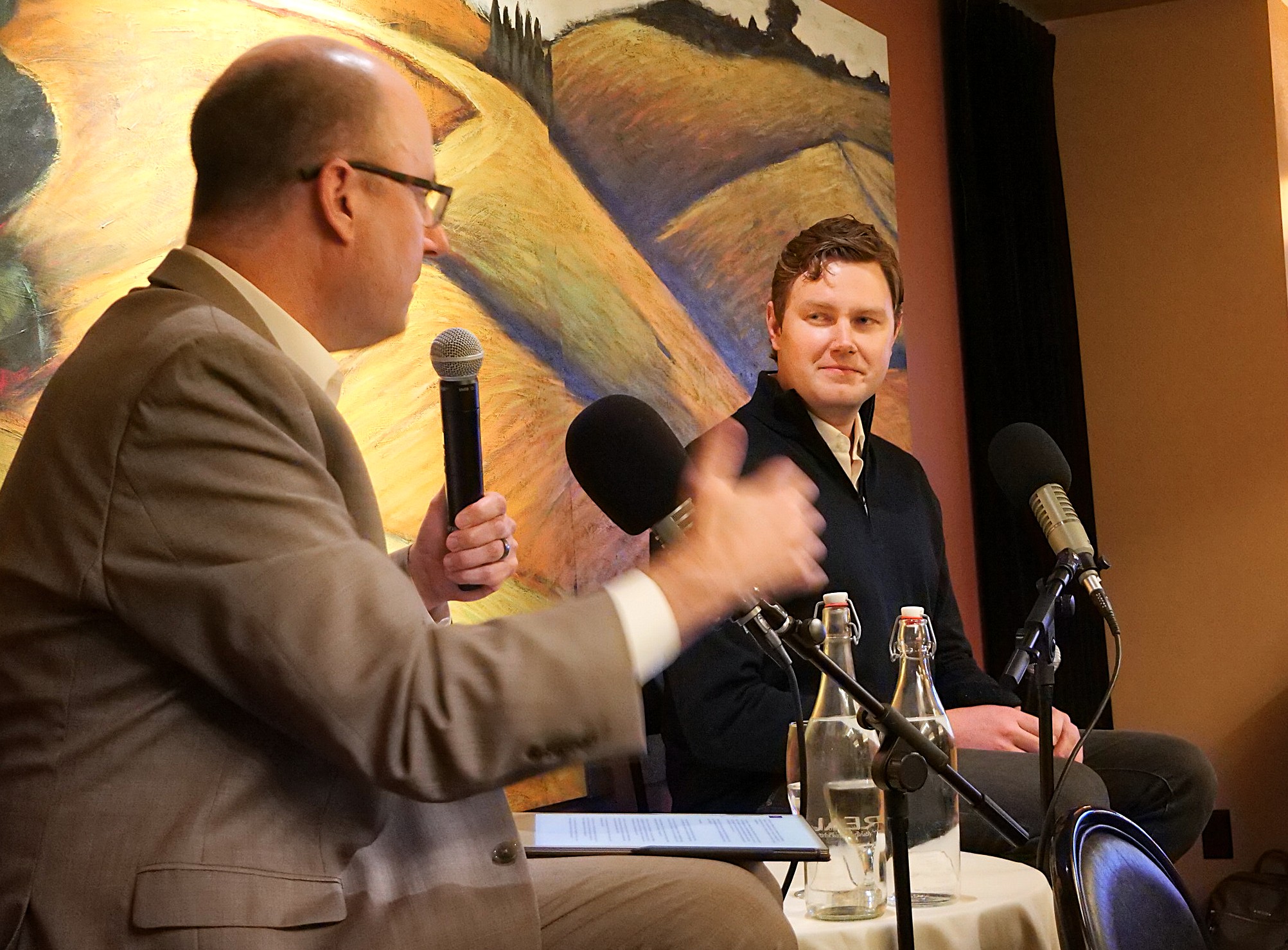
During a lively recording of the GeekWire Podcast at El Gaucho in Bellevue, Washington, host Todd Bishop sat down with author, strategist, and tech visionary Brian Evergreen to dissect the modern corporate frenzy surrounding artificial intelligence. The dinner event, titled “Agents of Transformation” and presented by Accenture, served as the perfect backdrop for a conversation that challenged the very foundation of how businesses currently view technological progress. Evergreen opened the discussion with a remarkably sharp and disarming analogy, asking the audience to imagine a contractor showing up at their front door holding a hand-saw and enthusiastically declaring, “Let’s walk through your house and see what we can cut down to make it better.” It is an absurd image, yet it perfectly mirrors how the vast majority of search committees, executives, and boardrooms are approaching the AI revolution today. Rather than starting with a clear, architecturally sound blueprint of what they want their organization to become, leaders are walking down their corporate corridors holding shiny new AI algorithms, frantically looking for something—anything—to apply them to. This tool-first hysteria is born out of a collective fear of missing out, but it ultimately distracts organizations from their actual purpose, leading to expensive, fragmented implementations that fail to deliver sustainable value or meaningful human connection.
To understand why this approach is so fundamentally flawed, one must look at Evergreen’s extensive pedigree. Having served as the U.S. AI strategy lead at Microsoft, and having held pivotal senior technology roles at both Accenture and Amazon Web Services, Evergreen has spent nearly a decade in the trenches helping Fortune 500 executives build their digital future. Throughout his journey, he repeatedly observed a disappointing pattern: companies would identify a minor operational headache, pick an AI tool to solve it, chase the seductive allure of “low-hanging fruit,” and then wonder why their massive capital investment yielded such underwhelming, disjointed results. In response to this systemic failure of imagination, Evergreen authored his landmark book, Autonomous Transformation, and founded his consulting firm, The Future Solving Company, to pioneer a business philosophy he calls “future solving.” The core tenet of future solving is that a company does not need an “AI strategy” any more than a builder needs a “hammer strategy.” Instead, leaders must cultivate a deep, value-first vision of the future they wish to establish, and only then evaluate whether AI is the appropriate instrument to build it. Evergreen famously notes that while engineered use cases are the best friend of tactical software execution, they are the absolute enemy of cohesive enterprise strategy; focusing solely on isolated, hyper-specific use cases blinds organizations to the broader, holistic transformations necessary for survival in a digital age.
This strategic myopia becomes painfully obvious when companies attempt to position artificial intelligence as the primary storefront of their brand, a mistake Evergreen urges organizations to avoid at all costs. Instead of thrusting cold, algorithmic interfaces directly in front of the customer, he advocates for an architectural model where empathetic humans remain the primary interface, while AI functions as a quiet, powerful engine of “middleware” working diligently behind the scenes. To illustrate the catastrophic risks of ignoring this advice, Evergreen pointed to the recent cautionary tale of fintech giant Klarna, which made global headlines by laying off hundreds of its customer support representatives and replacing them with conversational AI agents, only to find itself in a desperate, chaotic scramble to rebuild its human team when the limitations of automated empathy became undeniable. Human beings inherently crave genuine, nuanced, and understanding connection, especially when navigating complex disputes or financial decisions. When a brand replaces human relationships with automated scripts, they strip away the emotional resonance that builds customer loyalty. By keeping AI in the background, organizations can instantly feed human agents the critical data, context, and creative pathways they need to resolve customer issues with warmth and precision, thereby elevating the customer experience rather than sterilizing it.
To successfully execute this middleware model, organizations must learn to systematically decouple repetitive tasks from actual professional roles. As Evergreen explained during the podcast, a true career or job is not simply a arbitrary checklist of mechanical actions, but rather a profound system of accountability for a specific, qualitative outcome. A software algorithm can draft letters, analyze financial statements, organize schedules, or translate languages with incredible speed, but because it lacks consciousness, ethics, and a soul, it can never shoulder the heavy burden of consequence when things go wrong. Only a human being can hold the accountability required to steer a project, nurture a key client relationship, or make an ethical judgment call in a crisis. When executive leadership mistakenly treats jobs merely as collections of tasks to be automated out of existence, they inadvertently gut the organizational structure of its intellectual curiosity and critical thinking. The far more lucrative and human approach is to strip away the administrative and cognitive clutter using AI, liberating valuable employees to leverage their unique human judgment, emotional intelligence, and collaborative powers to drive unprecedented creativity and organizational health.
This ethos of taking initiative and reshaping one’s own role is something Evergreen understands on a deeply personal level, as his own career path serves as a masterclass in the power of high agency. Long before he was advising tech giants and global executives, Evergreen entered the corporate ladder at Accenture as a low-level, temporary data entry contractor. Rather than passively accepting the monotonous bounds of his daily data-entry grind, he possessed the self-starting curiosity to learn SharePoint after hours, using it to completely automate his team’s tedious manual workflows and eliminate the very bottlenecks that defined his daily routine. By demonstrating this high-agency mindset—the refusal to wait for permission or to be constrained by a job description—he quickly transformed his temporary assignment into a permanent, highly sought-after strategic consulting role at the firm. Evergreen’s journey is a powerful testament to the idea that the future of work belongs to those who actively seek out ways to create value through self-education and proactive problem-solving. This is precisely the kind of energetic internal culture that modern companies must foster; rather than restricting innovation to top-down mandates or isolated R&D labs, they must empower and reward high agency at every single tier of their organizational hierarchy, allowing the brightest ideas to bubble up from the frontline workers who interact with the daily realities of the business.
Ultimately, the ultimate promise of the artificial intelligence era is not about finding ways to do existing things slightly faster or cheaper, but about imagining and creating entirely new paradigms of value that were previously impossible. Evergreen challenged leaders to look beyond basic operational cost-cutting and to think about systemic transformation, pointing to Netflix’s historic transition from a convenient DVD-mailing service to a global streaming titan as the gold standard of visionary evolution. If Netflix had merely focused on using technology to mail DVDs more efficiently, they would have eventually optimized themselves straight into irrelevance. True leadership requires the courage to formulate a vision so compelling, and so anchored in future human needs, that it generates the massive momentum required to overcome deep-seated organizational inertia and cultural resistance. Without this guiding North Star, companies will remain perpetually reactive, bouncing from one technological trend to the next without ever making a lasting strategic impact. By prioritizing people-first values, cultivating widespread individual agency, and treating technology as a supportive partner rather than a replacement for human connection, organizations can confidently step into an autonomous future and build a world that is not only highly efficient, but deeply human.