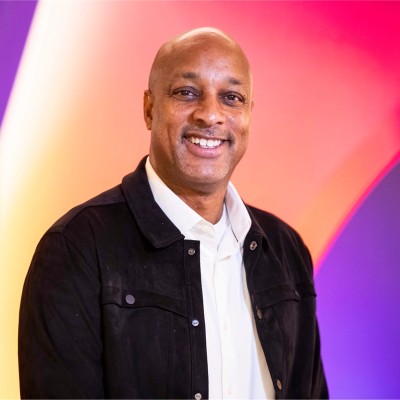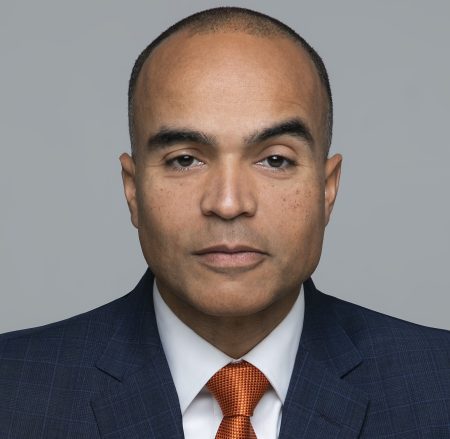







It was a telling scene on a late spring morning in Bellevue, Washington, where a group of Seattle’s most influential civic and business leaders gathered not in their own downtown boardrooms, but across the waters of Lake Washington to diagnose the economic anxieties of the Emerald City. Hosted by the Bellevue Chamber on May 22, 2026, the Seattle-focused luncheon felt like a physical manifestation of a shifting regional dynamic. Historically, Seattle has stood as the undisputed powerhouse of the Pacific Northwest, a cultural and corporate titan whose gravity pulled in talent from across the globe. Yet, as Bellevue’s sleek, modern skyline continues to expand, local leaders like Seattle Metro Chamber CEO Joe Nguyen, West Coast Commercial Realty President Tiffini Connell, and Downtown Seattle Association President Jon Scholes sat before an Eastside audience to discuss how local governance and fiscal policies are disrupting Seattle’s long-term economic momentum. It was a panel marked by both candid self-reflection and a polite, albeit competitive, tension. Jon Scholes captured this shift perfectly, joking to the Bellevue crowd that he certainly wasn’t invited to speak back in 2017 or 2018, a period when Seattle’s sky was punctuated by a record-breaking seventy-nine construction cranes and Amazon jobs seemed to rain down on the city’s urban core. This lighthearted banter, however, could not entirely mask the underlying concern that Seattle is actively yielding its hard-earned competitive edge to its neighbors. For decades, the two municipalities have locked horns in a quiet war over the tech industry’s crown jewels, but today, that rivalry feels less like a healthy corporate competition and more like a warning sign of a city struggling to manage its own prosperity. The conversation laid bare a growing, regional consensus that while Seattle’s physical and intellectual foundations remain incredibly robust, its political decisions are beginning to exact a heavy, observable toll on its economic health and community morale.
At the heart of the discussion was a fundamental paradox: how a city blessed with so many natural advantages can find itself in such a state of regulatory and economic self-harm. Joe Nguyen pointed out that Seattle has already accomplished what most metropolitan areas can only dream of—the “hard part,” as he described it, is entirely secure. The city boasts a world-class, highly educated workforce, cutting-edge research institutions like the University of Washington, a thriving deep-water port, extensive public transit infrastructure, and resilient global supply chains. Furthermore, it serves as the birthplace and home anchor for some of the most influential corporations in human history. Yet, the panelists warned that this extraordinary foundation is being actively undermined by a series of aggressive tax policies that threaten to choke off future growth and drive valuable employment opportunities elsewhere. Specifically, they targeted Seattle’s controversial JumpStart tax, which heavily taxes payrolls at the city’s largest employers, alongside a recently restructured local business and occupation tax that increases the burden on larger firms, and the state’s new capital gains tax targeting high earners. Nguyen, who previously served as a Democratic state senator, cautioned that targeting an incredibly narrow, select group of businesses and citizens is a dangerously unstable fiscal strategy. By turning unique corporate anchors into easy funding sources for volatile public expenditures, the city not only alienates the engines of its economy but also creates an unreliable revenue stream that is highly susceptible to broader market downturns, ultimately hurting the vulnerable civic programs those taxes were designed to protect. When public policies treat major employers as endless cash reserves rather than collaborative community partners, a toxic environment of friction develops. This approach forces companies to evaluate alternative hubs, like Bellevue, where municipal governments adopt a more collaborative and inviting posture toward job creation and corporate wellness.
The real-world consequences of these fiscal experiments are no longer hypothetical; they are written in stark, worrying data points and quiet downtown corridors. Jon Scholes delivered a sobering wake-up call to the room, noting that since the implementation of the JumpStart tax in 2021, downtown Seattle has experienced a devastating loss of nearly 40,000 jobs alongside a staggering ten-billion-dollar decline in commercial office values. These are not merely abstract figures on a municipal balance sheet; they represent a profound disruption in the daily lives of thousands of workers, business owners, and residents. To walk through the downtown core is to feel the tangible absence of the foot traffic that once sustained keeping family-owned restaurants, dry cleaners, and retail boutiques alive. While Seattle struggles with empty cubicles and boarded-up retail storefronts, Bellevue has capitalized on its reputation as a safe, clean, and highly predictable business haven. Tech giant Amazon, despite its deep-seated history in Seattle, has steadily redirected a massive portion of its regional growth toward its Eastside campus, quietly voting with its feet and its capital. The panel made it clear that when a municipality places disproportionate financial burdens on its commercial core, it systematically dismantles the delicate economic ecosystem that supports working-class service employees, transit networks, and small business owners who rely on busy, vibrant streets to survive. The financial vacuum created by lost office valuations also sets off a domino effect of tax reassessments, shifting the financial burden of funding city operations onto residential property owners, who must make up the deficit. By ignoring the interdependence of large employers and local economies, policymakers have inadvertently degraded the city’s vibrancy, transforming once-buzzing commercial blocks into underutilized monuments to outdated fiscal assumptions, prompting an urgent need for swift, structural course correction.
While the panel centered much of its critique on local taxation, they also acknowledged that Seattle is navigating a complex web of broader, global forces that are actively rewriting the rules of the modern workplace. We are currently living through a period of historic tech industry restructuring, where companies are aggressively pulling back on corporate headcount to offset the monumental capital investments required to build out artificial intelligence infrastructure and power-hungry data centers. Simultaneously, the stubborn persistence of remote and hybrid work models has permanently altered the relationship between employees and the traditional office. Humanizing this shift means recognizing the anxiety of tech workers facing layoffs, the mid-career professionals navigating sudden industry pivots, and the younger generation of workers trying to build professional networks in half-empty buildings. However, this disruption has also triggered an intriguing demographic evolution within Seattle’s core. While commercial office buildings remain quietly vacant, downtown Seattle’s residential population has actually climbed to historic, unprecedented highs. This remarkable resilience suggests that while people may no longer feel compelled to commute to Seattle for work, they still deeply desire to live there, attracted by its natural beauty, cultural wealth, and urban lifestyle. This demographic pivot presents both an incredible opportunity and a logistical challenge. As families, young professionals, and retirees move into high-rises once surrounded by corporate commuters, the demand for parks, grocery stores, early childhood education, and reliable neighborhood safety has exploded. The city’s identity is shifting from a centralized corporate playground to a complex, multi-dimensional living space, requiring a complete reimagination of public services and real estate development. The standard playbook for urban success has been thrown out, and Seattle finds itself at a historical crossroads, forced to adapt its physical spaces to accommodate how human beings actually want to live, interact, and build communities in a post-pandemic world.
Despite the stark warnings and current challenges, the tone of the Bellevue luncheon was far from defeatist; indeed, it was grounded in a pragmatic optimism about Seattle’s capacity for revitalization and self-correction. The participating business leaders emphasized that they are actively engaged in constructive, ongoing dialogues with Seattle officials, sensing a genuine, newfound willingness within city hall to mend fractured relationships with major employers and address systemic administrative inefficiencies. They expressed hope that local government can begin to emulate the fiscal discipline and collaborative spirit seen in other major metropolitan areas that successfully recovered from similar economic downturns. This collaborative effort is already yielding noticeable, human-centric victories on the ground. Panelists pointed with pride to visible improvements in public safety, the ongoing transformation and revitalization of the central waterfront, and the expansion of region-connecting transit lines that make the city more navigable for residents and visitors alike. To truly humanize the city’s recovery, these leaders are focusing on the tangible, everyday experiences of the population—ensuring that a family can comfortably walk along the new waterfront park, that a commuter feels safe riding the light rail network, and that a small business owner feels supported rather than targeted by city policies. The bridging of the divide between the business sector and public officials represents a cultural shift away from the polarizing rhetoric that characterized the city’s politics for nearly a decade. The current willingness of civic leaders to sit down with corporate partners signals a growing realization that a healthy city requires a symbiotic relationship between public infrastructure and private enterprise. By focusing on practical results over political posturing, Seattle has a realistic path toward restoring its status as a reliable, functional, and deeply compassionate metropole that works for everyone.
Looking immediately ahead, a monumental, high-stakes test of Seattle’s physical and cultural transformation is rapidly approaching as the city prepares to serve as a host for the prestigious 2026 FIFA World Cup, with matches scheduled to kick off next month. Tiffini Connell brilliantly framed this global sporting event through the lens of a massive, high-stakes commercial “pop-up shop,” explaining that pop-ups have a unique ability to define and communicate the long-term narrative of a specific location to the rest of the world. The World Cup represents a fleeting, intensely focused window of time for Seattle to showcase its raw operational capabilities, its cultural warmth, and its readiness to reclaim the global stage. The central question lingering in the minds of residents and business leaders alike is whether the city can rise to this occasion: can its public transit systems seamlessly transport hundreds of thousands of international visitors through its hilly corridors, can its security forces effectively manage the complex public safety concerns that still linger in the urban core, and can its community spaces project an image of a vibrant, clean, and welcoming world-class metropolis? The success of this massive undertaking will be felt not just in ticket sales or hotel occupancy rates, but in the pride of the local bus drivers, the success of the street vendors, and the lasting impressions carried home by visitors from every corner of the globe. If Seattle can successfully execute this monumental event, it will do more than host sports matches; it will provide definitive, undeniable proof that the city has survived its recent trials, learned from its policy missteps, and is actively building a resilient, human-centered future capable of standing tall next to any city in the world, including its ambitious neighbor across the lake.