




In an era dominated by hyper-targeted online advertisements, sterile corporate messaging, and crowded convention center displays, a remarkably bold and unexpected marketing bridge is being built between the high-tech corridors of the Pacific Northwest and the thunderous, rain-slicked terraces of South London. Temporal, a developer tools startup based in Bellevue, Washington, and boasting a valuation of $5 billion, has announced a historic partnership to become the official front-of-shirt sponsor for Crystal Palace Football Club, starting in the 2026/27 season. At first glance, this union seems like an eccentric anomaly of modern sports marketing: a seven-year-old, highly specialized business-to-business software company aligning its destiny with a deeply rooted, 164-year-old English Premier League emblem. After all, the typical global audience for top-tier British soccer consists of millions of everyday fans, whereas Temporal’s primary users are the specialized software developers who build the invisible, behind-the-scenes scaffolding of our modern digital lives. Yet, this striking contrast is exactly why the arrangement is a stroke of marketing genius. As Temporal’s co-founder and CEO Samar Abbas noted, the traditional playbook for developer outreach is inherently limited, consistently failing to capture the imaginations of the millions of engineers who have not yet had a direct, professional reason to discover their platform. By placing its name proudly across the chests of the famous red-and-blue jerseys worn by Crystal Palace’s athletes in the most-watched sports league on Earth, Temporal is leaping out of the niche confines of tech forums and directly into the global cultural consciousness. It is a deeply humanized, ambitious attempt to spark universal curiosity, proving that behind the cold code driving the world’s most powerful applications, there is a pulse, a community, and a shared love for the beautiful game that unites people across continents.
The context surrounding this groundbreaking sponsorship highlights a dramatic, long-awaited paradigm shift in the commercial and ethical dynamics of European football. Historically, the front of Premier League shirts has been dominated by multi-national airlines, telecommunications giants, and, more recently, a highly controversial wave of international digital gambling and betting companies. In fact, Crystal Palace’s previous partnership with Asian betting firm Net88 represented the tail end of this hyper-commercialized betting era, securing around $13 million (£10 million) per season—a modest sum compared to the massive $80 million annual arrangements of elite clubs, but a lifeline for a proud, mid-table side fighting to maintain its competitive edge. However, the Premier League’s landscape is transforming: starting in the 2026/27 season, a self-imposed collective ban on front-of-shirt gambling sponsorships will take effect to address widespread social concerns regarding the continuous exposure of betting logos to vulnerable audiences, including young children. This ethical regulatory shift has suddenly liberated upwards of $125 million in combined annual sponsorship value across the league, forcing clubs to cast a wider net and actively court a new generation of partners. The open space on Palace’s kit has created a historic vacancy for a developer infrastructure company to step onto the grandest stage in sports. Replacing promotional betting firms with a platform dedicated to software innovation represents a massive cultural victory for fans who have grown increasingly weary of predatory advertising. It replaces an industry built on the volatility of risk with one built on structural reliability, exchanging the stress of gambling for a celebration of the builders who design our digital world.
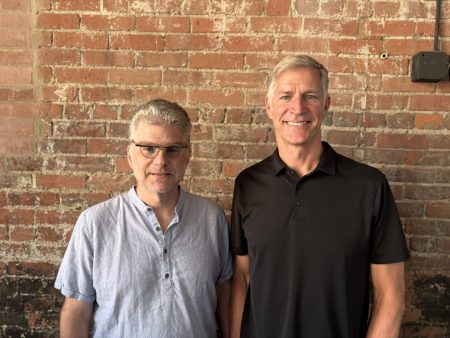
To fully appreciate the emotional core of this partnership, one must understand the human journey behind Temporal and the technological breakthroughs that have fueled its meteoric rise. Founded in 2019 by Samar Abbas and Maxim Fateev—both seasoned veterans of tech giants Amazon, Microsoft, and Uber—Temporal was created to address a simple yet incredibly aggravating problem: software systems are notoriously fragile and prone to catastrophic failure when complex, multi-step processes are interrupted. Whether a computer crashes, an internet connection drops, or a cloud server suddenly goes offline, typical digital workflows can easily break, leaving ordinary users stranded with failed transactions, lost data, and disrupted services. Temporal’s solution is an open-source platform and cloud service designed to achieve what they call “durable execution”—a concept that essentially means writing code in a way that automatically remembers its exact state, allowing processes to seamlessly pause, resume, and recover gracefully from any failure without losing progress. This promise of unwavering reliability has recently been thrust into hyper-drive due to the rapid, global expansion of artificial intelligence. As businesses rush to deploy complex AI agents that must execute sophisticated tasks over extended periods, the demand for Temporal’s reliable digital bedrock has skyrocketed, enabling the company to raise $300 million earlier this year, experience a staggering 380% year-over-year revenue growth, and power giants like Netflix, JPMorgan, and OpenAI. Deep down, the engineers at Temporal understand that their software does not just handle cold, abstract data; it supports the vital systems that humans rely on every single day to buy groceries, stream movies, and manage their lives.
If Temporal represents the cutting edge of digital perseverance, Crystal Palace Football Club represents the absolute pinnacle of human and athletic endurance in the physical world. Nestled in the heart of South London, Palace is a club with roots tracing all the way back to 1861, making it one of the oldest and most historically rich institutions in the history of international sports. For over a century, their spiritual home has been Selhurst Park, an atmospheric, 25,000-seat stadium in the Borough of Croydon that has echoed with the passionate, loyal roars of local supporters since 1924. Yet, this historic club nearly ceased to exist entirely during a dark period in 2010 when, plagued by crippling financial distress, the club was placed into administration. Facing a localized tragedy, a consortium of lifelong supporters led by current chairman Steve Parish had just 24 hours to find a buyer or watch their beloved club be completely liquidated and erased from history. They succeeded in saving their club, sparking one of English football’s most inspiring, heart-stopping comeback stories of the modern era. What followed was a steady, defiant climb up the ranks: achieving promotion to the Premier League in 2013, solidifying their status against much wealthier opponents, capturing a historic first-ever FA Cup title in 2025, and remarkably charging all the way to a European stage, preparing for the UEFA Conference League final in Leipzig, Germany, against Spain’s Rayo Vallecano. This miraculous journey from the brink of total annihilation to the heights of European glory is a powerful testament to human resilience, loyalty, and grit. It is a narrative of survival that beautifully mirrors Temporal’s own mission of creating systems that can withstand any storm, survive any crash, and ultimately emerge victorious.
Crucially, this landmark agreement is far more than a superficial brand-alignment campaign or a simple logo plastered onto polyester uniforms for television exposure; it is a collaborative, highly technical integration that directly impacts the daily lives of the fans and the operations of the club. As part of this deal, Crystal Palace is taking the monumental step of becoming a customer of Temporal Cloud themselves. The Eagles are currently embarking on an ambitious, multi-million-dollar redevelopment and modernization of Selhurst Park, seeking to transform their home into a state-of-the-art sports and entertainment venue while staying true to its classic South London character. To support this physical evolution, the club must completely overhaul its digital infrastructure, trusting Temporal to orchestrate the critical workflows behind their modern ticketing systems, e-commerce stores, secure payment processing, and overall matchday fan experiences. This means that when thousands of fans simultaneously attempt to purchase physical tickets to a crucial local derby, order merchandise online, or access digital features on their smartphones inside a packed, noisy stadium, Temporal’s code operates continuously in the background to ensure every transaction is processed smoothly. This genuine operational integration is a direct reflection of Temporal’s organizational philosophy, spearheaded by Chief Marketing Officer Clair Byrd. In addressing the fiercely protective, traditional fanbase of Crystal Palace, Byrd openly acknowledged the sacred weight of the iconic shirt to the local South London community, noting that the company does not take this association lightly and understands that respect, trust, and a true sense of belonging are values that must be patiently earned over time, rather than bought with a corporate check.
Looking at the broader horizon, this unique partnership between a Bellevue software pioneer and a legendary South London club is a shining example of how the Pacific Northwest’s expanding tech ecosystem is weaving itself into the beautiful game. This cross-continental intersection comes at a culturally perfect time, as Seattle prepares to serve as one of the key host cities for the historic 2026 FIFA World Cup, igniting an unprecedented level of soccer passion and engagement throughout the entire region. Tech leaders and innovators are realizing that soccer represents a universally understood, borderless language that brings diverse groups of people together in a way that traditional technology marketing simply cannot achieve. Temporal is not alone in recognizing this powerful cultural conduit; other notable Northwest tech trailblazers are also investing heavily in the rich tapestry of English football. Shivaas Gulati, the co-founder of digital remittance giant Remitly and the innovative new startup Arkero, recently joined the ownership consortium of Essex-based Southend United with the deliberate goal of deploying state-of-the-art AI and proprietary software to revolutionize and optimize the fifth-tier club’s daily operations. This emerging trend represents a beautiful, highly humanized evolution of the relationship between humanity and technology, proving that software engineering is no longer confined to isolated offices in Western Washington, but is instead deeply integrated with our passions, our hobbies, and our communities. As Temporal prepares to see its name step onto the pitch for the 2026/27 Premier League season, the deal stands as a monument to what can happen when cutting-edge logic meets raw, human emotion, promising to write a thrilling new chapter where the invisible reliability of code helps elevate the very visible magic of sport.