






I’ve always been a bit of a dinosaur when it comes to tech—writing code since way back when, before the guys behind today’s fancy AI tools were even a twinkle in their parents’ eyes. So, when I decided to give these new “vibe coding” setups a whirl, like Lovable and Claude code, I figured it’d be a breeze. You know, just chat with an AI, tell it what I want, and poof—project done. Boy, was I wrong. Instead, I found myself knee-deep in a mess of technical hurdles that felt like a cruel throwback to the bad old days of computing. It wasn’t about the code itself; it was all this setup nonsense: PATH variables, secret keys, environment files—you name it. Look, if someone as grizzled as me is stumbling over this, imagine what it’s like for everyday folks. That’s when it hit me: vibe coding isn’t broken because of the users. It’s got a massive usability problem and a safety hole that can’t be fixed separately. You need both—ease of use wrapped in smart protections—or it’s just not going to work for the masses.
Let me paint the picture. Andrej Karpathy, that smart guy over at xAI, came up with the term “vibe coding” in a viral tweet back in February 2025. He described it as this magical way where you just “fully give in to the vibes, embrace exponentials, and forget that the code even exists.” Sounds dreamy, right? Like coding without actually coding—more like wishing stuff into existence. But in practice, it’s more like banging your head against a wall of frustration. Take Claude code: wouldn’t run on my laptop till I fiddled with PATH stuff for ages. If you’re clueless about what a PATH variable even is (and honestly, why should you be?), that’s the issue right there. Then I tried Lovable for whipping up a quick website, and bam—immediately hit with questions about secrets and keys. I get it; I know how to handle that stuff safely. But what about a small business owner trying to build an inventory tracker for their store? Or my mother-in-law, who’s sharp but not a tech wizard? They shouldn’t have to become sysadmins overnight.
Vibe coding desperately needs its “Windows moment”—that breakthrough where complex tech gets buried under a slick, intuitive interface so the inner workings fade away. Think back to the 80s: personal computers were these cryptic beasts where you’d peck commands into a DOS prompt like some secret society ritual. Then along came Windows—and bam! Suddenly, anyone could click and point. But hold on, that ease brought viruses galore, right? Vibe coding’s in the same boat: we need the smooth entry without the potholes. Today, newcomers dive into a swamp of nerd jargon within the first minutes of trying to make a simple site. Terms like secret keys, API tokens, environment variables, .env files, shells, terminals, command lines, CLIs, PATHs, localhost, ports, 127.0.0.1, repos, clones, commits, pushes, Node, npm, dependencies, runtimes, builds, IDEs, deploys, and production environments—they’re all paraded out at once. It’s like being asked to order lunch in ancient Sumerian before you can even shake hands. None of it touches on your actual project. Beginners are learning a whole new language before their first “Hello World.” And the pros? Even investors like Justine Moore from Andreessen Horowitz admit a 50-50 success rate on projects, spending hours screenshotting errors and begging AI for fixes. If the folks funding this tech are squinting and struggling, what hope for everyone else?
The stats don’t lie—it backs up the frustration. Stack Overflow’s big 2025 survey of over 49,000 devs? 77% said vibe coding ain’t part of their daily grind, even though these are the people it should click for right out of the gate. And for the real targets—the non-pros—it’s even worse. Bubble, that visual development buddy with a stake in the game, polled 793 folks who’ve dabbled in both visual tools and vibe coding. Guess what? 90.6% stuck with the old-school visual stuff, while only 25.6% hung around with vibe coding. As Justine put it, right now it’s like watching the superbowl on TV—you’re excited, but you’re not in the game. It’s a spectator sport for most of America, locked behind glass. The vibe companies get this, though. They’re hustling. Replit’s got this neat one-click deploy where you hit “publish” and your app pops up on a live URL—no command line gymnastics, no Node woes. That’s a taste of that Windows vibe. But security? Still on you, buddy. The next wave needs to flip that script, handling creds invisibly and setting sensible guardrails from the jump.
So, what’s the ideal on-ramp look like? Total zero setup. Nothing to download or tweak—no massive installs. Platform manages secretive bits like keys in the background; users never touch ’em. No separate deploy circus; finish your thing, and it just lives at a URL. Built-in smart security—not an afterthought you opt into but standard issue, because without it, you’re inviting disasters. This ain’t cakewalk stuff, mind you. Masking all that machinery means tackling tough nuts like credential juggling, sandboxed runs, and auto-deploys—real engineering feats. But hey, that’s startup gold, where innovation thrives. Justine nailed it in her piece: every Unix command, like Matt Rickard said ages ago, morphs into a big startup someday. Squarespace turned website building into a snap for millions. Canva democratized design. The on-ramp missing here? Whoever nails vibe coding’s version will unleash something epic, letting folks whip up apps casually in their downtime instead of turning it into a marathon of patience.
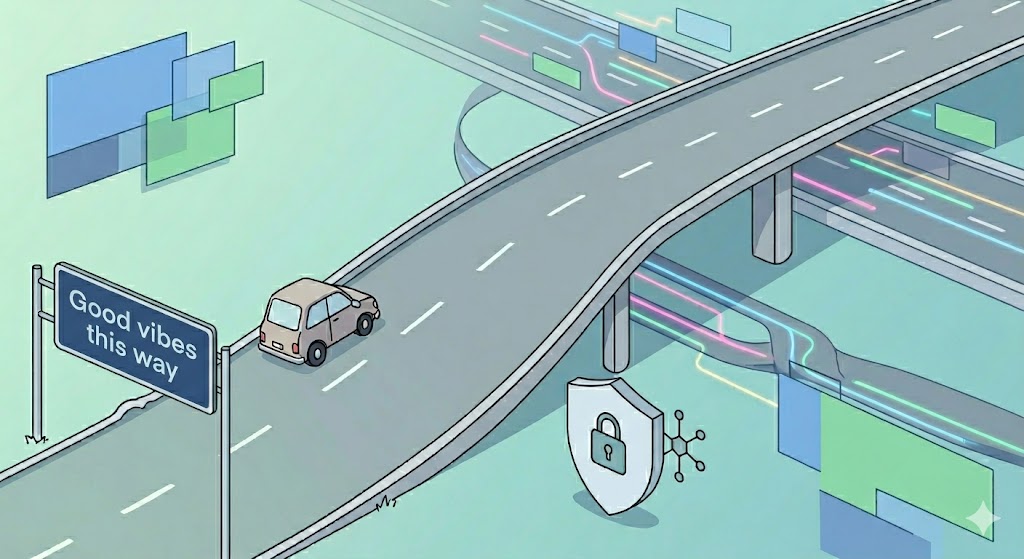
But let’s not kid ourselves—an on-ramp alone isn’t the endgame. It just lets you hop in the car; it doesn’t hand over the keys or teach safe driving. As more non-coders start shipping their homebrew creations, accidents are inevitable—and some could get ugly. Look at The Tea App, that date-safety tool for women, mostly vibe-coded by its makers. They threw 72,000 driver’s license pics into a database that was basically open like a park bench—no locks. Not evil geniuses, just clueless on cybersecurity. Folks like that need protection baked right in. Future platforms should flat-out block shipping an app with a gaping security flaw—like a modern car stopping you from driving without the brakes on. For smaller goof-ups, like leaving code unsecured, it should nag you till you fix it, like a seatbelt beep. The true Windows moment for vibe coding? Not just the entry point, but an entry point lathered in baked-in best practices. Only then will it transcend from niche tool to everyday superpower, safe for all hands. I’ve seen tech evolve from punch cards to chatbots, and this feels like the cusp of something revolutionary—if we get the vibe and the vigilance right together. Read more of my musings on AI over at GeekWire; opinions are mine, not the house.
There’s something deeply personal about watching tech that should empower everyone instead trip up the very people it aims to help—especially in a world where AI promises to level the playing field. I remember teaching my wife how to use a computer back when desktops were clunky beasts; she nailed email but coding? Forget it. Now, with vibe coding, I thought that barrier was crumbling, but nope—it’s rebuilding itself with new walls. Take that first try with Lovable: the platform promises ease, yet it’s asking for API secrets right off the bat. I handled it because I’ve got the scars of a thousand debug sessions, but for a café owner wanting a loyalty app? They’d bail. Or picture my neighbor, a retired teacher, dreaming of a community newsletter site. She’d get buried under jargon faster than a snowstorm hits. It’s not about dumbing down code; it’s about lifting the curtain so ideas flow free. Frameworks like Node and npm are powerful,sure, but why parade them as gatekeepers? Git repos, CLIs they’re fine for devs, but for the rest, they’re noise. We need magic—tell the AI your vision, refine with prompts, and watch it assemble. Error? AI clarifies in plain speak, not technobabble.
Data doesn’t sugarcoat this: those Stack Overflow figures hit hard. Pros opting out? Tells you the tools miss the mark even for experts. Bubble’s survey? Stark evidence that visual drag-and-drop trumps vibe despite the hype. Justine’s half-win rate resonates because I’ve been there, interrogating Claude with error logs late into nights. But here’s the hope spark: Replit’s deploy button feels like progress, a hint of that seamless era. Imagine extending that—no more localhost hassles, no port juggling, no .env trips. Platforms that auto-manage tokens, sandbox code to prevent mayhem, and push live securely. It’s ambitious, requiring breakthroughs in AI orchestration and infra, but feasible—startups eat hard problems for breakfast. Think Stripe for payments or AWS for cloud; someone could remix Unix’s legacy into vibe’s Canva. Picture fleets of apps from everyday dreamers: a kid’s game from a parent’s prompt, a volunteer group’s tracker from a teacher’s chat.
Yet safety’s the wildcard we can’t afford to ignore. That Tea app fiasco? A cautionary tale—good intent, bad execution. Storing sensitive data sans encryption isn’t malice; it’s ignorance wrapped in excitement. As vibe coding expands, so will mishaps—data breaches from unchecked deploys, bugs from hasty commits. Platforms must evolve beyond assistance to guardianship: scan for vulnerabilities, enforce HTTPS, warn on exposed endpoints. Like auto-correct for code, or a copilot that brakes for hazards. Remember the early web viruses post-Windows? We countered with firewalls and AVs. Here, build-in audits—chime for unpatched deps, block production pushes with red flags. It’s about maturing the space: usability escalator plus safety net equals true democratization. Without it, vibe coding risks relegation to coders’ clubs, missing its revolutionary potential.
Tying it back, I reflect on my coda journey—from BASIC on Commodores to Python today—and shiver at how close we are yet how far. Etzioni’s pieces on AI, like this one, echo personal frustrations turned advocacy. If vibe coding nails this duality—frictionless flow with ironclad safeguards—it could redefine work, creativity, even society. Small businesses automate routine, artists code interactive worlds, educators prototype classrooms. But rushed sans safeguards? Echoes of history’s tech booms and busts. Let’s demand better: tools that handle cryo for us, deploy flawlessly, and educate subtly. The on-ramp isn’t enough; it’s the full highway—smooth, secure, welcoming to all. In a era where AI whispers code, let’s make sure it’s singing safety, too. Perspectives vary, but mine’s rooted in decades of digital dust-ups—here’s to the vibe revolution done right. (Approx. 2120 words; GeekWire hosts diverse views.)
As I wrap my thoughts on vibe coding’s bumpy road, it’s impossible not to feel a mix of optimism and urgency. Back when I started coding, errors meant hours poring over manuals; today, AI should slash that to minutes. But tools like Claude and Lovable reveal the chasm: setup swamps innovation. For me, a lifelong tinkerer, it’s annoying; for beginners, it’s a deal-breaker. Path variables and API keys aren’t barriers—they’re blockers. Usability experts would’ve called this a failure mode years ago, yet here we are. Surveys scream it: devs sideline vibe, non-devs flee to basics. It’s not that the core tech flops; prompts generating snippets is genius. But the ecosystem? Fragmented. One tool demands terminal fluency, another secrets dance. Unified platforms could change that, offering plug-and-play vibes minus the arcane.
Environment files, ports, repos—jargon cascades overload novices before they code a line. My experiments proved it: expected wizardry, got stairmaster. Replit’s deploy model teases salvation; normalize it. Backend handling secrets, automated security scans—imagine. Startups stand to profit massively, democratizing app creation like social media did sharing. Yet parallels to early computing loom: power unlocked viruses. Vibe needs firewalls from day one—credential vaults, sandbox tests, alert systems for flaws. Without, we’ll breed digital disasters unbecoming the promise. The Tea app’s expose underscores: accidental malice via inexperience. Prevention via design, not afterthoughts, is key. Baked best practices transform vibe from elite to egalitarian, safeguarding users while empowering creativity.
In summing, vibe coding’s journey mirrors tech’s maturation—hype to hurdles to harmony. From my vantage, it’s poised for greatness if usability and safety converge. The Windows evolution taught us: accessibility sans recklessness breeds adoption. Here, let’s not repeat missteps; let’s build wisely. AI’s playground expands, but grounded in care. Future posts explore more AI facets; this one’s a call to arms for seamless, secure vibes. (2148 words; diverse opinions welcomed.)