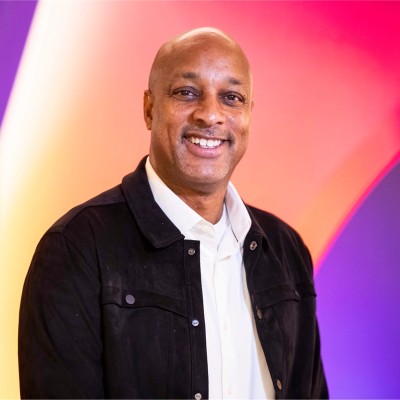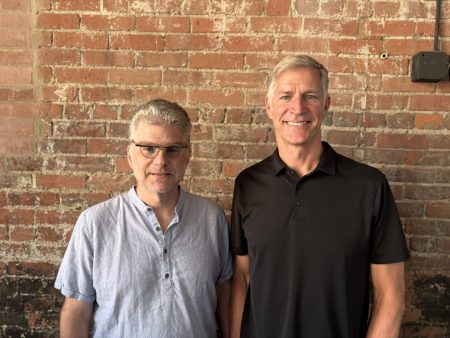






The global technology industry is characterized by a dizzying level of executive churn. Leaders routinely migrate from one giant to another, chasing high-valuation start-ups, venture capital funds, or initial public offerings in an endless quest for disruption. Against this backdrop of transient loyalty, a career like Yusuf Mehdi’s at Microsoft stands as an extraordinary, almost mythic monument to corporate devotion, successful adaptation, and sustained cultural impact. Having dedicated thirty-five remarkable years of his professional life to the Redmond-based software pioneer, Mehdi has announced his plans to embark on his “final season” with the company, setting his official departure date for June 30, 2027. Serving as the company’s Executive Vice President and Consumer Chief Marketing Officer, the fifty-nine-year-old executive is not quietly slipping into a passive, immediate retirement. Instead, in a move reflecting the product-centric culture he helped build, Mehdi described his retirement planning in an interview as “picking a ship date” for a major product. You put it on the calendar, you align the operational teams, you plan the resources, and you work toward it with absolute, unwavering intensity until the final hour. By announcing his plans a full year in advance, Mehdi is prioritizing an orderly, highly strategic transition of leadership, working hand-in-hand with CEO Satya Nadella and Chief Marketing Officer Takeshi Numoto. His goal is simple yet profound: to leave the massive, multi-faceted consumer portfolio he oversees—which encompasses critical pillars like Windows, Surface hardware, Microsoft Copilot, Edge browser, Bing search, and Microsoft 365 consumer products—in the strongest possible hands. Over the next year, he intends to pour his entirety into this chapter, treating the upcoming fiscal year not as a comfortable victory lap, but as a rigorous, full-speed-ahead sprint to cement Microsoft’s consumer dominance in a competitive landscape. This timeline and strategy illustrate Mehdi’s deep sense of personal responsibility to the company that has served as the massive, vibrant canvas for his life’s work, proving that true leadership is as much about how elegantly one exits as how boldly one performs. Indeed, his final days at Microsoft represent the culmination of a life defined by loyalty, evolution, and an unmatched passion for technology.
To appreciate Mehdi’s tenure is to trace the evolution of modern consumer computing from its infancy to the current era of artificial intelligence. Arriving as a mid-twenties intern in 1991, personal computers were still viewed by many as noisy, beige, command-prompt novelties confined to offices rather than essential home appliances. Prior to Redmond, Mehdi earned an economics degree from Princeton University and spent two years at Reuters working on early foreign exchange trading systems, gaining a firsthand, rigorous appreciation for how digital information transforms complex industries. Recognizing the immense potential of the software industry, he went on to pursue an MBA at the University of Washington, which positioned him perfectly to join Microsoft full-time in 1992. His early assignments placed him immediately in the high-pressure trenches of technology history, contributing to the crucial launch of Windows 3.1 and, later, the legendary and industry-defining Windows 95. To understand the gravity of Windows 95 is to recall physical media, where software was distributed on floppy disks or CD-ROMs packaged in oversized cardboard boxes. It was a historic release that captured the global imagination, complete with televised launch events, press frenzy, the Rolling Stones’ “Start Me Up” playing in advertisements, and the introduction of the iconic “Start” button, which became the universal gateway to the digital world. For Mehdi, marketing these early operating systems was not merely about promoting technical memory specifications; it was about introducing humanity to a completely new way of living, thinking, communicating, and working. Walking down the hallways of Microsoft during those formative, high-energy years, surrounded by visionaries who were actively drafting the blueprint of the digital age, Mehdi developed a humanized, empathetic approach to product marketing that would guide him through the corporate terrain of the next three decades. This profound understanding of the human-technology interface became the cornerstone of his leadership philosophy, guiding his every major strategic breakthrough.
As personal computing transitioned from offline desktop software to the wild, interconnected frontier of the global internet, Mehdi was repeatedly called to the front lines of Microsoft’s strategic battles. In the late 1990s, he emerged as a vital leader in the “browser wars,” orchestrating marketing and product strategies for Internet Explorer against Netscape Navigator. This trial by fire tested his acumen under intense scrutiny, antitrust investigations, and brutal media focus, yet it ultimately succeeded in establishing Microsoft’s footprint in the online era. Following the battle for the browser, Mehdi dedicated over a decade of his career to the high-stakes task of building, defending, and scaling Microsoft’s search engine and online services division. In an era when competitors had already established a seemingly unbreakable search monopoly, and their brand name had become a universal verb, Mehdi spearheaded the creation and 2009 launch of Bing. Challenging a dominant search pioneer required immense resilience, immense financial investment, and a stubborn refusal to back down from seemingly impossible marketplace odds. Mehdi did not merely focus on engineering algorithms; he deeply recognized the power of strategic industrial alliances, playing a central, highly diplomatic role in negotiating and executing Microsoft’s monumental search and advertising partnership with Yahoo. This complex, multi-year alliance fundamentally reshaped the economics of online search advertising, secured a critical market position for Microsoft’s proprietary search architecture, and proved that the company could sustain a long-term consumer business against all odds. Through these grueling, highly public campaigns, Mehdi cultivated a stellar reputation within the company as a steady, unflappable, and deeply respected leader who could take on complex, long-horizon challenges, demonstrating that Microsoft’s consumer success was built on tenacity, creative storytelling, and an unwavering belief in choice and consumer competition. Ultimately, his perseverance laid the critical operational groundwork for Microsoft’s enduring presence in the highly competitive digital advertising and consumer search landscapes.
In 2011, Mehdi pivoted to a highly dynamic, cultural sector of the company by joining the Xbox division, where he was tasked with leading the marketing and business strategy during a pivotal transition point for console gaming. He was a central figure in the globally watched launch of the Xbox One, navigating the shifting, passionate preferences of a demanding gaming community. Understanding that technology must seamlessly integrate into the broader cultural fabric of daily life to achieve true mass appeal, Mehdi engineered a historic, multi-billion-dollar partnership with the National Football League. This groundbreaking collaboration did not merely place passive Microsoft logos on stadium banners; it fundamentally revolutionized the sport of professional football by replacing paper playbooks with specialized, weather-resistant Microsoft Surface tablets on active sidelines. Suddenly, millions of sports fans around the world spent their Sunday afternoons watching elite, hard-hitting athletes and high-profile coaches interact with Microsoft hardware under intense, real-time pressure, a master stroke of authentic, culturally resonant product placement that elevated the Surface from a corporate accessory to an icon of elite performance and rugged utility. Mehdi’s success in bridging the gap between dry hardware and raw human emotion paved the way for his eventual return to the foundational operating systems division, where he managed the complex, highly sensitive rollout of Windows 10 to the global public. By successfully shepherding the platform’s upgrade cycle to reach over one billion active devices worldwide, Mehdi proved his unparalleled ability to manage immense engineering scale while restoring crucial consumer confidence. When the company’s charismatic, long-serving hardware chief Panos Panay departed unexpectedly in 2023, Microsoft’s executive leadership naturally turned to Mehdi to steady the ship, unifying the Windows and Surface hardware businesses under his single, trusted banner and cementing his status as the brand’s ultimate consumer guardian. By bridging the complex gaps between engineering innovation, cultural relevance, and user experience, Mehdi became an indispensable guardian of the Microsoft ecosystem.
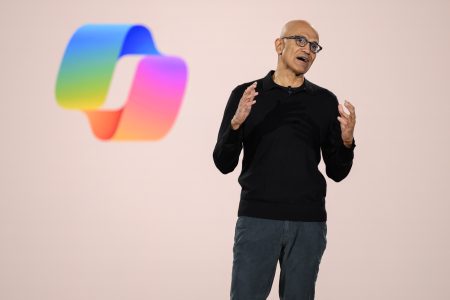
This lifetime of diverse, high-impact experience culminated in late 2023 when Mehdi was officially promoted to the elite Senior Leadership Team as Executive Vice President and Consumer Chief Marketing Officer, positioning him at the absolute vanguard of the generative artificial intelligence revolution. As Microsoft partnered with OpenAI and began aggressively infusing state-of-the-art AI capabilities across its massive software portfolio, Mehdi became the reassuring, public face of this monumental technological paradigm shift. In high-profile press conferences, keynote speeches, and strategic product reveals, his calm, articulate, and authentic style stood in stark, pleasant contrast to the typical, hyper-kinetic hype cycle of the tech world, humanizing complex machine learning concepts into tangible, life-enhancing tools for everyday users. He helped move the public conversation away from abstract, science-fiction fears of artificial intelligence and toward the practical, empowering daily utility of Microsoft Copilot, demonstrating how an AI companion could organize busy family calendars, streamline professional workflows, and unlock new waves of personal creative expression. As he enters his final fiscal year, Mehdi’s strategic priorities remain incredibly ambitious, focused on preparing the global computing landscape of Windows for the “agentic era”—a future where operating systems don’t just respond to static commands, but actively and safely coordinate complex tasks on behalf of users. He is also passionately dedicated to unifying the Copilot software experience so that it flows seamlessly between an individual’s professional workspace and their personal life, while simultaneously scaling the core Microsoft 365 consumer business toward a historic milestone of one hundred million active subscriptions. There is a beautiful, deeply poetic circularity to the fact that his unparalleled career, which commenced at the dawn of the graphical user interface with Windows 3.1, is concluding at the horizon of an era where technology is guided by the simple, natural cadence of human conversation. Through his visionary voice, Mehdi did not merely market artificial intelligence; he taught the world how to welcome it into their daily lives with warmth.
As Yusuf Mehdi prepares to navigate his final season at Microsoft, his upcoming departure marks more than just a routine transition of executive leadership; it represents the closing of a monumental, thirty-five-year chapter in the history of personal computing. At fifty-nine years old, Mehdi emphasizes that he still possesses a vibrant, youthful energy, a sharp strategic mind, and a deep, intellectual curiosity for the world, clarifying that he does not view this step as a traditional, passive retirement but rather as a blank canvas for his next professional, philanthropic, or personal adventure. By collaborating closely with CEO Satya Nadella and Chief Marketing Officer Takeshi Numoto on an intensive, year-long succession plan, Mehdi is ensuring that the transition of leadership will be seamless, preserving the vital momentum of Microsoft’s consumer AI initiatives and safeguarding the cultural integrity of the teams he has spent decades building and mentoring. His career teaches an invaluable, inspiring lesson to a modern, often cynical corporate world: that it is possible to spend a lifetime at a single institution, constantly reinventing oneself alongside the technology, while maintaining an untarnished reputation for kindness, collaborative stability, and visionary insight. Software versions will inevitably become obsolete, and hardware devices will eventually be replaced by newer, sleeker models, but the human-centered philosophy, the high-stakes operational lessons, and the mentoring legacy that Mehdi leaves behind will remain deeply embedded in Microsoft’s corporate DNA for generations to come. Having contributed to the launch and marketing of nearly every major consumer product the company has ever shipped, Yusuf Mehdi leaves the Redmond campus not just as a successful, highly accomplished C-suite executive, but as a legendary master builder who spent his life elegantly translating raw computing power into the human experience. As he prepares to walk through the Redmond corridors one last time, he carries the gratitude of a global community whose digital lives he helped shape.