




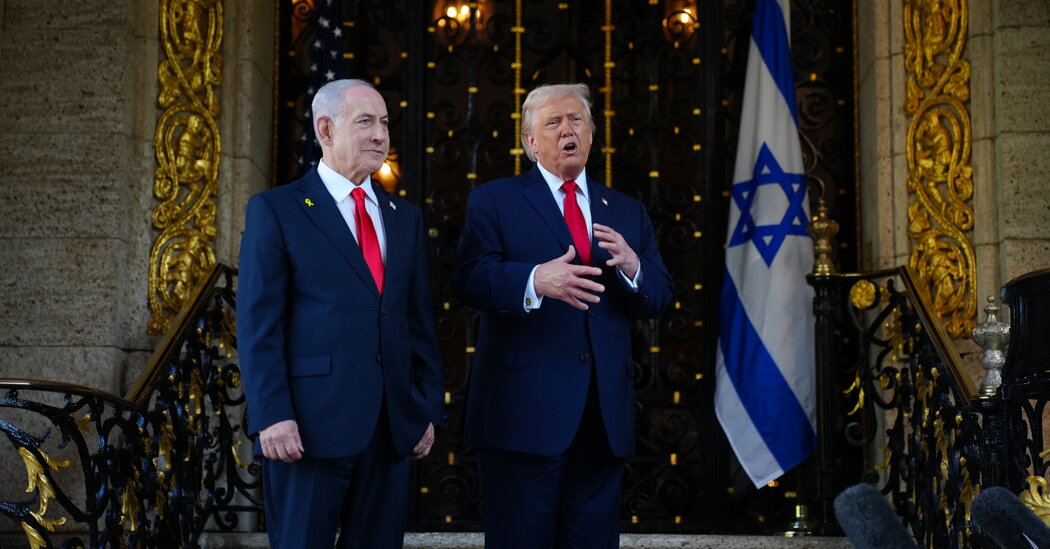
In the high-voltage atmosphere of the White House Situation Room during the run-up to the February 28 air campaign against Iran, Benjamin Netanyahu was not merely an ally seeking assistance; he was the primary architect of the strategy, confidently commanding the room. Standing beside a receptive President Donald Trump, the Israeli Prime Minister painted a cinematic, almost effortless portrait of victory, predicting that a decisive, joint U.S.-Israeli military strike would trigger the immediate, historic collapse of the Islamic Republic. Back in Tel Aviv, this hubristic optimism was mirrored in an unprecedented level of military fusion. Deep within “Fortress of Zion”—the heavily fortified intelligence bunker buried beneath the Kirya military headquarters in downtown Tel Aviv—American and Israeli officers worked shoulder-to-shoulder in the dim, blue fluorescent light, their command systems intricately woven into Centcom’s headquarters in Tampa, Florida. Tactical decisions regarding incoming threats were made in lockstep, creating an intoxicating sense of shared destiny. Netanyahu leveraged this unprecedented access to the absolute fullest, eager to convince a skeptical electorate of his unique geopolitical genius. In televised wartime broadcasts, he presented himself as Trump’s strategic peer, assuring Israelis that he spoke with the American president nearly every single day, exchanging advice and “deciding together.” When initial operations successfully decapitated key components of the Tehran regime, it briefly appeared that Netanyahu’s lifelong obsession—the total destruction of Iran’s nuclear and missile programs and the ultimate overthrow of the mullahs—was finally within reach. In those heady first days of air supremacy, both nations spoke proudly of their unprecedented cooperation, even urging the Iranian people to rise up and seize their own future. The prime minister’s political fate, wrapped tightly in the flag of American military might, seemed secure, and the promised dawn of a new Middle East, free of its primary security threat, felt closer than ever before. This absolute certainty created a dangerous bubble of overconfidence among Israeli leadership, who truly believed they were the co-authors of a historic American crusade.
The transition from the cockpit of global decision-making to the ignominy of economy class was swift and merciless, completely shattering Netanyahu’s illusions of a partnership of equals. As the conflict dragged past its optimistic two-week deadline, the sobering realities of war began to set in, exposing a deep and fundamental divergence in American and Israeli strategic priorities. When Iran responded to the initial strikes by aggressively shutting down the crucial Strait of Hormuz, global energy markets went into a tailspin, sending oil prices soaring and inflicting severe political and economic pain on the Trump administration. Anxious to avoid a protracted economic crisis, Trump abandoned any lingering fantasies of regime change and pivoted sharply toward diplomacy, leaving Netanyahu holding an empty bag. Almost overnight, the warm channel of communication between Washington and Jerusalem froze solid. Israeli defense officials found themselves completely locked out of secret truce negotiations between the United States and Iran, struggling to comprehend how they could be so thoroughly sidelined by their closest ally. Deprived of official intelligence briefings, humiliated Israeli commanders were forced to behave like espionage scavengers, desperately piecing together the details of the American-Iranian back-and-forth through regional diplomatic backchannels, whispers from foreign diplomats, and their own clandestine surveillance assets operating deep inside the Iranian regime. This sudden, deafening silence from Washington was not merely a diplomatic snub; it was a shattering blow to Netanyahu’s carefully constructed political persona. He had staked his entire political survival on the promise that he could bend the American giant to his will, and this sudden ejection from the decision-making loop left him deeply exposed as an uphill, high-stakes re-election battle loomed at home, leaving his opponents with a potent weapon to dismantle his image as a master diplomat.
For the Israeli public, the strategic failure of the war was felt not in the abstract halls of diplomacy, but in the terrifying reality of daily life, which ground to a sudden and traumatizing halt during March and April as a barrage of Iranian ballistic missiles rained down on their cities. Parents huddled with their children in cramped bomb shelters, listening to the thunderous explosions of air defenses, waiting for a victory that Netanyahu had promised would be swift and absolute. Instead, they watched in dismay as Netanyahu’s three core objectives—destroying Iran’s nuclear program, eliminating its ballistic missile capabilities, and dismantling the mullahs’ regime—evaporated into thin air. Far from being vanquished, the Islamic Republic emerged from the conflict with its authority intact, behaving as though it had won simply by surviving the onslaught. Even more alarming for Israeli security officials was the emerging shape of the American cease-fire proposals, which neglected to address Iran’s missile arsenal altogether. Rather than permanently dismantling Tehran’s nuclear ambitions, the proposed U.S. framework sought to establish a mere twenty-year moratorium on nuclear activity—a timeline that seemed to shrink further with each subsequent draft of the negotiations. To the horror of the Israeli defense establishment, this developing consensus closely resembled the 2015 Obama-era nuclear deal that Netanyahu had spent a decade venomously opposing. Compounding this strategic nightmare was the prospect of Washington lifting economic sanctions, which would flood Tehran with billions of dollars in sanctions relief—funds that would inevitably be funneled directly to hostile proxies like Hezbollah along Israel’s northern border to replenish their depleted arsenals, posing an immediate and revitalized existential threat to communities in northern Israel that had already suffered tremendously.
As the Trump administration shifted its focus toward an exit strategy, Israel’s status was degraded from a sovereign, respected partner to a disposable subcontractor tasked with executing highly dangerous operations only to be politically abandoned when the geopolitical fallout intensified. This painful dynamic was illustrated when Israeli intelligence proposed a daring plan to deploy Kurdish ground forces from northern Iraq directly into Iran, supporting the invasion with targeted Israeli airstrikes in the northwestern region. Though President Trump initially gave the green light, he abruptly reversed himself forty-eight hours later on Air Force One, publicly stating he did not want to see the Kurds get hurt or killed, leaving the Israelis holding a compromised operation. A similar betrayal occurred when Israel launched a coordinated, pre-approved airstrike against oil refineries in Tehran and the nearby city of Karaj, intended as a powerful warning to the regime. However, when the strikes resulted in apocalyptic clouds of toxic black chemical smoke hanging over the Iranian capital for days—sparking fears that Gulf nations might face retaliatory strikes on their own vital energy infrastructures—the Trump administration balked. Rather than standing shoulder-to-shoulder with their ally, American officials publicly expressed deep disapproval, claiming they had expected a far smaller, symbolic strike and throwing Israel under the bus to appease regional partners. This toxic cycle of strategic coordination followed by immediate public abandonment deeply fractured trust between the two military establishments. The sense of betrayal was palpable in the halls of the Kirya, where seasoned military planners realized they had assumed immense geopolitical and moral risks—including executing the highly controversial targeted killing of a sovereign nation’s leader—for a partner that lacked the stomach for the inevitable messiness of a real conflict, leaving Israeli commanders feeling exploited, exposed, and deeply wary of future joint ventures with an administration that prioritized short-term public relations over long-term alliances.
The absolute nadir of this dysfunctional dynamic occurred on March 18, during a high-stakes coordinated airstrike against the South Pars natural gas field and oil facilities along the Persian Gulf. Designed to pressure Iran into accepting more favorable truce terms, the operation instead triggered a head-spinning display of political gaslighting from the White House. Attempting to distance himself from the escalation, Trump publicly denied any advance knowledge of the attack, lambasted Israel for “violently lashing out,” and went so far as to suggest that he had explicitly warned Netanyahu against executing the operation during their private briefings. Faced with a mercurial ally who was rewriting history in real-time, Netanyahu was forced to make a humiliating public climbdown. In a televised address in Jerusalem that evening, the prime minister took sole, painful responsibility, stating to reporters that Israel had acted entirely alone and would hold off on future strikes at Trump’s direct request. This public self-flagellation marked a staggering departure from Israel’s foundational security ethos, which historically emphasized the proud, defiant doctrine of defending itself by itself without relying on foreign permission—a stubborn independence that had famously exasperated generations of previous American presidents. The humiliation deepened when Trump pressured Netanyahu to abruptly halt Israel’s military campaign against Hezbollah in Lebanon within days of the April 8 cease-fire, forcing the nation to accept severe strategic constraints on its hostile northern border while leaving its citizens feeling precariously exposed to future aggression. By subjugating its military decisions to the whims of a volatile foreign leader, Israel found itself in a subordinate position, with its own defense minister, Israel Katz, openly admitting on April 23 that the nation was reduced to waiting for a “green light” from Washington before taking any defensive action.
This systematic sidelining and loss of autonomy forced a desperate, painful recalibration of Netanyahu’s political rhetoric as he scrambled to save his political skin in the face of an angry, confused, and deeply disillusioned electorate. Recognizing that his original promises of a nuclear-free, missile-depleted Middle East were now impossible to deliver, Netanyahu began to systematically alter his public definitions of victory to obscure the war’s failures. In a striking speech on March 12, he sought to gloss over the glaring reality that the existential threat of Iranian missiles and nuclear centrifuges remained wholly intact, instead pivoting to a vague, grandiose narrative of regional dominance. He told the Israeli public that while specific threats might come and go, Israel had successfully transformed into a global and regional power capable of pushing dangers away simply through its sheer strength and its alliance with Donald Trump—which he disingenuously termed “an alliance like no other.” This rhetorical sleight of hand was a desperate survival mechanism for a prime minister facing an uphill re-election campaign, but it served as cold comfort to citizens who knew their security was now hostage to the domestic political interests of a foreign capital. This forced optimism, however, could not mask the sobering reality of Israel’s newfound strategic vulnerability. The country that had once fiercely guarded its independent military judgment was now reduced to public declarations of dependency, having sacrificed its hard-won operational autonomy for the volatile, fleeting favor of an unpredictable American leader. In the end, Netanyahu’s gambit traded Israel’s historic self-reliance for a subordinate partnership that left its borders insecure, its enemies emboldened, and its political leadership waiting in the wings of a theater they no longer controlled. The geopolitical tragedy of the war was that in its quest to secure its future through an ironclad American alliance, Israel had surrendered the very sovereignty that had defined its national identity for generations.