






Shadows in the Coalfields: How the Shanxi Mine Disaster Exposes the Gap Between Chinese Safety Reforms and Industrial Reality
A Midnight Catastrophe in Shanxi: Inside the Liushenyu Mine Explosion
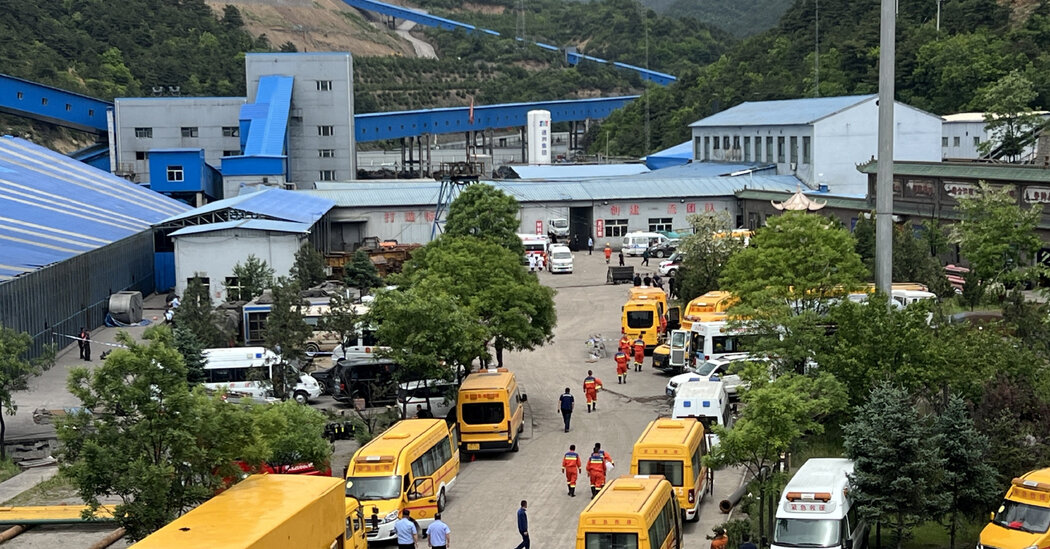
The quiet rhythm of the night shift at the Liushenyu coal mine in northern China’s Shanxi Province was shattered on Friday night by a devastating underground gas explosion that has claimed the lives of at least 90 workers, marking one of the nation’s most catastrophic industrial disasters in recent memory. Situated in China’s premier coal-producing heartland, the facility—operated by the state-linked Shanxi Tongzhou Coal Group—was actively hosting 247 miners deep within its subterranean shafts when high-concentration gases ignited, converting the complex network of extraction tunnels into a high-pressure furnace of toxic smoke and falling rock. Initial reports from regional state media painted a deceptively modest picture, suggesting only eight deaths had occurred while optimistically noting that over 200 laborers had been safely evacuated from the volatile depths of the earth. However, as emergency response teams braved unstable, toxic subterranean conditions throughout Saturday, the initial optimism dissolved into horror; the official death toll underwent a series of rapid, agonizing upward revisions, leaving families in agonizing suspense and exposing the fatal disconnect between automated alert protocols and on-the-ground crisis management. The sheer velocity of the rising casualty rate not only shocked the local community but sent tremors through the highest corridors of political power in Beijing, raising urgent questions about how such a high-risk excavation was permitted to operate at full capacity despite holding a known, long-standing record of hazardous gas concentrations.
+————————————————————+
| LIUSHENYU COAL MINE DISASTER INDEX |
| |
| Location: Shanxi Province, Northern China |
| Operator: Shanxi Tongzhou Coal Group |
| Personnel Underground at Blast: 247 Workers |
| Confirmed Casualties: At least 90 Dead |
| * Systemic Classification: High Gas Hazard Mine (Blacklisted) |
+————————————————————+
Political Shockwaves: Why Xi Jinping’s Swift Intervention Signals a National Emergency
In a highly unusual departure from standard administrative operating procedures, China’s paramount leader, Xi Jinping, intervened personally and publicly mere hours after the tragedy occurred, issuing an authoritative directive that demanded a redoubled, scientific rescue mission and absolute accountability for those responsible. Under normal circumstances, the Chinese central government maintains a disciplined posture of informational triage, deferring official, high-level statements on industrial accidents until local bureaucratic structures have fully categorized the damage and prepared a highly curated public relations narrative. By issuing a swift, top-tier mandate ordering provincial authorities to “make every effort to treat the injured, organize search and rescue operations scientifically, and properly handle the aftermath,” Mr. Xi signaled to the bureaucracy and the broader public that the tragedy at Liushenyu had transcended a localized industrial failure to become a matter of national concern. This direct political intervention acted as an immediate catalyst, prompting state broadcasting networks to abandon their initial, conservative estimates and rapidly release cascading death-toll updates that climbed by the dozen every few minutes, thereby acknowledging the scale of a crisis that could no longer be managed behind closed doors. Furthermore, Mr. Xi’s explicit warning that those responsible must be held to account “according to the law” places tremendous pressure on Shanxi’s regional leadership, who must now balance the economic demands of meeting national energy production targets with the severe political penalties associated with regulatory negligence.
┌────────────────────────────────────────────────────────┐
│ BEIJING’S DISASTER RESPONSE PATHWAY │
├────────────────────────────────────────────────────────┤
│ [1] Disaster Occurs -> Localized News Blackout │
│ │
│ [2] High-Level Intervention -> Xi Jinping Directive │
│ │
│ [3] Dynamic Information Release -> Rising Death Toll │
│ │
│ [4] Accountability Phase -> Target Local Bureaucrats │
└────────────────────────────────────────────────────────┘
The Paper Trail of Negligence: How Warnings at Shanxi Tongzhou Coal Group Were Ignored
The unfolding tragedy at the Liushenyu facility is compound, as public regulatory records reveal that this deadly outcome was predicted by federal safety watchdogs months prior to the Friday night explosion. Earlier in 2024, China’s National Mine Safety Administration published a comprehensive security report listing 1,128 mining operations nationwide cited for “severe safety hazards,” a blacklist on which the Liushenyu coal mine was explicitly featured due to its dangerous, persistent accumulation of high gas levels. Despite clear directives from the central administration urging provincial-level mine safety supervision departments to implement rigorous, regional disaster management protocols and enforce strict output caps on high-risk operations, production at the Shanxi Tongzhou Coal Group site continued unabated, driven by the intense national pressure to secure domestic energy reserves. This systemic failure highlights a deep structural flaw within China’s energy governance, where provincial authorities often face conflicting incentives: while they are nominally expected to enforce stringent federal safety guidelines, their localized economic performance, tax revenues, and political advancement are inextricably tied to maintaining a high volume of coal extractions to fuel the country’s massive industrial grid. By allowing a mine explicitly flagged for catastrophic gas hazards to continue high-density subterranean operations, local supervisors effectively gambled on luck over safety, turning a documented regulatory concern into a grim reality of human loss.
                ┌────────────────────────┐
                │ National Mine Safety   │
                │ Administration (NMSA)  │
                └───────────┬────────────┘
                            │
           Issues warning to 1,128 mines
           (Explicitly names Liushenyu)
                            │
                            ▼
                ┌────────────────────────┐
                │ Regional Safety        │
                │ Regulators (Shanxi)     │
                └───────────┬────────────┘
                            │
        Pressure to maintain coal output;
        fails to enforce strict shutdown
                            │
                            ▼
                ┌────────────────────────┐
                │ Fatal Gas Explosion    │
                │ ( Friday Night Blast)  │
                └────────────────────────┘
The Fatal Warning Lights: Reconstructing the Alarm Sequence and Rescue Chaos
The timeline of the disaster suggests a critical, potentially negligent window of time between the initial mechanical detection of danger and the actual ignition of the subterranean gas. According to telemetry data monitored by local authorities, an underground carbon monoxide sensor at the Liushenyu mine tripped on Friday night, sending urgent alerts to the facility’s control room indicating that toxic gas levels had crossed safety thresholds. State broadcaster CCTV showcased live footage from the scene on Saturday, illustrating a highly coordinated, desperate race against the clock as hundreds of specialized hazard rescue crews, chemical safety experts, and medical staff transformed the muddy mine entrance into a high-stakes search zone. As heavy excavators cleared surface blockages, emergency responders in breathing apparatuses were seen navigating underground shafts filled with hazardous air, pulling out stretchers from ambulances next to dust-covered miners manually wheeling transport carts out of the smoke-filled tunnels. Yet, despite the presence of specialized equipment and the brave efforts of first responders, the delay in ordering a preemptive evacuation of the shafts after the carbon monoxide sensors initiated their first automated alarms points to operational failures at the mine’s management level, leaving 247 workers deep in the path of a powerful blast.
- Timeline of a Disaster:
[Friday Night – T-0:00] Underground carbon monoxide sensor triggers automatic safety alarm.
[Friday Night – T-0:35] Gas ignites deep within the extraction shaft; blast seals exits.
[Saturday AM – T-06:00] State media reports early death toll of 8; 200+ allegedly rescued.
[Saturday AM – T-09:00] Xi Jinping issues emergency directive calling for “scientific search”.
[Saturday PM – T-12:00] CCTV broadcasts live updates; death toll surges rapidly past 90.
Echoes of the Past: China’s Long-Term Struggle with Mine Safety and Resource Extraction
While the catastrophic loss of life at the Liushenyu site represents one of the deadliest single incidents in China’s mining sector in years, it occurs against a backdrop of progressive, though highly inconsistent, safety reforms enacted by Beijing over the past two decades. In the early 2000s, China’s rapidly growing economy demand was fueled by a largely unregulated, highly fragmented coal mining network, resulting in thousands of worker deaths annually and making the country’s mines statistically the most dangerous in the world. Recognizing the severe sociopolitical threat of these recurring tragedies, the Chinese Communist Party launched extensive modernization efforts, closing down thousands of illegal, small-scale operations while heavily penalizing corporate executives and standardizing clean-air systems. However, as the global energy landscape fluctuates and geopolitical tensions place a premium on domestic energy self-sufficiency, coal production targets have repeatedly been pushed to historic highs, leading to fatal regressions in safety standards. The Shanxi tragedy echoes other recent disasters, such as the devastating 2023 open-pit mine collapse in Inner Mongolia that buried 53 workers under a mountain of debris, and a 2020 disaster where 16 miners died of carbon monoxide poisoning in the southwest, proving that even with advanced technologies, the human cost of energy remains high when production goals override risk mitigation.
ANNUAL COAL MINE CASUALTIES IN CHINA (HISTORICAL CONTEXT)
High (Early 2000s Era)
▲ [~ 5,000+ Deaths Annually ~]
│ – Unregulated private pits
│ – Minimal safety equipment
│
├──▶ Reforms: Consolidation of State Mines & Technology Adoption
│
▼ [~ Moderate Decline / Modern Standard ~]
Low – Recurrent peaks during high energy demand periods (e.g., 2023/2024)
- Major accidents like Liushenyu (90+ dead) expose persistent safety gaps
The High Cost of Coal: The Complex Intersection of Energy Demand and Human Life
As the recovery efforts in Shanxi Province gradually shift from a search-and-rescue operation to a somber recovery mission, the geopolitical and economic dimensions of the Liushenyu mine explosion are coming into sharper focus. China is currently navigating an incredibly complex green transition, pledging to peak carbon emissions by 2030 while simultaneously striving to keep its massive manufacturing sector supplied with cheap, reliable fossil fuels. Whenever global energy markets experience supply crunches, Beijing routinely turns to its domestic coal reserves, placing intense pressure on regions like Shanxi to maximize their extraction rates, which in turn leads mine operators to run equipment around the clock and neglect routine safety steps. This systemic dynamic creates a dangerous environment where mine workers are exposed to hazardous conditions, and regulatory compliance is treated as a secondary concern. As the families of the victims seek justice, and investigators carry out President Xi’s order to hold local decision-makers accountable, the Liushenyu disaster serves as a sobering reminder of the true human cost of coal, demonstrating that until safety checks are fully prioritized over production volumes, the nation’s energy security will continue to be built on the lives of its workers.
   ┌──────────────────────────────────────────────────────┐
   │             THE SOCIOECONOMIC TENSION LOOP           │
   └──────────────────────────┬───────────────────────────┘
                              │
                              ▼
                ┌────────────────────────────┐
                │ Global Energy Volatility   │
                │ & High Manufacturing Needs │
                └─────────────┬──────────────┘
                              │
                              ▼
                ┌────────────────────────────┐
                │ Beijing Orders Maximum      │
                │ Domestic Coal Production   │
                └─────────────┬──────────────┘
                              │
                              ▼
                ┌────────────────────────────┐
                │ Regional Operators Bypass  │
                │ Core Safety Protocols      │
                └─────────────┬──────────────┘
                              │
                              ▼
                ┌────────────────────────────┐
                │ Systemic Crises & Major    │
                │ High-Casualty Disasters    │
                └────────────────────────────┘