






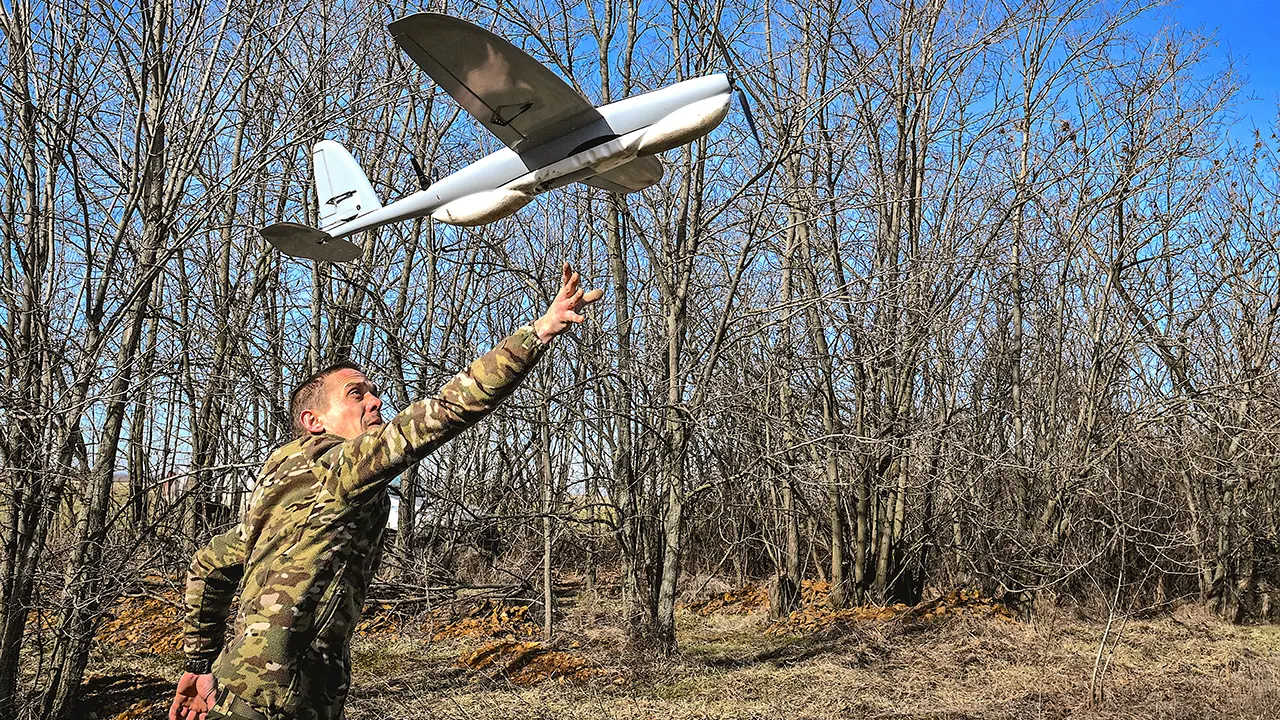
In the historic, cobblestoned city of Lviv, Ukraine, the haunting wail of air raid sirens has become a routine backdrop to daily life, but behind closed doors and within unmarked, hidden factories, a quiet revolution is rewriting the rules of modern engagement. Here, former university students, office workers, graphic designers, and teachers gather daily, working under the dim glow of desk lamps to assemble state-of-the-art kamikaze drones and advanced interceptor systems. These individuals, who only years ago held ordinary civilian jobs, now find themselves on the cutting edge of a global military transformation, operating around the clock to build the very weapons that hunt the Iranian-designed Shahed drones terrorizing their skies. What began as a scattered, grassroots effort of survival has rapidly coalesced into one of the world’s most sophisticated and fast-growing defense industries, fundamentally altering how wars are fought and won. For these unlikely tech-warriors, the assembly line is no longer just a temporary contribution to the war effort; it has become their permanent, deeply personal way of life and an absolute prerequisite for their nation’s survival. In these secret workshops, where the smell of solder and hot plastic hangs heavy in the air, the traditional boundary between civilian and soldier has completely dissolved, replaced by a shared, relentless drive to innovate faster than the enemy can adapt.
This rapid intellectual mobilization has turned Ukraine into an unlikely global classroom, demonstrating that the future of warfare belongs not to massive industrial conglomerates, but to agile IT integration and cheap, adaptable technology. Ukrainian drone manufacturers, like the one led by a CEO named Dmytro, are currently producing around 1,000 units a week, maintaining a technological pace that he describes as being three or four steps ahead of the rest of the world. In this new era of “IT warfare,” highly expensive, multi-million-dollar military assets like main battle tanks, armored personal carriers, and sophisticated air defense systems are routinely disabled or vaporized by disposable drones costing only a fraction of their target’s value. Inside the developmental showrooms of defense technology clusters like “Iron,” co-founded by Volodymyr Cherniuk, one can see the tangible results of this evolutionary leap: lines of rugged unmanned ground vehicles, heavy-lift night-strike bombers colloquially dubbed “Baba Yaga” (the boogeyman) by terrified Russian troops, and high-speed interceptor drones engineered to hunt down aerial threats. These miniature interceptors can reach staggering speeds of up to 300 kilometers per hour, requiring a payload of merely 100 grams of explosives to bring down a massive Russian-operated Shahed drone mid-flight. This asymmetric reality has effectively shattered twentieth-century military doctrines, proving that localized, creative software solutions can confidently blindside the rigid, slow-moving hierarchies of traditional global superpowers.
The sheer scale of this domestic output is as breathtaking as its technical ingenuity, prompting Ukrainian officials to project an annual production target of over seven million drones by the year 2026, a massive upward trajectory from the four million planned for 2025. This staggering industrial output is fueled by an intense, existential motivation that blends patriotism with a pragmatic understanding of global politics. Technicians like Vitaliy, who meticulously assemble hundreds of delicate fiber-optic and microchip components every solitary day, view their high-stakes labor through the lens of long-term geopolitical strategy, drawing direct inspiration from the philosophy of “peace through strength.” Amid shifting international dynamics, including statements from newly elected U.S. President Donald Trump regarding a rapid resolution to the conflict, these frontline builders recognize that true security can only be guaranteed by absolute self-reliance and technological supremacy. By transforming local workshops into highly sophisticated assembly hubs, these citizens are not merely waiting for foreign aid; they are actively dictating the terms of their own defense. This rapid scaling of drone technology has caught the attention of military strategists worldwide, forcing a fundamental rewrite of Western military doctrines that for decades relied on heavy armor and massive capital investments, proving instead that decentralized, crowd-sourced production lines can effectively hold the line against a massive invading army.
Crucially, this localized tech boom is not occurring in a vacuum, as Lviv’s innovators are increasingly sharing their hard-won battlefield data with international allies who are eager to learn how to counter the cheap, deadly drone technologies proliferating across the globe. Lviv Mayor Andriy Sadovyi envisions a future, perhaps only six to twelve months away, where Ukraine will possess the sophisticated coordination tech required to launch and precisely land thousands of synchronized drones simultaneously, a capability that would completely neutralize current air defense paradigms. This prospect has drawn a steady stream of military experts, researchers, and defense contractors from the United States, Israel, Canada, and various European nations to western Ukraine, all seeking to study raw telemetry, frontline feedback, and operational data. As Western allies confront the very same Iranian-engineered Shahed drone designs across the Middle East and the Persian Gulf, the lessons learned in the frozen trenches of Ukraine are becoming highly prized commodities. Mayor Sadovyi has strongly advocated for deeper, formal collaborations between Ukrainian engineers, American tech firms, and Israeli security experts to co-develop systemic defenses. Through this active exchange of knowledge, Ukraine is transitioning from a recipient of global charity to a primary exporter of cutting-edge military innovation, offering the democratic world a masterclass in modern electronic warfare.
Yet, even as these high-tech systems are manufactured and tested, the terrifying physical reality of the war remains an omnipresent force, with Lviv and other urban centers enduring a dramatic escalation of Russian aerial assaults following the collapse of a brief, tentative ceasefire. Russia has responded to Kyiv’s technological advancements by launching massive, coordinated waves of long-range drone strikes, deliberately aiming at crucial logistics nodes, power grids, and municipal infrastructure, often dangerously close to the Polish border and NATO’s eastern flank. In response, Ukraine has aggressively demonstrated its own ability to project power deep inside hostile territory, utilizing domestically produced long-range strike drones to bypass dense air defenses and strike critical energy infrastructure deep within the Russian Federation, including targets surrounding Moscow itself. This continuous exchange of high-altitude violence has turned the skies above Eastern Europe into a highly volatile, two-way highway of autonomous destruction, keeping civilian populations on both sides in a state of perpetual anxiety. For the residents of Lviv, the constant, low-frequency hum of passing drones and the subsequent thunder of air defense interceptions serve as a stark, daily reminder that their city is both a sanctuary for innovation and a primary target in a borderless war of attrition.
The escalating nature of this automated conflict has inevitably spilled far beyond the borders of Ukraine and Russia, creating dangerous geopolitical friction and exposing profound vulnerabilities within NATO’s defensive posture. Recently, several long-range strike drones compromised by aggressive Russian electronic jamming drifted far off course, breaching the airspace of Baltic alliance members Latvia, Lithuania, and Estonia, an incident that triggered immense political turmoil and culminated in the resignation of Latvian Defense Minister Andris Sprūds. Ukrainian and Baltic security officials have identified Western Siberia and Russian border installations as the sources of massive GPS spoofing and electronic warfare campaigns designed not only to disable incoming Ukrainian drones, but also to intentionally disorient civil aviation and sow political instability within sovereign NATO borders. These alarming incursions underscore how the highly localized war of drone technology has transformed into a wider, borderless gray-zone conflict that challenges the traditional definitions of collective defense and state sovereignty. As civilian manufacturing hubs in Lviv continue to churn out smarter, faster, and more resilient systems, the world is beginning to realize that the quiet, basement-dwelling innovators of western Ukraine have not only changed the course of their own national survival, but have permanently altered the landscapes of global security, electronic warfare, and human conflict forever.