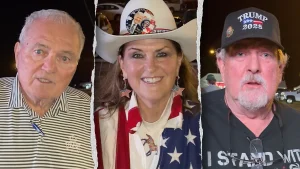


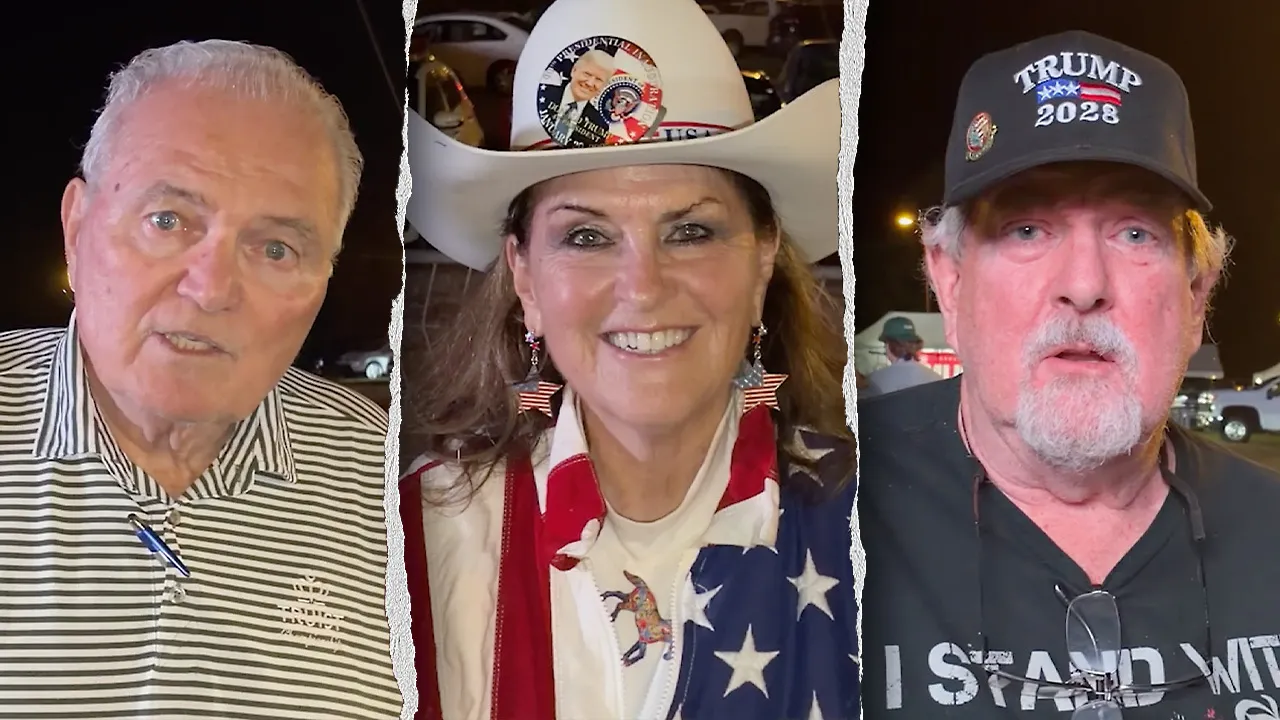
On a crisp autumn evening in South Carolina’s Upstate, the crowd gathering for President Donald Trump’s rally was carrying something heavier than the usual campaign energy. They were carrying questions, disappointments, and the uneasy sense that the midterm elections were no longer a foregone conclusion. The Upstate is a region of rolling hills, college towns, and deep Republican roots, where Clemson orange often blends with the red of campaign signs. Trump had traveled there to rally support for Senator Graham, a Republican incumbent facing a surprisingly competitive challenge from Democrat Annie Andrews in a state that had long been a GOP stronghold. But as the speeches echoed through the venue, the faces in the crowd told a more complicated story. There were red hats and chants, yes, but there were also furrowed brows and moments of hesitation. With just thirteen days until the election, the rally felt less like a celebration and more like a test. Could the base set aside its frustrations over the economy, immigration, and the conflict with Iran long enough to turn out? Or would those frustrations splinter the coalition at the worst possible moment? For many who stood in the audience, the answer was not obvious. The atmosphere was charged with the kind of tension that comes when voters feel they are choosing between imperfect options rather than rallying around a hero. Long lines snaked through the parking lot, vendors sold merchandise from folding tables, and families walked together with a sense of duty, but there was an undercurrent of anxiety that no amount of chanting could fully mask.
The economic anxiety in the crowd was impossible to ignore. A recent Fox News poll had found that six in ten voters considered the cost of living their top economic concern, followed by government spending at fifteen percent, jobs and income inequality at seven percent each, tariffs at six percent, and taxes at five percent. Those numbers were not abstract for the people standing in the rally crowd. They were the reason a Clemson University student named Grant Frady, who had once worn a Trump hat proudly, was now thinking about voting Democratic. Frady said he had supported the president but felt that too many special interests had gotten involved, and that the promises of ending wars, boosting the economy, and putting America first had not been kept. He did not say it with anger; there was more sadness in his voice, the disappointment of someone who had believed in a message and watched it slip away. The conflict with Iran only deepened the gloom, pushing energy prices higher and making every trip to the gas station feel like a fresh reminder of instability. For Frady, the gap between campaign rhetoric and lived reality had become too wide. He mentioned that Trump had promised to deport illegal immigrants, but in his view not enough had been done, and the country was paying a price for the chaos. He said the administration seemed to be overstating its achievements and causing too many problems for the benefits it was actually delivering. His story was not isolated. Around him, other voters nodded when he spoke about the strain on their budgets and the sense that the country was drifting. The president’s defenders argued that the pain was necessary and that the long-term gains would justify it. But in the immediate present, the arithmetic of groceries, rent, and fuel was hard to escape, and no speech could make a full tank of gas feel affordable again.
Immigration and foreign policy were equally tangled in the minds of the rallygoers. Another Clemson student, James, said he had backed Trump in the past but felt that some things had gone off the edge. He wanted stronger foreign policy, more aggressive dealings with other countries, and a firmer hand on illegal immigration. He worried that the administration was not doing enough to stop people from entering the country without authorization, and that the national debt was growing because of foreign entanglements that did not put America first. The confusion around ICE arrest policy only added to the frustration. Trump had recently reaffirmed his administration’s approach after a period of contradictory guidance had alarmed agents. For many in the crowd, the border was not just a policy issue but a matter of safety and grief. Scott Hines, a military veteran who had served during the 1983 Marine barracks bombing in Beirut, said the United States should have hit Iran long ago. His wife Margaret spoke about Laken Riley, a student who had been killed by an illegal immigrant while jogging on her college campus in Georgia. The tragedy had happened close to home, and it made the abstract policy debate feel personal. Nobody wanted a young girl to die like that, Margaret said, and the pain in her voice was unmistakable. At the same time, Summer Frost of Aiken argued that Americans needed to accept higher energy prices as short-term pain for long-term gain, especially when it came to confronting Iran. She was not alone in seeing Iran as a long-term threat that had to be finally dealt with, no matter the cost. There was no single opinion in the crowd, only a swirl of anger, fear, and resolve, each person filtering the president’s words through their own experiences and losses.
The rally’s political purpose was to boost Senator Graham, whose campaign had found itself in an unexpectedly tight race against Annie Andrews. For a state like South Carolina, where Republicans had long dominated statewide elections, the very fact that the contest was competitive felt like a warning sign. Grant Frady, the Clemson student who had drifted away from Trump, said his doubts about Graham’s conservative credentials had led him to consider voting for Andrews. That was a startling confession in a crowd full of GOP loyalists, and it illustrated the fragility of the coalition. But other rallygoers pushed back. Mike Korb, from Greenville, acknowledged that some Republicans might not be thrilled with Trump, but he warned that staying home would only hand power to Democrats. He also predicted that Democratic control would reverse the administration’s immigration-enforcement policies. Korb said the rally could help energize voters, though he was not optimistic about Republicans holding the House. His words captured the paradox of the moment: people were being asked to vote not for something so much as against the alternative. Summer Frost, from Aiken, offered a similar line of reasoning, arguing that the economic hardship caused by the Iran conflict was worth enduring because the long-term threat was too serious to ignore. The crowd was not monolithic. There were true believers, reluctant supporters, and a few people quietly questioning whether the party they had stood behind for years still represented their interests. The Senate race had become a test case for whether Trump’s presence could overcome those doubts, or whether the frustrations simmering beneath the surface would spill out in ways that neither party could control.
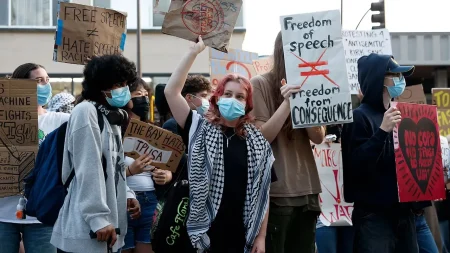
Tension also manifested in physical form. The rally was repeatedly disrupted by protesters, several of whom were escorted from the venue. At one point, an attendee punched a protester, and Trump praised the person who threw the blow, comparing him to former heavyweight boxing champion Evander Holyfield. The sheriff’s office said an assault report had been filed, noting that a deputy observed minor bruising on the person who reported being assaulted. The case remained under investigation, and no suspect had been publicly identified. The violence was a stark reminder of how raw the political atmosphere had become. For some in the crowd, the punch was a cathartic response to perceived disrespect; for others, it was a sign that political differences had become too dangerous. The disruptions underscored the strange energy surrounding Trump’s visit just days before the election. A rally that was supposed to rally the base had become a mirror of the country’s divisions. The protesters, whatever their message, were not going to be heard over the chants, and the chants were not going to silence the doubts. The altercation, captured on video and described in the police report, became yet another moment in a campaign season that seemed to lurch from one controversy to the next. For voters like Frady, it was another reason to question the path the country was taking. For supporters like Hines, it was proof that the other side was not interested in civility either. And for the undecided, it was just another layer of noise in an already overwhelming political landscape.
In the end, the rally left more questions than answers. The midterm election would be decided by whether people showed up, and the people in that South Carolina hall were clearly wrestling with that decision. Some, like Frady, were on the verge of crossing the aisle, not because they loved the Democrats but because they felt betrayed by the promises that had not been kept. Others, like Korb, were holding their noses and pulling the lever for the GOP because the alternative seemed worse. And many, like Hines and Frost, were more convinced than ever that the country needed a strong hand to confront its enemies and secure its borders. The rally was not a triumphant display of unity; it was a collection of individual struggles, each voter carrying a complicated mix of hope, anger, fear, and duty. The president’s words had to compete with the reality of high prices, uncertain foreign policy, and the constant drip of partisan conflict. The result was an event that felt less like a celebration and more like a plea. For Republicans, the hope was that the fear of Democratic victory would be enough to bring people to the polls. For Democrats, the hope was that the frustration with Trump would be enough to crack the GOP’s southern stronghold. What was clear is that the old certainties had eroded. In a state once considered reliably red, even a rally with the president at the center could not paper over the divisions in the room. The voters left the way they came: carrying more questions than answers, but with one shared awareness that the choice ahead would shape the country for years to come.