

Philadelphia’s Top Prosecutor Promises to Use a Piece of Trump’s White House as a Paperweight
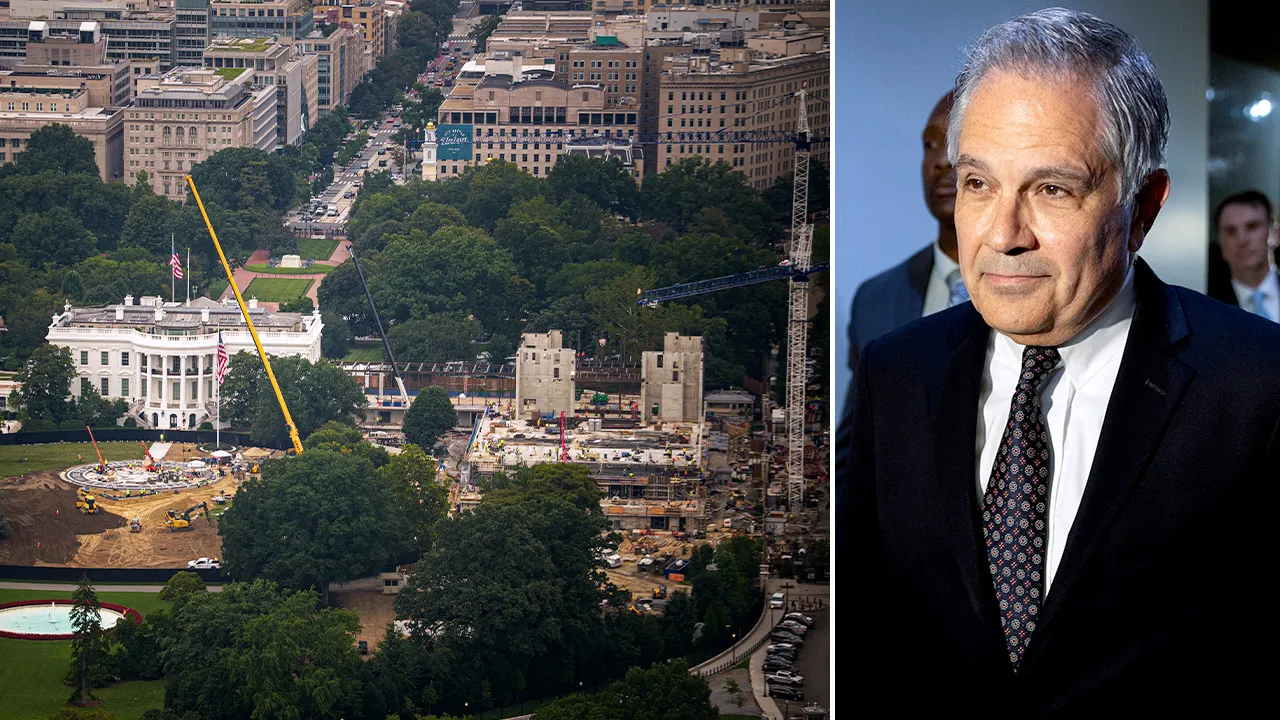
In a moment that vividly captures the current state of American political discourse, Philadelphia District Attorney Larry Krasner made headlines with a particularly provocative promise regarding the White House. During an address on Tuesday, the city’s top prosecutor, who has a well-documented history of combative rhetoric against former President Donald Trump, described a future scenario where he would be using a piece of the White House’s own architecture as a paperweight on his desk. This statement, made, is not merely a throwaway quip but a significant escalation in the verbal wars between the progressive wing of the Philadelphia political machine and the current presidential administration. The two-term district attorney, known for his strong progressive stance on criminal justice reform and his relentless pursuit of federal officials, used the platform of a public event to describe his vision of a future where the remnants of Trump’s recent renovation projects become mementos for his political adversaries.
While the district attorney’s hyperbolic language was aimed at the physical building on Pennsylvania Avenue, the true depth of his anger was reserved for the President’s policy decisions, specifically regarding the curation of American history. Krasner’s comments were embedded within a larger speech celebrating a memorial and bemoaning the recent federal decisions regarding the displays at George Washington’s Mount Vernon. He specifically attacked the administration’s as a desecration of the historical record, which he believes is being systematically whitewashed to erase the uncomfortable truths of the founding era. In his understanding, the fight over the exhibit, which detail the lives of enslaved people, is not just a local squabble but a high profile proxy war over the very soul of how the nation remembers its past, with Krasner positioning himself as the defender of a fraught but honest history. He’s stubbornly vowed that such educational content will return, hinting that the removal is only a temporary albeit painful setback in a much larger, generational struggle for historical truth.
The context behind this new political firestorm finds its roots in the so-called “Restoring Truth and Sanity to American History” letter. This specific executive order, issued in March, served as the spark that ignited this latest conflict, and it touches upon a site that is deeply meaningful to the onward culture war over identity and heritage. The National Park Service, responding to this new policy directive, replaced the dedicated panels that offered visitors a direct look into the complex and difficult history of the Trump, as a lead pun. By removing the specific focus of the enslaved individuals who lived and worked in the household, the administration shifted the focal point to a more national and broad display of early American history. For lawmakers like Krasner who supported local legislation to maintain the original exhibit, this move was a frontal attack on local authority and the city’s ability to preserve what they view as the authentic narrative of the land. The legal battles over this dispute have been intense, moving up to the Supreme Court and eventually resulting in a victory for the federal government, with the highest court ruling that Philadelphia had no standing to dictate content on federally controlled land.
Responding to the current political shift in power in Washington, Krasner’s presence in that constitutional dispute appears to have fuelled his anger. In his he outlined the current political scenario where the future of the memorial and its educational mission is in question, seeing a relentless federal court system constantly challenging his jurisdiction. Yet, his focus remains unaltered, as he explained that the education center will survive and people will continue to visit this federal park to learn about history, but he added a dark and frankly threatening twist. He declared that, referencing the President’s ambitious renovations to the White House, particularly the preservation project of the “People’s House” and its historic interiors, “there will not be a ballroom.” He further escalated the rhetoric, stating that there will not be any “Kennedy Center” renamed for a fool, linking the President’s various administrative renovations and renaming to a broader pattern of self-aggrandizement.
Krasner’s language went even further, describing a colorful imaginary of the “official ceremony” of demolition, which would involve the literal tearing down of the building to “give the taxpayers their money back” by selling the old pieces as merchandise. In a visceral, focused message, he promised the audience that he would be sitting at his desk with this specific artifact, a physical token of Trump’s defeat. The detailed humor, while jarring for its graphic brilliance, clearly served as a locker room version of his role as public prosecutor. It paints Krasner as the heroic underdog in a saga where his residents and prevent more “true” histories are being weaponized by the oligarchy. But the reaction from the opposing side was swift and metaphors. The White House, Louisiana or the charge, fired back with a time-honored appeal to political peace, denouncing Krasner’s with a new term in the political vocabulary: “Trump Derangement Syndrome,” the new way to describe any of Trump’s criticism that is wildly unrealistic.
The White House official statement was a clear attempt to project grace and anecd regardless, representing to argue that the recent renovation to the White House is simply a civic project to honor the 250th anniversary of Independence. They framed Krasner’s allegation of destruction as a sign of his mental instability and inability to accept that his candidate lost the election. Furthermore, the United States Secret Service, the law enforcement agency directly protect the President and his family, stated that they investigate any suspicious activities that could be perceived as a threat toward their protectees, though they wouldn’t comment further on the matter. This terse reply from the Secret Service warning a weight to the scenario of an individual holding office who talks about painting the White House parking lot, even if clearly rhetorical. While no federal investigator would treat such a rhetorical political joke as an actual threat, it does highlight that this kind of prologue, has moved beyond the typical policy arguing and into a rhetorical legal domain with very real implications for the security state.
Ultimately, the division between Krasner and the White House underscores a strategic political divide that is not unlikely to heal. He claims that his last statement of America is to force the conscience of the nation about slavery and systemic injustice, while the administration postures as defenders of a more optimistic and patriotic, narrative that doesn’t dilute its heritage into violent, unflattering chapters of history. As historically, the city loses its Supreme Court case and the federal government continues to disparage his statements, Krasner, rather than retreat, simply redirects the fight to the field of future. As the anniversary of independence in 2026 approaches, the country is not only celebrating but also dividing over what history means, and whether the renovation of a building has be a literal reflection of what the past tells them. Whatever the ultimate outcome is, the image of the top prosecutor of the sixth legal city in the United States planning to blow up the White House in a few years reflects a new unpredictable level of darkness in the political rhetoric within the U.S. democracy.