




Paragraph 1: The Unbearable Silence of Empty Classrooms
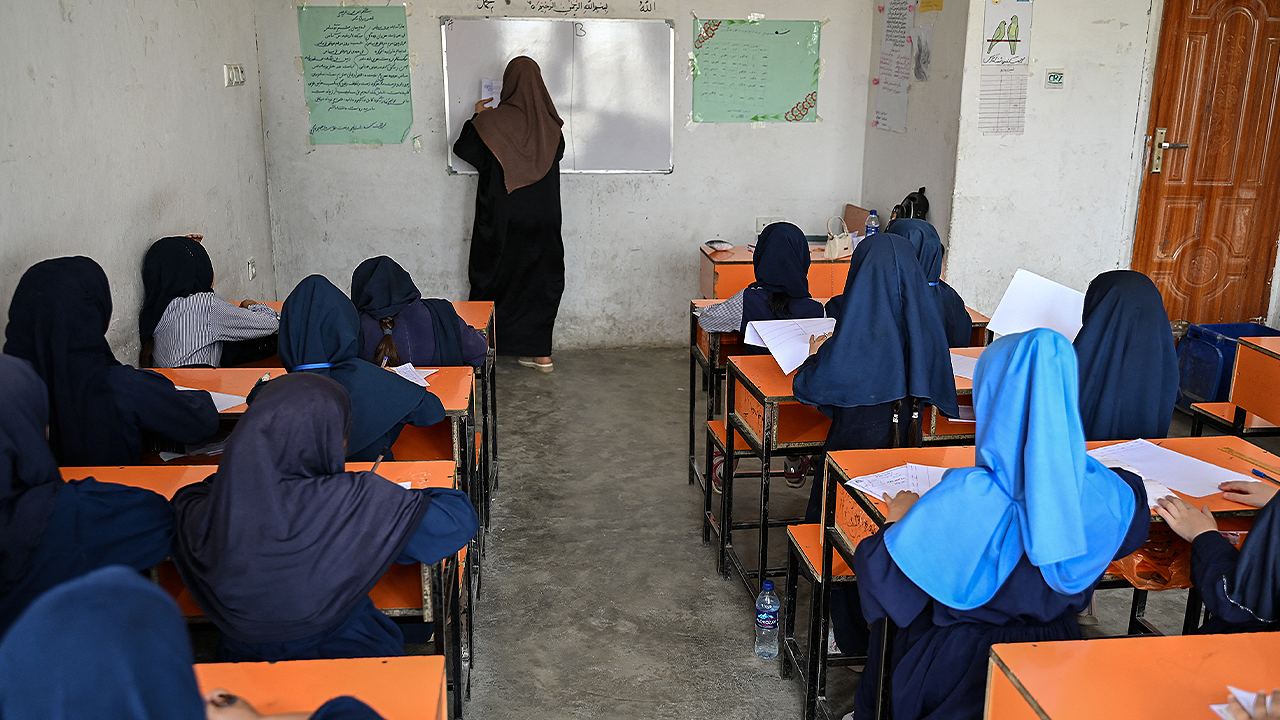
Five years have passed since the world watched in disbelief as Kabul fell and the Taliban reasserted its brutal grip over Afghanistan, but for 2.4 million young girls, the passage of time has not been marked by birthdays, friendships, or the thrill of learning. Instead, it has been measured in the suffocating silence of shuttered schoolrooms and the fading echoes of a dream that was brutally snatched away. On that fateful August morning in 2021, as foreign troops withdrew after two decades of conflict, the doors of secondary schools across the nation were not just closed; they were slammed shut with a finality that has reverberated through every home, every family, and every young heart harboring an ambition. Imagine the rows of empty desks, the chalkboards still bearing the remnants of a previous lesson on mathematics or literature, and the uniform hanging pristine and unworn in a bedroom closet—a silent testament to a life put on hold indefinitely. It is a stark, human tragedy that transcends mere statistics, yet those numbers are staggering: 2.4 million girls are currently locked out of any formal secondary education. This is not simply a suspension of schooling; it is a meticulously orchestrated erasure of an entire generation’s potential. For the girls caught in this nightmare, the concept of a “lost school year” has morphed into a lost adolescence, a lost identity, and a lost future, leaving them to grapple with the crushing weight of an ideology that views their minds as a threat and their ambitions as a heresy.
Paragraph 2: The World’s Sole Outlier and the Erasure of Women
According to a new, damning report from UNESCO, Afghanistan now stands in absolute isolation as the only country on Earth that formally prohibits girls and women from receiving an education beyond the primary level. This is not a matter of lacking infrastructure or resources; it is a codified, state-endorsed policy designed to subjugate half the population. The chilling declaration that “women have been erased from public life” captures a reality that extends far beyond the school gates. Since retaking power, the Taliban has systematically dismantled every avenue of female autonomy, barring them from most paid employment, public-facing professions, and even restricting their fundamental right to move about freely without a male guardian. The implications are dizzying in their cruelty—a woman cannot become a doctor to heal her own people, a lawyer to defend the innocent, a teacher to educate the next generation, or an engineer to rebuild her war-torn nation. She is relegated to the shadows, visible only as a dependent, subservient entity. UNESCO has issued a new and urgent call for the “immediate and unconditional” restoration of these rights, specifically highlighting the dire necessity of reopening classrooms. Yet, despite mounting international pressure from the United Nations, humanitarian organizations, human rights advocates, and even several influential Islamic nations, the Taliban remains defiant, arrogantly dismissing the global outcry by framing this horrific human rights abuse as a “domestic matter.” In doing so, they have effectively branded half of Afghanistan’s population as non-persons, stripping them of their basic human dignity and ensuring that their voices are silenced not just in the halls of power, but in the very fabric of existence.
Paragraph 3: A Devastating Reversal of Progress and the Theft of Time
To truly comprehend the depth of this catastrophe, one must look back at the trajectory of the previous two decades. In 2001, under the first reign of the Taliban, girls had virtually no access to schooling, with a shocking near-zero enrollment figure. However, the subsequent twenty years brought a renaissance of hope, as the international community invested heavily in education, leading to nearly a million girls being enrolled in secondary education by the summer of 2021. The sight of smartly dressed girls carrying stacks of books, laughing and debating scientific theories, became a beacon of progress for the entire region. But that beacon has been extinguished. Today, a heartbreaking 2.4 million girls are locked out, representing a complete collapse of that forward momentum. As Hoda Jaberian, UNESCO’s program coordinator for education in emergencies, poignantly stated, “Five years is not a temporary interruption in a child’s education. It is clearly almost an entire secondary school cycle.” The math is devastating: a girl who was 11 years old when the Taliban seized power is now 16, having missed every formative year of her education. She missed the biology lessons that could have made her a surgeon, the history classes that could have made her a politician, and the grammar lessons that could have made her a writer. The psychological weight of this loss is immeasurable, as these young women watch their brothers and male peers move on to higher education and careers, while they are confined to the domestic sphere, their natural curiosity and intellectual appetite starved into submission. This is not a temporary pause; it is the deliberate theft of a lifetime of opportunity, leaving scars that will take generations to heal.
Paragraph 4: The Crushing Economic and Social Fallout
The ramifications of this educational lockdown extend far beyond the intrinsic value of a diploma, threatening to unravel the very social and economic fabric of Afghanistan. UNESCO has starkly warned that denying education to girls while simultaneously restricting women’s ability to work is a catastrophic economic blunder that will deepen the nation’s already severe crisis. With nearly half of Afghanistan’s population currently living below the poverty line, the exclusion of women from the workforce cripples household incomes and removes a critical engine of economic recovery. Families are losing potential breadwinners, and the nation is losing the labor force necessary to rebuild its infrastructure and institutions. Furthermore, the lack of educational opportunity has a profound effect on the physical and mental well-being of girls, drastically increasing their vulnerability to early and forced marriage. When a young girl has no purpose and no path to independence, she becomes a transaction—a bargaining chip to settle debts or secure a meager bride price, relegating her to a life of childbearing and servitude. Tragically, the poison of this policy is now seeping through to the male population as well. The Taliban’s absolute ban on female teachers instructing male students has created a staggering shortage of qualified educators, effectively undermining the quality of education for boys, too. The school system is decaying from within; while girls are shut out, boys are being taught by an overstretched, demoralized, and increasingly unqualified male workforce, leaving an entire generation of Afghan children—both male and female—ill-equipped to navigate the complexities of the modern world.
Paragraph 5: The Resilient Glimmer of Underground Learning
In the face of such suffocating oppression, the human spirit has demonstrated a remarkable, albeit fragile, resilience. Faced with a complete shutdown of formal secondary and higher education, UNESCO and its partners have pivoted to alternative methods—community-based education, literacy classes, and skills development programs—designed to keep a spark of learning alive. These are not grand schools with proper resources, but rather small, clandestine gatherings held in private homes, community centers, and sometimes even in the cramped living rooms of brave facilitators. Nearly 70,000 people have participated in these programs, and remarkably, women account for 73% of the learners. Over 1,000 literacy facilitators, largely trained by UNESCO, risk their own safety to teach basic reading, writing, and numeracy skills to women who are desperate for any form of intellectual engagement. The empirical evidence from recent studies suggests that even these modest educational interventions are yielding tangible results: helping increase household incomes, improving nutrition, and giving women a modicum of control over their own lives. However, while these efforts are a vital lifeline, they cannot, and must not, be mistaken for a substitute for real schooling. These are merely the scattered candles fighting against an unbounded darkness. They do not provide the deep, disciplined, and sustained education required to create doctors, scientists, or engineers. The Taliban’s intolerance for these spaces remains a constant threat, forcing women to learn in fear, peeking over their shoulders, knowing that a single knock on the door could result in violence, arrest, or the destruction of their texts. It is a testament to their incredible hunger for knowledge that they continue to show up, but it is a desperate, unsustainable way to educate a nation.
Paragraph 6: An Unfinished Promise and the Demand for Global Action
As the world marks the fifth anniversary of this ongoing tragedy, UNESCO’s message is unambiguous and urgent: the global community must not look away. The agency has reiterated its demand for the “immediate and unconditional restoration of girls’ and women’s right to secondary and higher education,” declaring unequivocally that “It is not negotiable. It’s a basic human right.” The opportunity to learn is not a privilege to be granted or revoked by a religious police state; it is the fundamental bedrock upon which all other freedoms are built. While the Taliban maintains its cruel and misogynistic stance, the international community must maintain its pressure, refusing to normalize diplomatic relations or financial aid packages without demonstrative progress on women’s rights. The future of Afghanistan hangs in the balance. If the world allows this oppression to continue, it is not just the Afghan girls who suffer, but the entire global tapestry of human knowledge and potential. We cannot afford to write off a generation of girls as a lost cause. The resilience of the Afghan people, particularly its women, has been proven time and again through history—they have weathered the Chabahar dust, the scorching wars, and the crushing poverty. Yet, their most profound act of resistance lies in their unabated thirst for knowledge. The halls of their shuttered schools might be empty, but the dreams within their hearts remain fiercely alive. They are waiting, with pens in hand and notebooks prepared, yearning for the day when the doors are blown open again, not just for themselves, but for the promise of a brighter, more equitable Afghanistan. The world must stand with them until that day comes, ensuring that their civil rights are not just a promise made on paper, but a reality lived in their daily lives.