






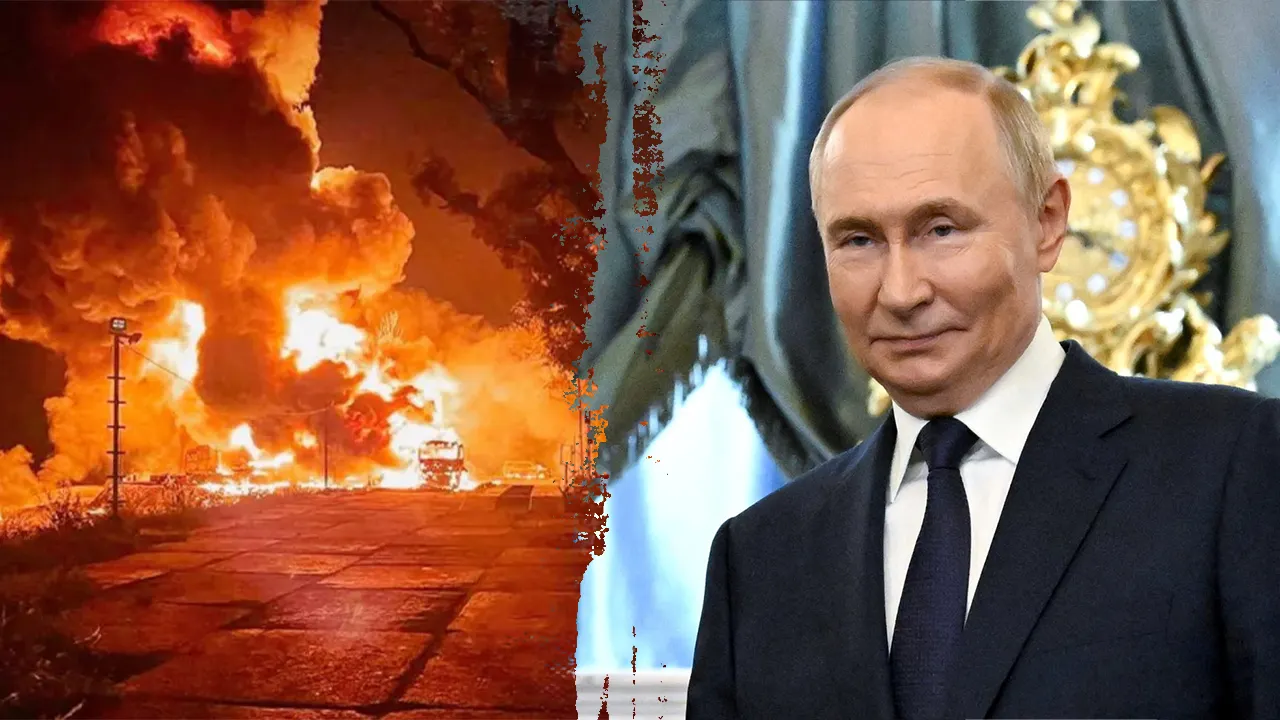
On a quiet summer morning in the affluent Moscow suburb of Balashikha, the violent reality of the war in Ukraine shattered the carefully curated illusion of domestic peace. As Lieutenant General Damir Davydov—a high-ranking Russian Defense Ministry official responsible for organizing the vital flow of missiles and artillery ammunition to the frontlines—settled behind the wheel of his BMW, a sudden, blinding blast tore through the vehicle. The explosion, orchestrated with chilling precision, marked the second time in just over a year that a catastrophic car bombing had claimed the life of a premium military figure in this exact neighborhood, mere steps from where another senior general, Yaroslav Moskalik, had been assassinated. The urban hunting ground extended into the heart of Moscow itself, where Lieutenant General Igor Kirillov, the head of Russia’s nuclear, biological, and chemical defense forces, was killed when an explosive device hidden secretly inside an electric scooter detonated outside his apartment complex. These high-profile liquidations, quietly celebrated by Ukrainian intelligence agencies like the SBU, have created a pervasive atmosphere of paranoia within the Russian high command, proving that despite the rings of security surrounding the capital, no military leader is truly safe from the reach of assassin networks.
Behind the immediate horror of these targeted assassinations lies a devastating toll on the battlefield that has systemic and long-lasting consequences for Russia’s military efficacy. At least fifteen Russian generals have been officially confirmed dead since the full-scale invasion of Ukraine began in early 2022, representing an unprecedented loss of senior leadership in a modern conflict. While some were hunted down in the streets of Moscow, others met their ends in the kinetic chaos of the frontline; Lieutenant General Oleg Tsokov was obliterated in a precise Ukrainian Storm Shadow missile strike in Berdiansk, while Major General Sergei Goryachev and Major General Vladimir Zavadsky perished amidst the mud and fire of active counteroffensives. Even the skies offer no sanctuary, as evidenced by the combat death of retired Major General Kanamat Botashev, who died piloting a fighter jet for the Wagner Group, and the sudden crash of a military transport carrying Lieutenant General Alexander Otroshchenko over occupied Crimea. Each lost commander represents decades of irreplaceable tactical experience and strategic training, and their sudden, violent removals have severely hampered operational cohesion while casting a heavy, demoralizing shadow over the lower officer corps who must step into these highly targeted vacancies.
This mounting body count has catalyzed a fierce, bitter institutional civil war within Russia’s own borders, exposing deep-seated, historical rivalries that trace their lineage back to the darkest paranoia of the Soviet era. The military and the Federal Security Service (FSB)—the direct successor to the notorious KGB—have long viewed each other with profound suspicion, but the current conflict has exacerbated this friction to a boiling point. As generals find themselves hunted both at home and abroad, the military has desperately demanded that the FSB provide comprehensive physical protection for its command staff, a request that the domestic security service has flatly and stubbornly rejected. This bureaucratic standoff reflects a fundamental power imbalance: while the grueling war of attrition has elevated the battlefield importance of the military, the political elites in Moscow still view the armed forces as a latent, highly dangerous threat to their autocratic monopoly. Consequently, the Kremlin finds itself trapped in a highly dangerous paradox, desperately needing capable military commanders to prosecute a difficult foreign campaign, while remaining deeply reluctant to empower or protect the very men carrying out their orders.
For the modern Russian general, this structural paranoia translates into a deeply stressful personal reality where the threat of execution by the enemy is often overshadowed by the threat of betrayal from within. Prominent opposition figures like Maxim Katz point out that in the Byzantine architecture of Vladimir Putin’s regime, the military has historically been systematically blocked from acquiring genuine political power, precisely because popular, charismatic generals are the only individuals who possess the institutional leverage to challenge the status quo. In Russia’s long history of authoritarian rule, from Joseph Stalin’s sweeping purges to the suspicious airplane crash that ended the mutinous march of Wagner chief Yevgeny Prigozhin, independent military popularity has always been treated as a capital offense. This has left the Russian officer class in a position of bizarre vulnerability; they are rewarded with tremendous wealth to secure their compliance, yet they remain entirely excluded from meaningful state decision-making. As Katz dryly observes, many generals now view the FSB as a far more immediate and terrifying danger than Ukrainian drones or artillery, knowing all too well that while the Ukrainian army might kill a commander once in a while, the FSB can—and frequently does—throw them into Lefortovo prison overnight on manufactured corruption charges to keep the military compliant and divided.
Faced with the FSB’s refusal to safeguard the lives of military commanders, the Kremlin has been forced to implement an awkward, fragile bureaucratic compromise by tasking the security services of the Russian presidential administration with the physical protection of top generals. This shift of responsibility away from the primary domestic security agency is a tacit admission of the profound dysfunction paralyzing the state apparatus, signaling that the regime cannot trust its primary intelligence organ to cooperate with its armed forces. The psychological fallout from this political infatuation is immense; soldiers and officers on the ground are acutely aware that their leaders are being picked off in broad daylight, driving frontline morale—which is already heavily strained by high casualty rates and poor logistical support—even lower. When commanders are incinerated in their own driveways or blown up by passing scooters, it sends a chilling message to the ranks that the state is either unable or unwilling to protect its most valued assets. This erosion of military confidence is not merely a logistical problem; it represents a slow, systemic rot in the vertical of power that underpins the entire Russian state, leaving the leadership vulnerable at a time of mounting international pressure.
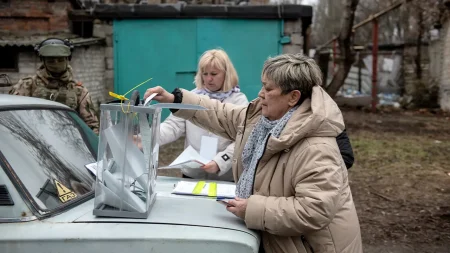
As these internal fractures widen, they are poised to collide with upcoming parliamentary elections, presenting a looming domestic crisis that many Western analysts are dangerously overlooking. While these elections are highly controlled and the official victories of Putin’s United Russia party are entirely preordained, the regime’s legitimacy still relies heavily on the public perception that the government enjoys the genuine, voluntary backing of a statistical majority. If the discrepancy between the manufactured official results and the actual level of public exhaustion and discontent becomes too wide to ignore, the foundational myths of the regime will begin to disintegrate. Authoritarian systems can govern through managed popularity, but when the public collectively realizes that the emperor’s support is a complete fiction, the state is forced to transition to overt, expensive, and unstable military coercion to maintain control. Combined with an increasingly alienated military class, a paranoid intelligence apparatus, and a continuous stream of high-profile assassinations occurring within spitting distance of the Kremlin, this shifting political landscape could soon push Putin’s autocratic system into a volatile and highly unpredictable new era.