






Paragraph 1: A Landing of Unlikely Guests in the Land of Liberty
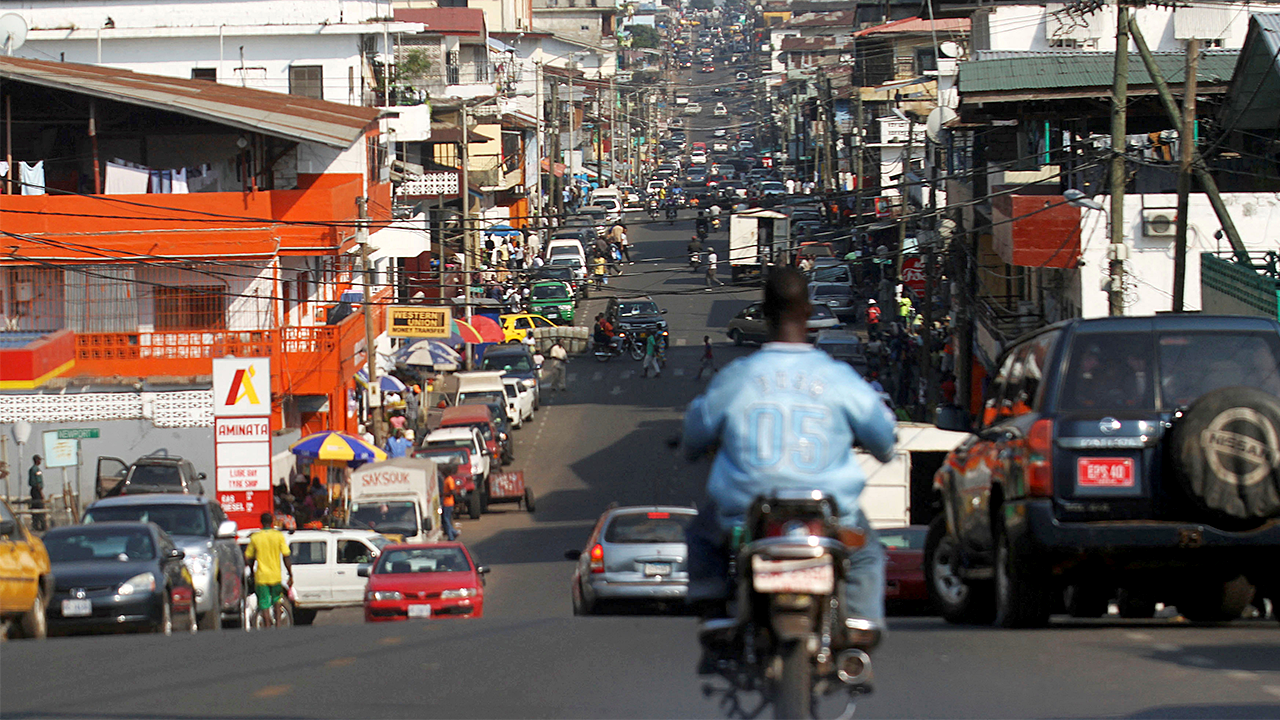
The sun hung high over Roberts International Airport in Monrovia when the commercial charter touched down, its arrival barely disturbing the humid stillness of the Liberian afternoon. At exactly 12:45 p.m. local time, a plane that had originated in Louisiana, with a brief stopover in Senegal, disgorged twenty men and women onto the tarmac. They were not tourists, nor were they diplomats. They were the vanguard of a new, deeply complex migration experiment between the United States and the West African nation. Under a recent agreement, Liberia has consented to accept up to 1,200 foreign nationals currently residing in the U.S. over the next twelve months. But as the passengers descended the stairs, squinting against the equatorial sun, their faces told a story of profound disorientation. These were not Liberians returning home; they were predominantly Latin Americans—Venezuelans fleeing economic collapse, Cubans escaping political repression, and Colombians escaping the violence of cartel warfare. The historical irony was not lost on observers. Liberia, a nation founded in the 19th century by freed American slaves seeking a promised land of liberty, was now serving as a sanctuary for people deemed too vulnerable to return to their own homelands, yet unwelcome to remain in the United States. The nation’s very name, which translates to “Land of the Free,” now resonated with a strange, new echo—a testament to how the tides of history often flow in unpredictable, circular patterns.
Paragraph 2: The Long Road Through Despair and Detention
To understand the trauma etched on these passengers’ faces, one must trace their arduous journeys. For the Venezuelans, the path began on dangerous cargo trucks and overcrowded buses, traversing the infamous Darién Gap—a lawless, mosquito-infested jungle separating Colombia from Panama. They left behind hyperinflation, medicine shortages, and a government that had decimated civil society. The Cubans, who had made perilous journeys across the Caribbean in rickety rafts, risked the trip knowing that the open sea could swallow them without a trace. The Colombians often fled after being threatened by paramilitary groups or forced to choose between joining a cartel or losing their families. Upon reaching the United States, they sought asylum, believing they had finally reached solid ground. Instead, they found themselves in sprawling detention centers in Louisiana and Texas, their cases shuffled through an overwhelmed immigration court system. Judges, sifting through their testimonies, reached a troubling conclusion: they could not be sent back to Venezuela, Cuba, or Colombia because the evidence overwhelmingly suggested they would face persecution, torture, or death upon arrival. This created a legal limbo—a state of being physically present in the U.S. but legally inadmissible. The solution, crafted quietly between Washington and Monrovia, was to transfer them thousands of miles away to a country they had never visited, probably never even thought about, and whose language and culture were wholly foreign. For these twenty passengers, the descent onto the Liberian tarmac was the final chapter of a nightmare they never anticipated when they first left their homes—a journey that had taken them from danger, through hope, into detention, and finally to a strange, dusty land on the coast of West Africa.
Paragraph 3: The Legal Safety Net and the Stigma of “Guest” Status
Liberian officials moved quickly to manage the narrative surrounding these arrivals, acutely aware of the potential for public backlash in a country struggling with high unemployment and limited resources. Liberian Information Minister Jerolinmek Piah emphasized that this arrangement is fundamentally humanitarian. In a carefully worded statement, the government underscored a vital legal guarantee: Liberia will not repatriate these individuals to their home countries under any circumstances until all pending protection claims are fully adjudicated. This commitment to non-refoulement—the principle of not returning refugees to places where they face serious threats—forms the ethical backbone of the agreement. Addressing the swirling rumors that these were hardened criminals being dumped on Liberian soil, officials were emphatic: these are not criminals. They are not being prosecuted under any U.S. or Liberian law. They are officially designated as “guests of the Republic of Liberia.” This status, however, comes with a labyrinthine set of conditions. The deportees are free to leave Liberia whenever they wish, but they must also be granted the right to apply for formal asylum within the country—a process that will be facilitated by international bodies. The International Organization for Migration (IOM) and the United Nations High Commissioner for Refugees (UNHCR) have been deployed to offer psychological support, legal aid, and resettlement services. For the deportees, this means they are trapped in a geopolitical quicksand: enough freedom to exist, but not enough certainty to thrive. They are guests, yes, but guests who cannot simply go home, and whose minds are clouded by the specter of a distant homeland they left in desperation, never to see again.
Paragraph 4: Liberia’s Historical Burden and Pragmatic Acceptance
Why Liberia? The answer lies in a complex tapestry of history, diplomacy, and economic pragmatism. Liberia has long styled itself as a haven for the displaced. In the 1990s and 2000s, it became a refuge for thousands of Sierra Leoneans and Ivorians fleeing brutal civil wars. Its own citizens endured fourteen years of harrowing conflict, which instilled a national identity of empathy for the displaced. The Liberian government, aware that it lacks the infrastructure to care for these new arrivals without assistance, has been careful to frame the deal not as an act of charity, but as a matter of international partnership. While officials stated emphatically that they are not demanding compensation, the United States has already disbursed $5 million to Liberia this year for “migration management activities.” This funding is intended to strengthen the country’s migration systems, bolster border controls, and provide the necessary logistical support to house, feed, and process the incoming groups. Yet, there is an underlying tension. Liberia is one of the poorest nations on Earth, with an unemployment rate hovering near 80% in the informal sector. The arrival of 1,200 foreigners could stretch fragile resources, escalate housing costs in Monrovia, and spark xenophobic tensions. The government is therefore walking a tightrope between fulfilling its historical role as a sanctuary and reassuring its citizens that these are not incapacitated burdens, but guests who will contribute to the nation’s rich mosaic. For the Liberian people, who have spent decades rebuilding from the ashes of a civil war and a devastating Ebola epidemic, the arrival of these Latin American strangers is both a testament to their nation’s resilience and a stark reminder of their own persistent vulnerabilities.
Paragraph 5: A Shifting Geopolitical Chessboard in Africa
This flight is not an isolated incident but rather a strategic piece in a broader, evolving geopolitical puzzle. The U.S. administration has touted the effectiveness of its immigration enforcement crackdown, noting that border crossings have dropped by 94% under the current leadership. However, the focus has shifted from simply patrolling the southern border to proactively outsourcing the fate of migrants to third-party nations. Liberia stands out as one of the largest partners in this arrangement on the African continent. Washington has also secured similar agreements with several other African states, including the Democratic Republic of Congo, the Central African Republic, Equatorial Guinea, Cameroon, Ghana, and Sierra Leone. These agreements represent a significant shift in how the U.S. manages migration flows. Rather than burdening detention centers indefinitely or releasing people into U.S. communities pending court dates, the government is striking bilateral deals to use African soil as a processing ground and resettlement zone. For African leaders, these deals offer a strategic advantage—a direct line to U.S. funding and aid, as well as a diplomatic boost in their relationship with Washington. However, human rights groups have raised alarms, arguing that these transfers upend the fundamental principles of refugee protection, turning countries with limited capacity into involuntary hosts. The globe watches as these agreements reshape the concept of “safe third countries,” asking whether a nation like Liberia—still deeply entangled in its own recovery—can truly guarantee the safety and dignity of those it has agreed to shelter.
Paragraph 6: The Uncertain Dawn for the New Arrivals
As the twenty deportees were escorted to temporary accommodations in Monrovia, the reality of their new existence began to settle in. The humid air, the rhythmic drums of local music, and the unfamiliar local languages created a sensory overload. They were given relocation packages, access to health screenings, and the promise of migration counseling. Yet, beneath the procedural order, a deep uncertainty reigns. They are free to travel across Liberia, free to seek employment, and free to leave the country if they can arrange an alternative destination. But for a Venezuelan man who left his family in Caracas, the concept of “freedom” feels abstract when he is thousands of miles away from anyone who speaks his native tongue. The promise of asylum in Liberia is a bitter-sweet remedy—it offers survival, but not the American Dream they originally sought. They now face the monumental task of integrating into a society where they are racially and culturally distinct, where they must navigate a legal system that does not yet fully understand their status. The UNHCR will begin workshops, attempting to teach them the nuances of Liberian customs, from the open-air markets of Waterside to the quiet rhythms of rural life. These men and women, who once dreamed of skyscrapers and suburban neighborhoods in the U.S., now look out at the Atlantic Ocean from a land named for liberty. They are suspended between a past they cannot return to and a future that is entirely uncertain. In the days to come, more planes will land, bringing more weary souls. The question lingering over Monrovia is whether this bold experiment will collapse under its own weight or become a unique model of international cooperation. For now, as the sun sets over the West African coastline, these twenty individuals represent the human face of a global crisis—one where the lines between hospitality, policy, and human endurance have never been so blurred.