





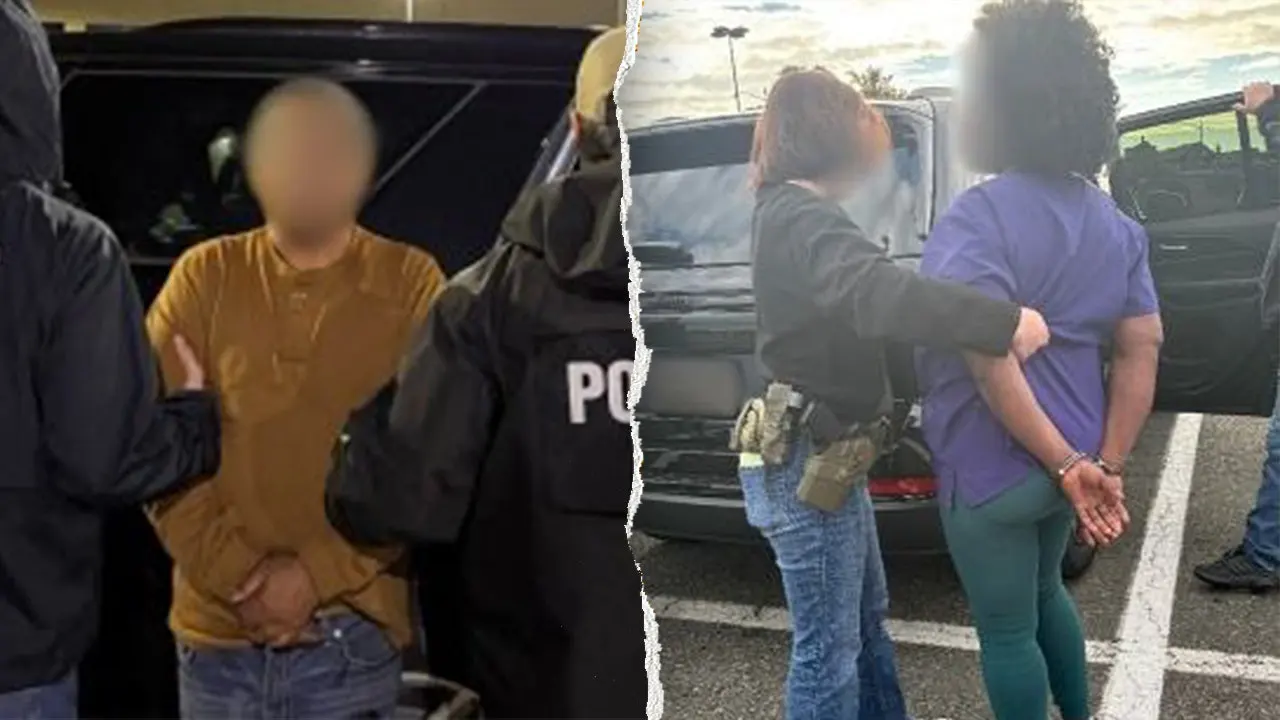
The Department of Justice has announced charges against 16 people in multiple states in connection with alleged illegal voting, voter registration, and other election-related crimes, including cases where noncitizens are accused of casting ballots in federal elections. The announcement was made public on a Friday, and the DOJ accompanied it with a blunt social-media warning: “Let this be a warning to ANYONE trying to cheat and undermine our elections. Spread the word!” According to the Justice Department, some of the people charged allegedly voted in the 2022 and 2024 elections, while others are connected to older elections as well. The charges are part of a broader Trump administration enforcement effort targeting illegal voting and restoring confidence in election integrity, but the department also took care to note that the charges are only accusations and that every defendant is presumed innocent unless proven guilty beyond a reasonable doubt. It is easy to get lost in the numbers and legal jargon, but “16 people is not just a number. It is 16 individuals, each with a name, a family, a history in this country, and now a potentially life-changing legal battle. Some have lived in the United States for years, perhaps decades. Some have jobs, children, and ties to communities where they live. The government’s allegations treat them as people who may have broken the law, but the justice system treats them as people whose guilt must be proven by evidence in an impartial courtroom. That is a critical distinction, and one worth remembering as the cases unfold. The DOJ’s social media message, with its all-caps warning and its call to “spread the word,” was clearly intended to deter wrongdoing. It was also meant to reassure citizens who worry about illegal voting. But in a country that values due process, even serious accusations must be proven, and even the most unpopular defendants deserve a defense. The announcement includes defendants from Texas, Idaho, Georgia, Massachusetts, Wisconsin, New Jersey, and Michigan, with Texas accounting for eight of the 16. The allegations span different kinds of misconduct: noncitizens voting in federal elections, false claims of U.S. citizenship to register or vote, and false statements made during naturalization proceedings. In some cases, investigators also uncovered alleged passport fraud, identification fraud, wire fraud, and firearm-related offenses. These additional accusations make the cases more complex and, for the defendants, more serious.
The cases reveal how election-related misconduct can intersect with immigration law in a deeply personal way. In Texas, eight noncitizens are charged with voting in federal elections, a direct violation of federal immigration and election laws. In other states, the charges focus on false statements made on voter registration forms or naturalization applications. The federal government has made clear it considers false claims of citizenship serious, because those claims are what allow someone to register and vote when they are not entitled to do so. The DOJ Fraud Division, led by Assistant Attorney General Colin M. McDonald, is overseeing many of these prosecutions. At the heart of the cases is a simple but absolute rule: United States citizenship is a requirement for voting in federal elections. No green card holder, no DACA recipient, no nonimmigrant visa holder, and no undocumented immigrant is allowed to cast a ballot in a U.S. federal election. The legal system treats that rule as foundational, and the administration has decided to invest significant resources into enforcing it. But the rule, while simple, can collide with complex human realities. Voter registration procedures vary by state. Some states automatically register people to vote when they get a driver’s license, and mistakes can happen. Some immigrants may be confused about their status or given incorrect information. Some may believe that paying taxes, serving in the military, or living in the country for many years gives them the right to vote. It does not. And yet, law enforcement must prove every vote was cast with intent, not simply that a vote was cast by mistake. A person cannot be convicted of illegal voting simply because their name was on a roll by error; the government must show they took deliberate steps to register and vote despite knowing they were ineligible. This is where the cases become difficult, and why the presumption of innocence is not a formality. For every person who intentionally votes without citizenship, there may be someone who made an honest mistake. Sorting out the difference requires evidence, careful questioning, and a willingness to see the whole picture. The DOJ announcement, with its strong language and broad scope, suggests prosecutors are prepared to be aggressive. But the courtroom, not the press release, is where facts will be examined and where the human story behind the charges will emerge in testimony and evidence.
The DOJ highlighted individual cases that help put a human face on the charges. In Georgia, Analiea Milliscent Eccles, a Venezuelan national and recipient of DACA, is accused of voting nine times between 2008 and 2024. DACA, or Deferred Action for Childhood Arrivals, is a program protecting hundreds of thousands of young immigrants from deportation and allowing them to work in the United States, but it does not confer citizenship and does not carry the right to vote. If the allegation is true, her votes spanned more than a decade and multiple election cycles. That kind of pattern, if proven, suggests not a one-time confusion but a sustained effort to participate in elections as if she were a citizen. In Idaho, Avila Gomez, a Mexican national, is accused of falsely claiming citizenship to register to vote, then voting in May 2022 and November 2024. Gomez’s indictment also includes wire fraud, passport fraud, identification-document fraud, and firearm-related charges, painting a picture of broader alleged criminal behavior that goes far beyond a single ballot. In New Jersey, Santana Coulibaly, a lawful permanent resident, is charged with registering to vote in 2016, voting in federal elections in 2018 and 2020, and submitting a provisional ballot in 2024 presidential election. She also faces allegations involving statements in her naturalization applications, meaning prosecutors say she may have lied while trying to become a U.S. citizen. What is striking is how different the circumstances are. One defendant lived under temporary immigration protection; another is a lawful permanent resident; another is a national with a mixed set of accusations. Each has a distinct history and each will have a distinct defense. But the public will see them grouped as examples of the same problem: noncitizens allegedly participating in American elections. The language of the charges—using words like “false,” “fraud,” and “unlawful”—carries severe consequences beyond conviction. A person charged can face job loss, family separation, and deportation, even if the criminal case is not resolved against them. That is part of being accused. It is why the law insists on proof beyond a reasonable doubt. The stories of Eccles, Gomez, and Coulibaly will be examined in court, where the government must answer questions: Did they know they were ineligible? Did they understand voter registration forms intentionally? Did they intend to deceive election officials? The answers determine what happens next. In the meantime, their lives remain suspended, caught in the machinery of the federal legal system.
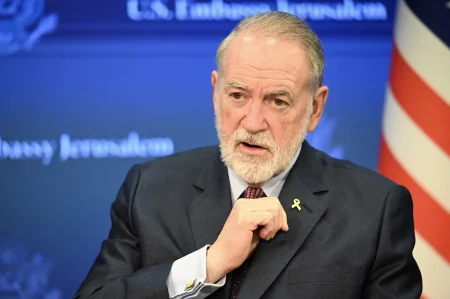
Beyond the 16 defendants announced on Friday, the federal government signaled this is only the beginning. Assistant Attorney General Colin M. McDonald told Fox News that the Trump administration has now charged 50 noncitizens with illegal voting. That is a significant number, and it suggests more announcements are likely in the weeks and months ahead. In a separate interview, Department of Homeland Security Secretary Markwayne Mullin described an even broader investigative effort. He said DHS has more than 1,620 open cases and has made 151 arrests. He also said authorities are looking into more than 300,000 suspected cases, a figure he said continues to grow. Mullin did not mince words about his view of the problem. “Every single vote that was at the hands of an illegal [immigrant], canceled out a citizen that was legally registered and able to vote,” he asserted. The emotional force of that statement is undeniable. It taps into a core American belief: one person’s vote is their voice in democracy, and when someone votes illegally, it can feel like stealing the voice of a citizen. But it is also important to be precise about the numbers matter. A “suspected case” is not the same as a confirmed illegal vote. The 300,000 figure likely includes names on voter rolls matching immigration records, possible duplicate registrations, outdated lists, clerical errors, and other data discrepancies requiring review. Some will prove genuine problems. Many will not. The DHS is doing its job when it investigates leads, and the public should expect agencies to follow up on irregularities. But large numbers can create a false impression that the system is overwhelmed by criminal activity, when in reality the system is processing information. The distinction matters because public confidence in elections depends on facts, not just alarms. The DOJ and DHS are right to pursue credible evidence of illegal voting. They are also obligated to report outcomes accurately—how many cases result in charges, convictions, and sentences, and how many are closed because they lacked merit. That number, not the other, should drive the debate.
For ordinary people, news like this arrives in an already loaded political atmosphere. Some read it as long-awaited confirmation that illegal immigration threatens election integrity. Others see a politically motivated attack designed to spread fear and restrict voting. Both reactions are human. Both are shaped by values and experiences. But the truth is likely more complicated than either side wants to admit. Yes, there are people who are not citizens but who cast ballots in federal elections. Those are crimes, and investigating them is legitimate. At the same time, the announcement does not show the problem is so widespread that it changed a national election, and the vast majority of investigations will not end in convictions. The cases announced Friday involve real people, and those people deserve to be treated as individuals, not symbols. Eccles, Gomez, and Coulibaly have names and stories. They may have acted with bad intentions. They may have acted carelessly. They may have been misled. The court will decide. In the meantime, the way the story is told matters. When government officials say, “America’s elections are for Americans,” they are making a legal point, and also a moral one. Citizenship is not just a status in a file; it is the basis of democratic community. Immigrants who are not citizens should not vote. But the same principle that says only citizens may vote also protects the rights of the accused—the right to be presumed innocent, the right to an attorney, the right to a fair trial. Those rights do not disappear because an accusation involves immigration or voting. They are at the very heart of what makes the American justice system different from a system of mere punishment. If the government crosses the line into presumption of guilt, it undermines the same legal order it is trying to protect. A warning is understandable. A call to spread the word is understandable. But the real warning to the public should include a reminder: charges are not facts, and rage is not evidence.
Ultimately, the strongest takeaway is that the legal system is moving forward, and it deserves public trust while holding it to a high standard. Election-related crime is a legitimate area of enforcement, and the federal government has a clear legal and moral duty to investigate credible allegations. The American people should support that work. But they should also insist on honesty in the presentation of numbers, because every file marked “suspected” does not amount to proof of conspiracy. The DOJ’s reminder—that defendants are presumed innocent—should be repeated often, not buried in small print. The 16 people charged, the 50 noncitizens charged by this administration, and the hundreds or thousands under investigation are all entitled to due process. Some will plead guilty. Some will go to trial. Some may be acquitted. The public should pay attention to those outcomes, because the eventual convictions, dismissals, and sentences will tell the real story about election integrity in America. The phrase “America’s elections are for Americans” should be a unifying principle, not a slogan to justify harsh assumptions about immigrants. Citizenship is meaningful precisely because it carries responsibilities and rights that noncitizens do not share. Enforcing that boundary is part of protecting the franchise for all who are lawfully eligible. But respect for law also requires restraint in how officials speak and act. A government warning to potential wrongdoers is fine, but it must be paired with protection of the innocent. This is a moment for patience and nuance, not panic. It is a moment to remember that the system works best when rules of evidence and a watchful public guide every case. And it is a moment to remember that every defendant, no matter the charge, carries the same dignity that every citizen demands for themselves. In the end, the best answer to election fraud is not overheated rhetoric but rigorous, transparent law enforcement. That is the promise held open by the DOJ announcement, and the promise the country should watch be fulfilled in courtrooms across America.