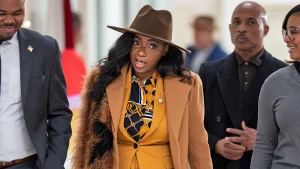





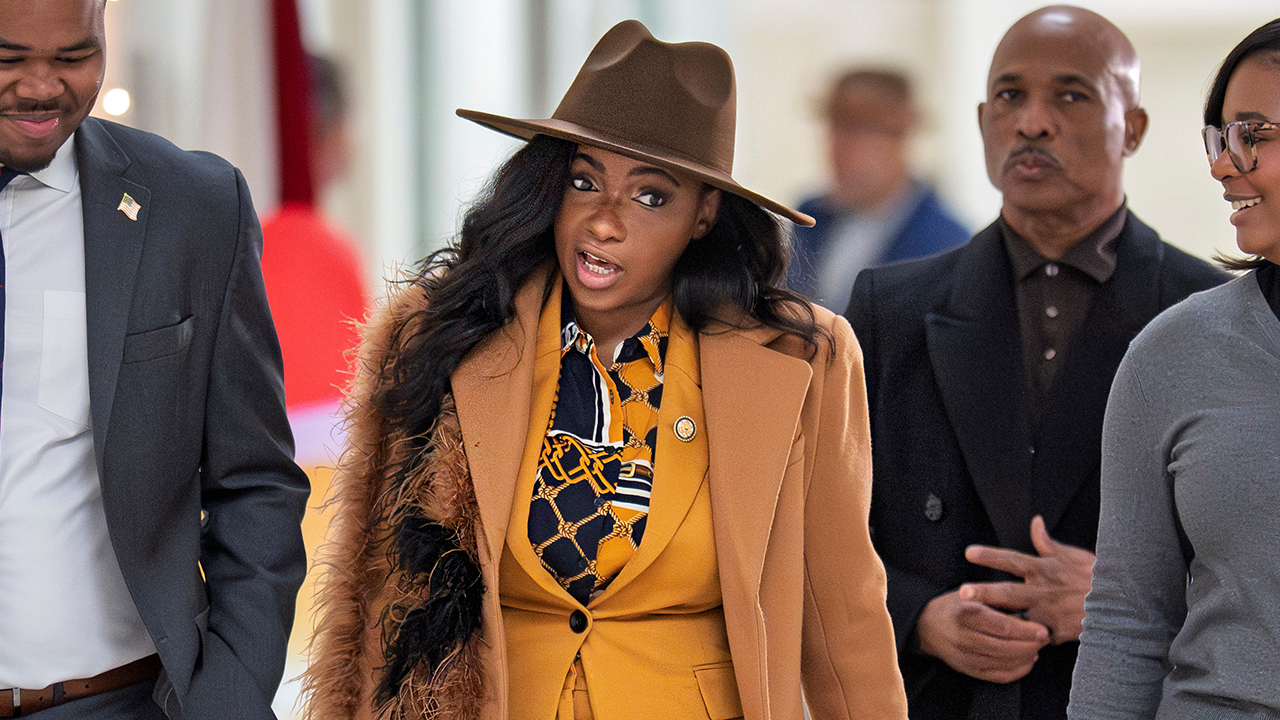
It was a Saturday night in Dallas, and the energy inside the arena was electric. Representative Jasmine Crockett, the Texas Democrat who had recently lost her bid for the U.S. Senate, stepped onto the stage alongside one of the biggest names in R&B, Chris Brown. The crowd roared as she playfully acknowledged that she tends to stir up controversy from time to time, then asked if Dallas was in the building. She was there not as a politician campaigning for votes, but as a fan, a celebrant, someone wanting to bask in what she called “Black joy.” She praised Brown and Usher Raymond, calling them architects of contemporary R&B and pop, and she made sure the moment was immortalized in the official Congressional Record. It was meant to be a tribute, a gesture of appreciation from a Black lawmaker to Black artists who shaped the culture. But almost as soon as the news spread, it became something else entirely: a political scandal, a moral flashpoint, and a painful reminder that public recognition carries weight far beyond the moment of applause.
The backlash was immediate, and it centered on something that many people found impossible to ignore: Chris Brown’s long, documented history of violence, particularly against women. In 2009, Brown pleaded guilty to felony assault for attacking his then-girlfriend Rihanna, leaving her bruised and bloodied in a way that shocked the world. Photographs of her injuries circulated widely, and the music industry responded with fierce condemnation. That was not an isolated incident. In 2013, he was involved in an altercation with fellow singer Frank Ocean and later pleaded guilty to a misdemeanor assault charge. In 2017, another former girlfriend, Karrueche Tran, obtained a domestic violence restraining order after testifying about alleged abuse and threats. Most recently, Brown pleaded guilty to charges stemming from an incident in July 2023, when he allegedly struck producer Abe Diaw twice in the head with a glass tequila bottle. He is also awaiting sentencing in October on a separate charge of affray, a criminal charge under English law for unlawfully threatening violence against another person. For many observers, Crockett’s decision to honor him with a congressional entry was not just a lapse in judgment; it was an insult to survivors and to the very communities she claims to represent.
Critics from across the political spectrum quickly weighed in, and their words were sharp. Andrew Kerr, an investigative reporter for the Washington Free Beacon, posted on X that the Kamala Harris-endorsed congresswoman had used her congressional authority to honor “the rapper best known for beating ever-living s— out of Rihanna in 2009.” Democratic activist Shannon Watts also reminded people of Brown’s past, listing his guilty plea for felony assault, the restraining order obtained by Karrueche Tran, and multiple allegations of violence and sexual assault against other women. Democratic strategist Ameshia Cross called the move a political miscalculation and a “ridiculous move” by Crockett, adding that it was “tone deaf as hell” especially because Black women suffer domestic violence at some of the highest rates, often fatally. Eric Michael Garcia, D.C. bureau chief for The Independent, wrote that it was “absolutely disgusting” to see Crockett platform and honor an abuser of women. Even bestselling author Dan Winslow said the moment changed his view of her, declaring that he would never support her again. The thrust of the criticism was not just about Chris Brown as an artist, but about the signal that honoring him sends: that achievement and fame can outshine a pattern of abuse, and that a lawmaker’s platform can be used to celebrate someone whose behavior has caused real harm.
Crockett, for her part, framed her decision very differently. On stage, she described the tribute as a way to document Black excellence and joy in the Congressional Record. She quoted scripture, saying, “Weeping may endure for a night, but joy comes in the morning,” and emphasized that the moment was about celebrating Black artistry at the highest level. Her member statement, a form of recognition that any lawmaker can enter into the congressional record without a vote, specifically recognized “the artistry of Chris Brown and Usher Raymond.” To Crockett, this may have seemed like a harmless, even uplifting gesture, a way to highlight the cultural contributions of two performers who helped define a generation of R&B and pop music, especially within the Black community. But to her critics, the absence of any acknowledgment of Brown’s violent history made the gesture feel careless at best and callous at worst. They argued that honoring a man with such a well-documented record of abuse, especially in a moment when domestic violence remains a devastating crisis in Black communities, shows a disconnect between symbolic gestures and the lived realities of the people she serves. It raised uncomfortable questions: What does it mean to separate the art from the artist? And should a public official, someone entrusted with moral authority and legislative power, be celebrating a figure whose conduct has caused so much pain?
Chris Brown himself responded to the controversy with frustration, posting a message on Instagram that mixed anger with exhaustion. He said the idea to honor him had come from Crockett, not from him, and that his Dallas shows were already sold out before any of this happened. “Funny thing is… YALL CAME TO ME WITH THIS! NOT THE OTHER WAY AROUND. I was minding my own d-mn business. My shows in Dallas were already sold out. I ain’t asked to be honored because I knew some sh-t like this would happen… I have an idea how about y’all leave me the f— alone and let me focus on the fans that spent their money to actually see and support me,” he wrote. His response did little to quiet the criticism. If anything, it underscored the tangled nature of the situation: a controversial artist who resents being put in the spotlight, and a politician who sought to elevate him without anticipating the inevitable fallout. For Brown, the honor came with unwanted scrutiny. For Crockett, it became another chapter in a string of controversial public moments that have defined her time in office, and it may end up being one of the final impressions she leaves as she prepares to depart the U.S. House of Representatives.
That political reality adds another layer to the story. Crockett had decided not to run for reelection to her House seat, instead setting her sights on the Senate. But she lost that bid to James Talarico, the Democratic nominee in the Lone Star State, and as a result, she will not be returning to Congress when the next session begins. That makes this tribute one of her parting gestures, a final moment in the national spotlight before she steps away from elected office. For her supporters, this may be seen as an authentic moment of cultural pride, a Black woman celebrating Black artists without apology. For her detractors, it is a cautionary tale about the dangers of political celebrity and the ease with which public figures can become tone-deaf to the very issues they claim to care about. The controversy also raises broader questions about accountability, redemption, and the standards we hold for public recognition. Can someone with a history of violence be honored for their artistry without implicitly endorsing their past? Where should the line be drawn between celebrating Black joy and confronting Black pain? And what responsibility do elected officials have to think beyond the applause, to consider the survivors who might be watching, the families who have lost loved ones to domestic violence, the communities still healing from wounds that were never fully acknowledged? For now, the moment remains a stark reminder that the choices public officials make in front of a cheering crowd can echo far beyond the stage, carried on the very record they once sought to immortalize.