





Here is a humanized and expanded summary of the original article, crafted into six cohesive paragraphs.
—
The serene, forested landscape surrounding Camp David in rural Maryland was momentarily punctured by the roar of jet engines on Saturday morning. A fighter jet scrambled from NORAD intercepted an aircraft that had wandered into protected airspace while President Donald Trump was in residence at the presidential retreat. For those familiar with the area, the sudden appearance of a high-performance military aircraft is a startling reminder that even the quietest corners of the country are subject to the highest levels of security when the commander-in-chief is present. The incident unfolded quickly and was handled with precision, but it served as a stark illustration of the constant vigilance required to protect the president and the rules that govern the skies over this historic compound.
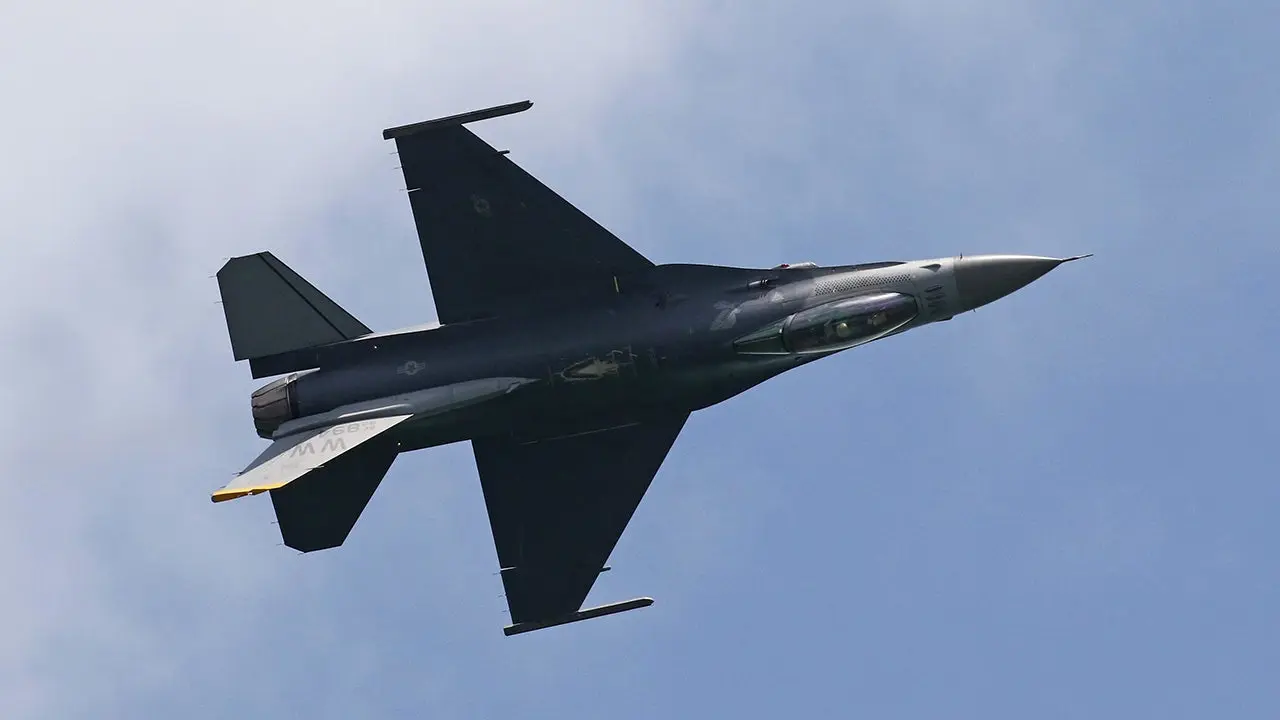
The interception was conducted by a NORAD F-16 fighter jet, a routine but serious response to an airspace violation. According to a release from the Defense Visual Information Distribution Service (DVIDS), the F-16 deployed flares as a visual signal to grab the attention of the aircraft’s pilot. This is a standard and non-lethal measure used to communicate with an unresponsive or unaware aviator. After the flares were deployed, the military pilots successfully guided the aircraft out of the restricted zone, ensuring the safety of the president, the aircrew, and the civilian pilot. The official guidance issued by NORAD urges any general aviation pilot intercepted by military aircraft to immediately tune to emergency frequencies 121.5 or 243.0 and reverse course until receiving further instructions. It is a simple but vital protocol that can turn a potentially dangerous situation into a controlled and peaceful resolution.
The airspace over Camp David is not a casual fly-over zone. There is a permanent no-fly area established around the presidential retreat, and additional temporary flight restrictions are routinely imposed when the president is present or when a presidential movement is anticipated. These restrictions are published as Notices to Air Missions, better known as NOTAMs, and they are a standard part of pre-flight planning for any responsible pilot. The First Air Force, a component of NORAD, took to social media on Saturday to emphasize this very point. In a message posted on X, the command noted that fighter aircraft intercepted an aircraft violating restricted airspace over Thurmont, Maryland, which is the town nearest Camp David. The post reminded all pilots to check NOTAMs before takeoff to ensure they have current information about temporary flight restrictions in their area, closing with a simple, human admonition: “Stay Safe, Fly Informed!” The tweet was a clear, professional nudge to the aviation community.
The timing of the incident is worth noting. President Trump had left the White House for Camp David on Friday evening, settling in for a weekend at the rustic retreat that has hosted presidents since Franklin D. Roosevelt. The violation occurred just hours after his arrival, a fact that underscores the immediate and unwavering nature of the security bubble that surrounds the president. This was also not the first time such an event has occurred. In fact, a plane was intercepted over Camp David in June when President Trump was staying there, and that pilot was also safely escorted out of the area. The recurrence suggests a pattern of pilots failing to review the latest flight restrictions or perhaps becoming disoriented in the regional skies, highlighting the ongoing challenge of ensuring airspace compliance in an era of increasingly busy general aviation traffic.
For the average private pilot, the idea of being intercepted by an F-16 might seem like a scene from an action movie, but it is a very real possibility when flying near sensitive locations. Most airspace violations are not intentional, but rather the result of oversight, a missed weather detour, or a simple failure to identify a temporary flight restriction. The human side of this story involves more than just the president and the military personnel; it also involves the pilot, who may have been unaware of the gravity of the situation until the sharp-eyed F-16 appeared off the wingtip. In such moments, the pilot’s reaction matters immensely. Remaining calm, following the fighter jet’s visual signals, and switching to the emergency frequency can mean the difference between a brief escort and a far more serious federal action. NORAD’s primary mission is to defend the homeland, and its response to these intrusions is always swift, measured, and designed to protect life while upholding the law.
Ultimately, this event is a reminder of the intricate ballet between national security and civilian aviation. Every day, thousands of flights crisscross the nation, and for the vast majority, they do so without incident. But in the shadow of a presidential retreat, the margins are far thinner, and the tolerance for error is essentially zero. The NORAD F-16 intercept was a textbook execution of protocol: flares used to gain attention, a safe escort out of the zone, and a public warning to the flying community to be more vigilant. For those on the ground at Camp David, the overflight may have been nothing more than a brief, distant noise. But for the military men and women tasked with guarding the skies, it was a moment of focused intensity, a quiet but firm assertion that the air above the president remains an inviolable sanctuary. It serves as a powerful message to all pilots that the skies are not unlimited open space, but a carefully managed environment where security always takes precedence.