






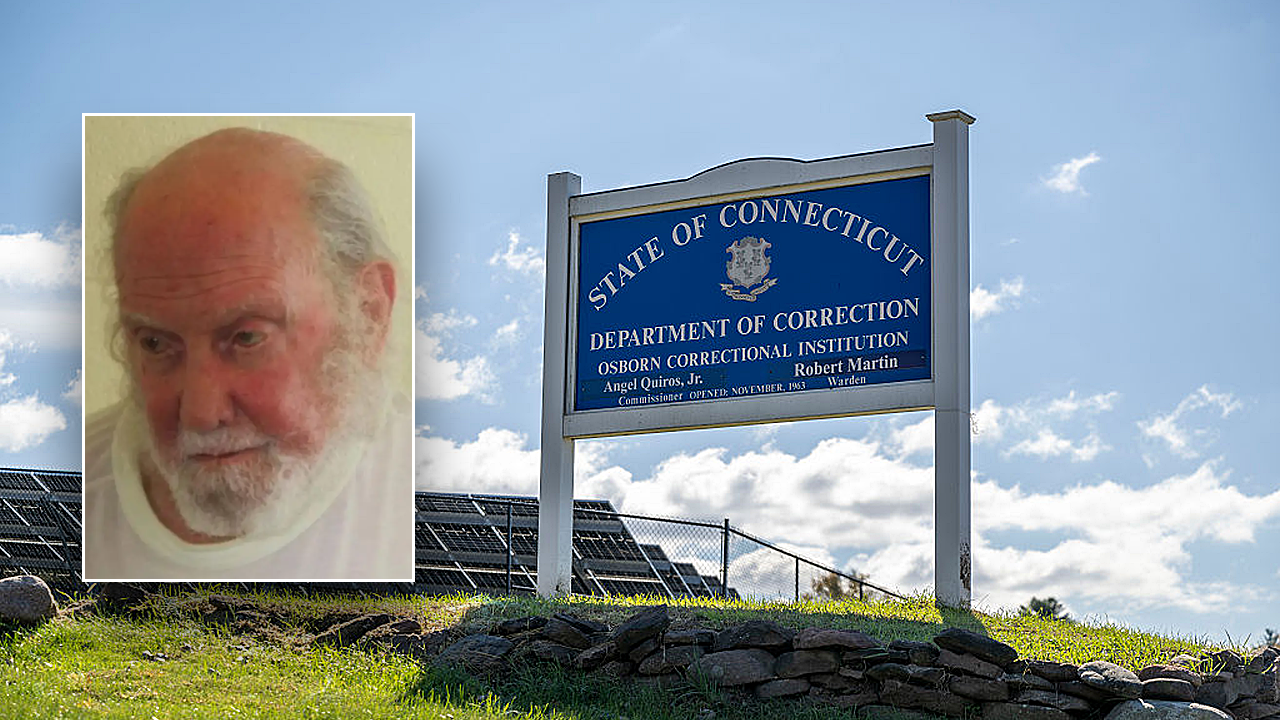
In the silence of a secured nursing facility in Connecticut, a quiet death occurred that ended one of the most extraordinary and tragic sagas in American legal history. Francis Clifford Smith, a man who stood as a living paradox—sentenced to die but living to be a centenarian—passed away in his sleep in late June at the 60 West facility, a specialized unit that houses aging individuals within the justice system. He was 101 years old, just a few months shy of turning 102, and had become the longest-serving prisoner in the history of the United States, having spent a staggering seventy-six years of his life behind bars. His death was as understated as his life had been contentious: he was cremated without a funeral, attended by no immediate family, his passing marked by the clinical efficiency of a system that had spent decades trying to determine his fate. “Essentially, he died of old age,” said David Skoczulek, a spokesman for the facility, adding that while his family involvement was minimal, the staff ensured his passing was “appropriate, met his wishes and was dignified.” It was a fittingly anticlimactic end for a man whose story was defined by denial, endurance, and a haunting question of guilt or innocence that was never truly resolved.
The genesis of Francis Smith’s lifelong confinement can be traced back to a humid, violent night in July 1949. On the 23rd, a 68-year-old night watchman named Grover Hart was fatally shot during an attempted robbery at a Connecticut yacht club. The brutal killing sent shockwaves through the community, and police quickly arrested two men: Francis Clifford Smith, a 25-year-old, and George Lowden. The case against Smith was built on a fragile foundation of cooperation and coercion. Lowden, facing the ultimate penalty himself, took a plea deal with prosecutors, agreeing to implicate Smith in the shooting in exchange for a lesser sentence. His testimony was the lynchpin of the prosecution’s case. However, the truth was far more murky. Lowden would later recant his statement, alleging that police had beaten him mercilessly until he fabricated the story implicating his accomplice. When the time came for him to face Smith in court, Lowden refused to testify altogether, leaving the prosecution scrambling to shore up an already shaky narrative. Despite the absence of this key witness and the dubious origins of the confession, a jury convicted Smith of the murder. The judge, handing down the harshest penalty available, sentenced the young man to death in the electric chair. At 25, Francis Smith was thrust into the grim limbo of death row, a young man who would spend the next half-decade waiting for a date with the executioner.
The years that followed were a surreal and agonizing ordeal, a testament to the cruelty of prolonged uncertainty. Smith was scheduled to be executed eight separate times during his time on death row. Each scheduled date brought with it the psychological preparation for death—the shaving of the head, the final meals, the walk down the corridor—only to be granted a last-minute stay of execution, sending him back to a cell he would never leave. The entire process was punctuated by a growing chorus of doubt from within the justice system itself. Major Leo Carroll, one of the police officers who had interrogated Smith immediately following his arrest, testified before the Board of Pardons right before the eighth scheduled execution, making a stunning admission: “I’m not even sure he was present at the murder.” This declaration from a law enforcement officer who had witnessed the initial investigation firsthand should have been a bombshell, yet the legal machinery continued to grind forward. In 1954, after five years of this living nightmare, the state of Connecticut commuted Smith’s death sentence to life in prison. While this spared him from the electric chair, it cemented the reality that he would likely spend the remainder of his life confined, regardless of the mounting questions about his actual culpability in Grover Hart’s death.
Over the subsequent decades, the case against Francis Smith began to unravel in dramatic fashion, revealing a catalog of exculpatory evidence that had been ignored or suppressed. A key witness who had originally provided testimony linking Smith to the crime recanted her entire account, admitting that her earlier statements had been inaccurate. George Lowden, the man whose original accusation had sealed Smith’s fate, formally repudiated his earlier statement, fully corroborating the story of police violence that had forced him to lie. Then, in a twist that offered a glimmer of hope, another man, who was serving time in Alabama, stepped forward and claimed full responsibility for the murder of Grover Hart, asserting that he—and not Francis Smith—had been the actual triggerman. The evidence for a new trial seemed overwhelming. Yet, the judicial system remained obstinate. A judge reviewed the Alabama inmate’s confession and dismissed it as lacking credibility, declining to overturn the conviction or grant Smith a new hearing. Smith was left to rot in prison, stripped of any legal avenue to prove his innocence. Despite this, he maintained his innocence until his dying day, telling the Boston Globe in 2023 with a quiet defiance, “I’m in here on no evidence at all.” The words encapsulated the tragedy of a man whose life was defined not by proof, but by presumption.
Smith’s existence within the prison system was a strange chronicle of institutionalization punctuated by fleeting bursts of attempted freedom. He spent 76 years behind bars, with only three short stints of release. In 1967, he managed to escape, living a fugitive’s life for a mere twelve days before being apprehended and returned to custody. In 1975, he was granted parole, a taste of freedom that lasted approximately ten months before he was arrested on larceny and weapons charges. Although he was never convicted of these latter offenses, the violation of his parole was sufficient grounds to send him back into the cold embrace of the correctional system, where he would remain for decades more. As he grew older, Smith appeared to stop fighting for his release. Records indicate that he declined or refused to participate in several later parole hearings, a decision he would later dispute, attributing it to a failing memory. It was only in 2020, with his physical health deteriorating and dementia beginning to cloud his awareness, that he agreed to a supervised parole transfer to the 60 West nursing facility. There, he traded the stark gray walls of a cell for the soft pastels of an elderly care wing, spending his final years watched over by nurses rather than guards, a poignant symbol of how the justice system grapples with the geriatric population it has accumulated.
In the end, Francis Clifford Smith left the world the way he largely existed within it—quietly and alone. The Connecticut Department of Correction confirmed that he was struggling with issues associated with old age, and while they did not formally diagnose dementia, his faculties were clearly fading. He passed peacefully in his sleep, and when the news broke, the response was not outrage or celebration, but a somber reflection on a life consumed by time. “He was 101 and a half,” noted Andrius Banevicius, the public information officer for the Connecticut Department of Correction, with a touch of dry understatement. “He did pretty well as far as longevity is concerned.” The comment highlights the bizarre nature of his record: a man sentenced to death achieved a longevity that the state denied him the chance to enjoy in freedom. His story now stands as a grim monument to the fallibility of the justice system, asking uncomfortable questions about whether the ends of a sentence justify the means of an erroneous conviction. Did he pull the trigger that killed Grover Hart? The evidence remains mired in coerced confessions, recantations, and alternative suspects. What is certain is that Francis Smith paid an astronomical price in human years, sacrificing his entire adult life to a legal battle he could never win, and a verdict he refused to accept. As he was cremated, unmarked by public ceremony, he has finally found the release that eluded him for eight decades—not through a pardon or a vindication, but through the quiet, unforgiving finality of death.