





U.S. and Iran Resume Nuclear Talks, Yet Breakthrough Remains Elusive, Rubio Confirms
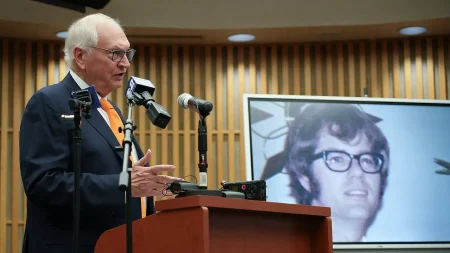
Washington, D.C. — In a development that signals a cautious reopening of diplomatic channels between Washington and Tehran, Secretary of State Marco Rubio has confirmed that American negotiators have re-engaged in conversations regarding Iran’s contested nuclear program. However, in a stark reminder of the deep complexities that continue to define this long-running geopolitical standoff, the top U.S. diplomat offered little in the way of optimism, conceding that no significant breakthroughs have materialized from the preliminary exchanges.
A Cautious Return to the Table
Rubio’s remarks, delivered during a briefing in the nation’s capital, mark the clearest indication yet that the Trump administration is willing to explore dialogue with the Islamic Republic, even as it maintains its broad campaign of pressure and sanctions. While the Secretary of State refrained from detailing the specific venue or the rank of the officials involved, his acknowledgment that conversations have “restarted” signals a potential thaw in a relationship that has remained brittle since the United States unilaterally withdrew from the Joint Comprehensive Plan of Action (JCPOA) several years ago.
The revelation comes at a time of heightened tension across the Middle East, where Iran’s accelerating enrichment activities have repeatedly edged the region closer to the brink of conflict. Diplomatic sources suggest the new round of discussions is focused primarily on attempting to establish a framework for verifying Tehran’s activities, though the precise parameters of the agenda remain shrouded in the kind of ambiguity typical of such sensitive back-channel efforts.
The Shadow of Enrichment
At the heart of the renewed—and so far unfruitful—dialogue lies the perennial issue of uranium enrichment. Since the collapse of the 2015 nuclear pact, Iranian scientists have drastically expanded the nation’s stockpile of highly enriched uranium, surpassing the stringent limits once imposed by international inspectors. This accelerated program, combined with the removal of international monitoring equipment from many sites, has fueled alarm across Western capitals regarding the potential proliferation of nuclear weapons capabilities in the volatile Middle East.
Despite the ominous trajectory of Iran’s nuclear clock, the resumption of talks—however preliminary—has been viewed by some regional analysts as a last-ditch effort to prevent a full-blown military confrontation. The international community, still reeling from the ongoing conflict in Ukraine and the persistent unrest in the Gaza Strip, has watched these developments with a mixture of hope and anxiety, wary that a misstep could plunge the region into a new and devastating war.
Reading the Depths of Tehran’s Ambitions
One of the primary reasons a breakthrough has yet to be achieved is the conflicting strategic calculus within Tehran itself. The Iranian leadership maintains that its nuclear work is entirely peaceful, intended solely for civilian energy production. Yet, the opaque nature of its compliance, coupled with the continued development of advanced centrifuges, forces Western intelligence agencies to adopt a deeply skeptical posture, viewing the program as a potential weaponization project in waiting.
Engaging with Washington offers Tehran a potential path to economic relief, allowing the battered Iranian economy to potentially re-enter global markets and attract foreign investment. However, any concession regarding its nuclear sovereignty is likely to be met with fierce resistance from hardline factions within the Islamic Revolutionary Guard Corps (IRGC), who view the nuclear program as a key deterrent against foreign regime change and guarantee of the dynasty’s survival. This internal political friction makes it exceedingly difficult for Iranian negotiators to concede ground, even when facing the crippling economic realities imposed by a punishing sanctions regime.
The Role of External Mediators
Interestingly, the renewed contacts appear to be occurring with the assistance of regional intermediaries, a common feature of U.S.-Iranian diplomacy given the two nations lack formal diplomatic relations. Reports indicate that officials from Qatar and Oman have shuttled messages between the two capitals in recent months, attempting to narrow the significant gap that exists between Washington’s demands and Tehran’s red lines. While the details of these mediated discussions remain strictly confidential, sources suggest they have focused on potential confidence-building measures, such as the exchange of prisoners and the unfreezing of certain Iranian assets, intended to restore trust and facilitate more substantive negotiations.
The persistence of these third-party efforts underscores the international community’s urgent interest in a diplomatic resolution. According to experts on non-proliferation, the “breakout time”—the theoretical time required to produce enough fissile material for a single warhead—has shrunk to a matter of weeks. This compressed timeline does not allow for the luxury of lengthy, drawn-out negotiations that have traditionally characterized the relationship between the United States and Iran.
Congressional Skepticism vs. Pragmatic Necessity
Back home, the announcement of resumed talks has elicited a mixed, and often heated, response within the halls of Congress. Republican hawks remain vocally suspicious of any administration effort to negotiate with a nation they accuse of sponsoring international terrorism and destabilizing its neighbors. For this bloc, the memory of the previous administration’s “maximum pressure” campaign and the subsequent assassination of the Iranian General Qassem Soleimani looms large; a deal with the “ayatollah regime” is often viewed as an act of appeasement that would only serve to embolden the Iranian government.
However, a pragmatic faction within Washington is increasingly recognizing that diplomacy, while imperfect, remains the only realistic avenue to avoid a potentially catastrophic military intervention. An airstrike campaign against Iranian nuclear facilities would almost certainly trigger heavy retaliation against U.S. military assets in the region and wreak havoc on global oil supplies, sending shockwaves through an already fragile global economy. This reality creates a strategic dilemma, forcing the administration to balance the hawkish demands of its political base against the stark necessities of international stability.
What Lies Ahead
When asked about the timeline for these discussions and the likelihood of convening formal talks, Secretary Rubio was characteristically non-committal. He noted that “diplomacy requires time,” implying that the differing alignments between the two governments are too complex for rapid resolution. Nonetheless, the very existence of a conversation is a political victory for those who advocate for engagement over isolation, suggesting that the current administration, despite its rhetoric, is mindful of the dire alternatives.
For observers in the Middle East, the takeaway is one of guarded caution. The fact that Washington and Tehran are speaking is preferable to the sounds of silence that have so often preceded military strikes. Yet, the chasm between the two sides remains vast. As Iranian negotiators prepare for potential future rounds, they do so with one eye on the extraction of sanctions relief and the other on developing their capabilities closer to the threshold of nuclear latency.
In the Weeks Ahead
With Secretary Rubio’s remarks now on the record, the international community will be watching closely for any signs of tangible progress. The initial contact is a promising sign that the mechanisms of communication remain open and functional, yet the pervasive history of mistrust, coupled with the shadow of the IRGC and the complexities of the Israeli-Palestinian conflict, continues to obscure the path toward a stable resolution.
Ultimately, this renewed engagement is a high-stakes gamble. For Washington, it is a gamble that Tehran is genuinely ready to dim its enrichment centrifuges in exchange for a foothold in the global financial system. For Tehran, it is a gamble that the United States is prepared to offer credible and lasting guarantees—secured against the shifting tides of presidential transitions—that its economy will not be immediately re-crushed by a snap-back of sanctions.
While the Secretary of State was clear that “no breakthroughs” have yet emerged, the very vocabulary of negotiation has shifted. After years of adversarial confrontation and inflammatory messaging, the use of terms like “conversations” and “restart” suggests the ink is wet on a new chapter. Whether that chapter ends in a durable agreement—or merely a diplomatic epilogue to a looming crisis—remains one of the defining questions of this volatile era in international relations. As the wait for substantive progress continues, the world holds its breath, trapped between the mitigations of diplomacy and the catastrophic costs of conflict.