




Imagine walking into your Monday-morning staff meeting and feeling that familiar knot in your stomach. You’ve just checked the latest numbers, and something is off. Sales are down. Your win-back customers are quiet. The funnel that was humming last week has suddenly gone cold. Everyone around the table has a piece of the puzzle—someone noticed the email campaign paused, someone else saw a spike in checkout abandonment, and another person points to a bug in a new integration. But nobody can connect the dots, and by the time the team patches things together, a week of revenue has already slipped away. That scenario is exactly what Augmeta, a young startup based in Redmond, Washington, was built to eliminate. The company has raised $3 million in seed funding to accelerate its work on what it calls “Agentic KPI Ops”—a slightly clunky name for a very human idea: software that never sleeps, watches over every important business metric, and actually does something about it. Instead of showing up at a weekly review with charts and excuses, Augmeta assigns an AI agent to each key performance indicator, or KPI, and lets that agent monitor, investigate, and act on problems as soon as they happen—not days later. The simplest way to understand it is with an example. Imagine an e-commerce company that swaps out its email marketing system. In the chaos, a campaign designed to win back lapsed customers gets paused. Sales start to drift. The reason is hidden across six or seven different tools, with each team reading only a fragment of the story. As CEO Salman Jamali puts it, “Everyone reads part of it. Nobody reads it end to end.” Augmeta’s agents are built to read the whole story, all the time, from online sales to airline bag check-in rates, and to keep asking the question no one wants to be the first to ask: Why did this number move?
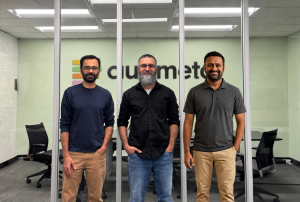
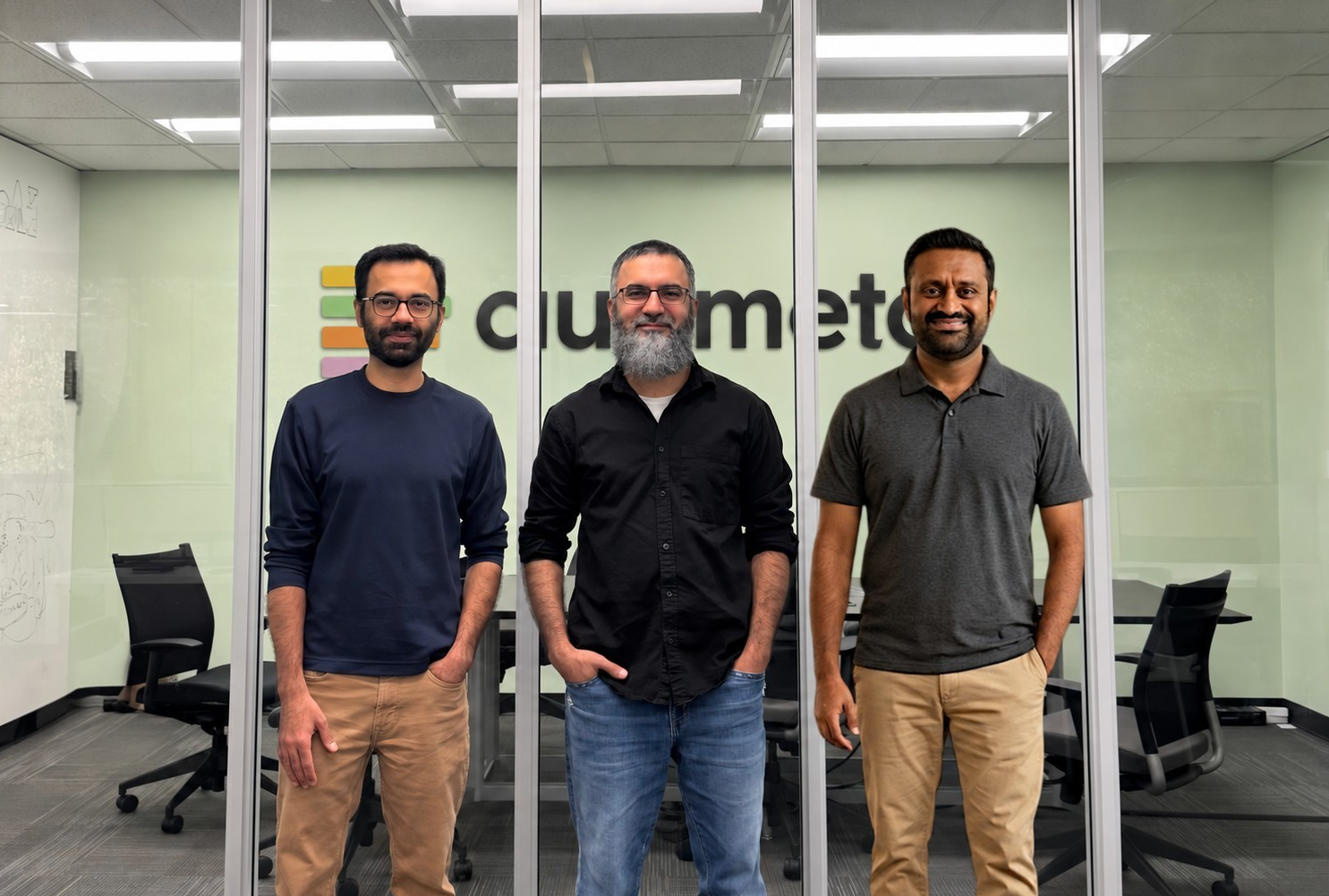
The company’s approach is more about ownership than automation for its own sake. Augmeta calls its AI agents “operators,” a deliberate nod to startup culture. In a fast-moving startup, the operator is the person who doesn’t just do the job description; they own the problem until it’s solved. They don’t stop because a task is technically complete or because their role says they’ve done enough. They keep going until the outcome actually changes. That’s exactly what Augmeta’s operators are designed to do. When one of them spots a problem or an opportunity, it first estimates how much money that change is worth in dollars. Then it gathers the relevant evidence—logs, dashboards, third-party tools, internal databases—and takes that evidence to the right team, whether that’s email marketing, engineering, or product. It doesn’t just file a report and move on. It follows up, checks whether the fix actually worked, and if it didn’t, it digs deeper. How much an agent can change on its own depends on the permissions a customer gives it, and the company is clear that not every fix is automated. Some problems still need a human in the loop. But the agent’s job is to be relentlessly persistent, the way a great startup founder is relentlessly persistent: don’t tell me you’re working on it; tell me it’s done. This persistent, end-to-end ownership is the heart of Augmeta’s pitch. It’s not another analytics dashboard that tells you where to look; it’s a digital teammate that actually follows through, learns from what it finds, and carries that context into the next investigation. The company was co-founded in 2025 by Salman Jamali, who previously led engineering for Opendoor’s home operations; Nitin Bhaskaran, who led product teams at Home Depot and Opendoor; and Arslan Jamali, a former Amazon Business senior product manager who worked in finance at AWS and Prime Video. Salman and Arslan are brothers. Together, they brought deep operational experience from both the consumer and enterprise sides of tech—experience that taught them how easily small, silent disruptions can turn into big revenue leaks.
The $3 million seed round is small by Silicon Valley standards, but the investor list is bright and strategic. The round was led by Depth Ventures, a San Francisco firm founded last year by Paul Jun, a former Index Ventures partner and CFO of the AI accounting startup Pilot, and Jeff Arnold, an early OpenAI employee who now sits as a director at the OpenAI Foundation. A former Opendoor colleague introduced the Augmeta founders to Depth, and the connection makes sense: these are people who understand the messy reality of running big operations and the promise of AI to clean things up. Also participating were NextWave NYC, part of Flybridge Capital, along with investments through the Index Ventures and Sequoia Capital scout programs and a number of angel investors. Jun frames the problem in stark terms: “Enterprises lose millions in revenue every day to friction and unintended changes in their customer funnels, from underperforming landing pages to slow checkout experiences.” He said Depth invested because of the founders’ technical expertise and their vision for how AI can help companies go from simply tracking their numbers to constantly acting on them, while keeping people in charge. That last part matters. There’s no shortage of AI hype out there, but Augmeta isn’t pretending to be a magic button. It’s a tool for people who need to make faster decisions with more context. The company is currently a small team of seven people, including the three founders, and they’re hiring. For a startup at this stage, the funding isn’t just about the money; it’s about validation and reach. It gives them the ability to move faster, bring on more customers, and build out the capabilities that will make their operators even more effective.
One of the best windows into Augmeta’s real-world impact is Tractor Supply Company, the Tennessee-based farm-and-ranch retailer, which is already a customer. According to Augmeta, its agents are tracking more than 100 KPIs across Tractor Supply’s e-commerce business, and the reports they produce are actually used in business decisions. Tractor Supply was so happy that it renewed after the first year, which is often the truest test of a B2B startup’s value. Sada Kshirsagar, Tractor Supply’s vice president of product management and operations, put it in a way that sounds almost poetic for a software product: “It feels like we’re building a brain for the digital team that stays with a KPI end to end.” She also said the system surfaces answers before anyone thinks to ask, and it carries what it learns from each investigation into the next one. That’s the holy grail, isn’t it? Not just telling people what went wrong, but creating an institutional memory that gets smarter over time. The startup has run pilots with other large companies and has more in the pipeline, so Tractor Supply isn’t just a one-off success story; it’s a proof point that the model can work in complex, real-world retail environments. On the business side, Augmeta sells annual enterprise contracts rather than charging per user or per month. That’s a telling choice. It means they’re selling outcomes, not seats. Jamali says he eventually wants to shift even further toward value-based pricing, where Augmeta’s fee is tied to a percentage of the savings or revenue the system genuinely helps create. That would be a bold move, and if they can pull it off, it would align their incentives even more tightly with their customers’. For now, the annual contract model is a more familiar enterprise playbook, but it’s clear where the company wants to go.
What about the competition? The AI landscape is crowded and noisy, but Jamali says he doesn’t see the big AI labs as a threat. In fact, each time a new model comes out, Augmeta benefits immediately—they can plug in better language understanding, better reasoning, better analysis. It’s not a zero-sum game. More complicated is the landscape of analytics companies like Amplitude, Adobe, and Quantum Metric, which have all started adding their own AI agents to their platforms. Jamali acknowledges the new competition but distinguishes between what those companies build and what Augmeta does. He calls their approach “triage agents”—tools that help you decide what’s important, alert you to a problem, and maybe suggest a next step. Augmeta’s operators, by contrast, are built for ongoing, end-to-end ownership. They don’t just hand you a report; they stay with the metric until the outcome is delivered. The bigger question, Jamali argues, is whether companies will just try to build these KPI agents themselves using off-the-shelf AI. It’s a fair question. With ChatGPT and Claude and all the other tools, why not just build your own? Augmeta is surprisingly willing to answer that question head-on, using a tactic Jamali calls “anti-selling.” He says the pitch often goes like this: “Don’t buy Augmeta. Let’s go build this in Claude.” It’s a gutsy opener. Then, instead of showing slides, they walk the prospect through everything they’d have to build—the integrations, the prompts, the error handling, the dashboards, the permissions, the security, the sheer operational overhead of keeping agents reliable across hundreds of KPIs as the business changes. By the end, the point is clear: the hard part isn’t writing a prompt that analyzes a metric; the hard part is building a system that keeps working day after day, in a messy world, through reorgs, new tools, shifting strategies, and fire drills.
So what’s next for Augmeta? Much of the new money will go toward speeding up sales and deployments at large companies, which tend to move slowly when it comes to purchasing new technology. Big enterprises have long procurement timelines, many stakeholders, and rigorous requirements around privacy and compliance. Augmeta wants to be the company that makes that process as painless as possible. They also plan to reach more customers, cover more KPIs for each customer, and give their agents more autonomy—more power to act on what they find and learn from the results. That last point is important because the long-term vision isn’t just to be a monitoring tool; it’s to be a sort of digital workforce that constantly improves. As Salman Jamali notes, AI has fundamentally changed how they think about building the team. “I really do think we can do a lot more with under 10 people,” he says, “compared to what I would have said, let’s just say, six months ago.” In other words, the same AI revolution that’s disrupting the rest of the world is also making Augmeta stronger and more efficient. For a startup with seven employees, that’s a huge advantage. They can stay small, move quickly, and let the software do the heavy lifting. The bigger promise, though, is something that resonates beyond any specific metric or dashboard: the idea that the people closest to a business shouldn’t have to spend their days hunting for the source of a problem. They should have a tireless partner watching every number, chasing every anomaly, and following up until the issue is fixed. That’s the future Augmeta is betting on—a future where the weekly business review becomes less about dread and more about where to put the next big opportunity. And if they’re right, those Monday-morning knots may one day be a thing of the past.