





Imagine a pair of sneakers leaving a warehouse in another country. There’s no big tracking device strapped to the box, no expensive cellular modem inside, just a tiny Bluetooth chip—the same kind of low-energy chip that’s already in billions of everyday objects. As that cardboard box moves from truck to plane to delivery van, that chip sends a small, quiet signal up into the sky. A satellite catches it, and somewhere on a screen, someone watches the sneakers cross the globe in real time. That’s not a distant sci-fi vision. It’s the kind of world that Hubble Network, a Seattle startup, is trying to build right now. And on Wednesday, the company took a huge step toward making that vision feel real by announcing $200 million in new funding. That money pushes Hubble Network’s valuation to $1.6 billion, officially making it a unicorn—a rare and much-desired status that means investors believe the company is worth more than a billion dollars. For a startup that’s only been around since 2021, reaching that milestone is a striking turn of events. The company didn’t get there by launching a giant rocket or building a competing version of the internet in space. It got there by doing something much more subtle and, in some ways, much stranger: connecting ordinary, off-the-shelf Bluetooth devices directly to satellites, and making global tracking cheap enough to use on everyday goods.
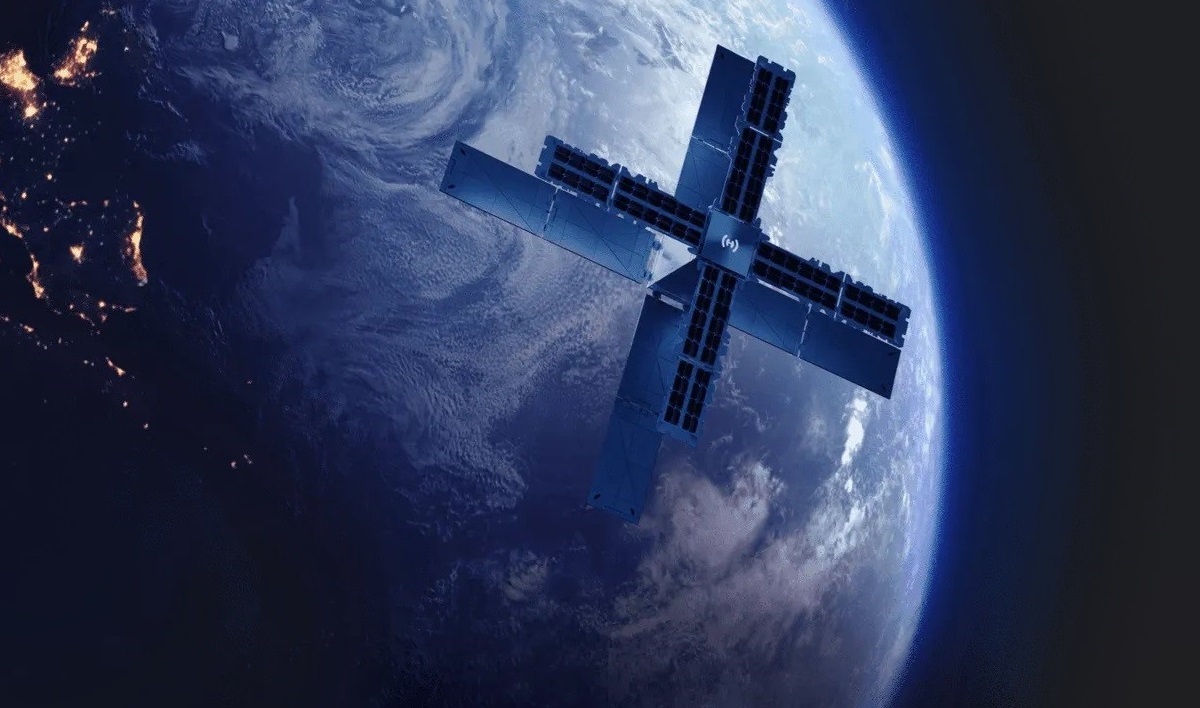
The money story behind Hubble Network’s big moment is worth unpacking. This latest round, a Series C, was led by Smith Point Capital, with participation from a mix of investors that includes Seraphim, Carthona Capital, Earthshot Ventures, Y Combinator, and RPM Ventures. Those names represent a blend of dedicated space-focused funds and more general startup backers, and their confidence says a lot about where commercial space technology is heading. With this new injection, Hubble Network has now raised a total of $300 million since its founding. That’s a significant war chest for a company that employs only about 70 people and currently operates just six satellites in low-Earth orbit. But the money isn’t just about keeping the lights on. It’s fuel for a much bigger plan. Hubble intends to expand from those six satellites to a full constellation of 60 satellites by 2030, working with satellite operator Muon Space to make that happen. The fact that investors are willing to pour this much capital into a relatively small team is a powerful signal that they believe Hubble has cracked something important. It also reflects a broader shift in the space industry, where huge constellations are no longer the exclusive playground of giant corporations or government agencies. A nimble startup with clever engineering and a focused vision can now take aim at a global market and attract serious money.
For most of us, the technology itself might sound almost impossibly ambitious. Hubble Network’s system works through a software update that allows standard Bluetooth Low Energy chips—commonly known as BLE chips—to broadcast signals directly to space. These are not specially designed, exotic pieces of hardware. They’re the same kind of chips found in package trackers, vehicles, pharmaceuticals, and countless other products. But Bluetooth was originally designed to work over very short distances, like between your phone and your wireless headphones. Sending a Bluetooth signal to a satellite hundreds of miles overhead is a completely different challenge. The signal is weak, the distance is enormous, and there’s an entire atmosphere in the way. That’s why Hubble’s approach generated so much skepticism early on. When the company first claimed it could connect Bluetooth chips to satellites, many people in the industry simply didn’t believe it. Alex Haro, Hubble’s CEO and co-founder, acknowledged that openly in the company’s announcement. “When we said we’d connect Bluetooth chips to satellites, most of the industry said the physics wouldn’t allow it,” he said. “Today we’re turning that early skepticism into a global opportunity.” That quote captures the essence of Hubble’s journey. It’s a story about engineers refusing to accept conventional limits, finding a way to make a weak, humble little radio chip reach beyond the Earth, and turning doubt into momentum.
Skepticism is often the starting point for the most interesting startups, and Hubble is a great example of that. The physics problem at the heart of the company is real. Bluetooth Low Energy chips are designed to use very little power, which is why they can run for years on small batteries. But that low power comes at a cost: the signals are not meant to travel far. In a typical setting, a Bluetooth signal might reach a few dozen meters at most. To get that signal to a satellite, you need extremely sensitive receivers, clever antenna design, and a network architecture that compensates for the limitations of the chips. Hubble’s hybrid network does this by pairing its satellite constellation with a ground-based network of nearly 90 million scanners. Those scanners catch signals that satellites can’t pick up, and the two layers work together to create much more complete coverage. For pilot customers, the system is already live. One of those early partners is Samsara, a software company focused on fleet management and industrial operations. That’s a meaningful validation, because Samsara is not in the business of testing experimental technology just for fun. They want practical, reliable ways to keep track of vehicles and equipment. As Hubble launches more satellites, data speeds and update frequencies will improve, making the network even more useful. For now, the company is starting with a handful of satellites but building toward a future where signals from billions of devices can regularly connect to space.
Hubble Network’s rise also says something important about the Pacific Northwest. The Seattle area has quietly become a major hub for satellite development in low-Earth orbit. Heavyweights like SpaceX, with its large Starlink facility in Redmond, and Amazon, with its Project Kuiper satellite division in nearby Kirkland, have built a dense community of engineers and expertise around space technology. Those companies focus largely on high-bandwidth orbital internet, the kind of service that could one day beam streaming video and broadband connectivity to homes and businesses around the world. Hubble is carving out a different niche. Instead of trying to deliver massive amounts of data, it’s focused on low-power, direct-to-satellite connectivity for the internet of things. That means small bursts of important information: where a package is, how cold a medicine got, whether a trailer is moving, whether a product is still in the right place. It’s a narrower slice of the space economy, but it could be an enormous one. There are already billions of Bluetooth chips in circulation, and the potential to turn those ordinary chips into global communicators is a huge idea. The region’s booming space ecosystem gives Hubble access to talent, partners, and credibility, and Hubble, in turn, reinforces the region’s reputation as a center for commercial space technology. It’s no accident that the company ranks No. 135 on the GeekWire 200, the ranked index of the Pacific Northwest’s top startups. A 70-person company achieving unicorn status in such a competitive field is proof that you don’t need a massive campus or thousands of employees to make a planetary impact.
At the heart of it all is a simple but profound economic argument. Traditional cellular trackers can be effective, but they’re expensive. The hardware costs more, the connectivity plans cost more, and that makes them impractical for cheap everyday goods. Hubble’s system is designed to change the math completely. By combining terrestrial and space networks, the company can drop tracking costs low enough to make global monitoring economically viable for things we never thought worth tracking before. Standard Bluetooth chips cost roughly 50 cents, and a subscription could be as cheap as about $4 a month. That opens up a world of possibilities. It’s not just about high-value cargo like shipping containers filled with electronics or expensive medical supplies. It’s about being able to track a new pair of shoes from a warehouse to a front doorstep, giving both businesses and customers a level of visibility that used to be reserved for much more expensive goods. The company was founded in 2021 by Alex Haro, who previously co-founded the location-sharing app Life360, and Ben Wild, the chief technology officer, who invented Amazon Sidewalk. Those backgrounds show up in Hubble’s approach: they see Bluetooth as a kind of connective tissue for the physical world. And despite the name, Hubble has no connection to NASA’s Hubble Space Telescope. The name plays off the idea that the network acts as a hub for Bluetooth devices, a central point that gathers their signals and gives them a path to the rest of the planet. That quiet, human-scale idea—making the things we make stay connected to us as they travel through the world—is what makes Hubble Network’s promise feel so real. It’s a big ambition born from a tiny chip, and now it has a billion-dollar valuation standing behind it.