






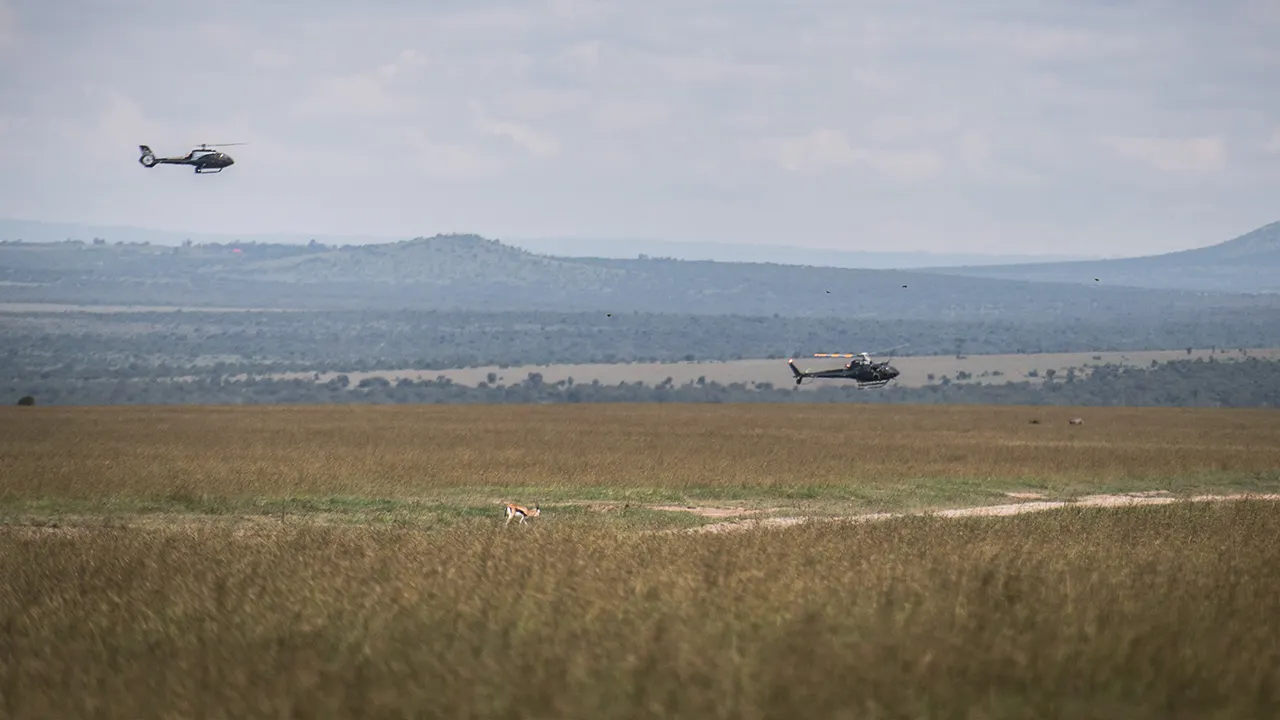
It began as an ordinary morning in one of Kenya’s most breathtaking and remote landscapes. On Wednesday, a helicopter lifted off from a private wildlife conservancy in northern Kenya, carrying seven people on what was described as a charter flight. Instead of reaching its destination, the journey ended in catastrophe. In a mountainous region near Kirish in Samburu County, around 9 a.m., the aircraft went down, and lives were suddenly extinguished. The U.S. State Department later confirmed the heartbreaking news: five of the people on board were Americans. For their families, friends, and colleagues, the announcement would set off an immediate and devastating wave of grief. For the wider public, the news was a stark reminder that even in places of stunning natural beauty, tragedy can strike without warning. The Kenya Civil Aviation Authority acknowledged the crash, noting that seven souls were aboard the Eurocopter EC130 B4, a helicopter registered under the markings 5Y-GYM. The country’s rugged northern regions are known for their dramatic cliffs, wide valleys, and wildlife-rich conservancies, drawing travelers from around the world. That such a setting, so often associated with adventure and wonder, should become the site of an aviation disaster only deepens the sense of sorrow. As rescue and response efforts unfolded, questions about what exactly went wrong began to mount. Yet for now, those questions remain unanswered, and the morning’s silence is broken only by grief.
Among the deceased was José Suárez, a well-known figure in Spanish-language media and a respected leader in the news business. He served as president and general manager for Telemundo, overseeing multiple stations in Florida, where he had become a familiar and trusted presence both inside the newsroom and across the broader community. In a message to employees, NBCUniversal News Group Chairman Cesar Conde identified Suárez as one of the victims. For colleagues, the news was not just a professional loss but a deeply personal one. Those who worked alongside Suárez knew him as someone who cared about journalism, about his team, and about the communities his stations served. He was part of the fabric of the organization, someone who helped shape coverage that mattered and who guided newsrooms through moments of both triumph and difficulty. His death is a reminder that behind every headline is a human story, and behind every editorial decision, there is a person with a family, with friendships, with dreams, and with a future that will now never unfold. In the moments after the announcement, tributes began to surface online and within the industry. Colleagues shared memories, expressed shock, and tried to make sense of a loss that felt impossible to comprehend. The corporate statements and official declarations of condolence, while necessary, cannot fill the enormous void left by his absence. For the team members who looked to him for leadership, the road ahead will be uncharted. They will carry forward his legacy, even as they mourn the man who led them. His life was intertwined with the mission of keeping audiences informed, but it was also marked by the ordinary, precious rhythms of daily existence—quiet mornings, family conversations, and the anticipation of what tomorrow might bring. That tomorrow is now gone, replaced by a sorrow that will be felt for a long time.
The helicopter involved in the crash was operated by Lady Lori Helicopters, a company that expressed its profound sadness over the loss. In a statement shared on social media, the operator said, “Our deepest sympathies are with the guests, crew, their families and loved ones, and all those affected by this tragic accident.” The flight itself was a charter journey from Suyian Conservancy, a sprawling 44,000-acre private wildlife refuge, to Ololokwe, according to the company. The region surrounding Mount Ololokwe is iconic, often described as a place of dramatic beauty, with rocky peaks rising out of the savanna and vast stretches of untouched land. Visitors come for the solitude, the wildlife, and the chance to connect with a world far removed from the noise of modern life. The idea that a journey to such a place could end in such a sudden and heart-wrenching way adds an extra layer of disbelief. The Eurocopter EC130 B4, a popular model known for its panoramic views and used frequently for sightseeing charters, would normally be associated with unforgettable experiences in extraordinary surroundings. Instead, this flight will be remembered for its devastating outcome. The terrain where the crash occurred is mountainous, and remote locations present particular challenges for emergency response and accident investigation. Even reaching the site may require significant effort, and every hour that passes is felt acutely by the families waiting for news. As the operator’s statement suggests, the shock of the accident extends far beyond the immediate victims. The guests onboard were not just passengers; they were individuals with lives, stories, and people who loved them. The crew, too, had families and futures that have been torn apart by this tragedy. Lady Lori Helicopters, an organization that likely prides itself on safety and service, now faces a moment of deep reflection and heartbreak. In the coming weeks, investigators will work to understand the sequence of events that led to this disaster. But before those technical findings are released, there is a human toll that cannot be measured by data or analysis.
The cause of the crash has not yet been determined, and a thorough investigation is now underway by the relevant authorities. As is often the case with aviation accidents, the inquiry will likely examine a range of possible factors, including weather, mechanical performance, pilot decision-making, and operational protocol. The aircraft was on a charter route between points that are separated by expansive and difficult terrain, where weather patterns can change quickly and where thin mountain air can pose unique challenges. Investigators will sift through debris, retrieve flight data if possible, and consult with experts to piece together the final moments of the flight. All of this takes time, and for those who are mourning, time moves both too quickly and not nearly fast enough. While the work of understanding the cause proceeds, the U.S. Embassy in Kenya is in contact with local authorities and is providing consular assistance to the families of the Americans involved. That support may take many forms, from helping loved ones navigate logistics to offering a compassionate presence during a deeply traumatic period. There is something profoundly difficult about losing a family member in a foreign country, hundreds or thousands of miles from home, with the added burden of coordinating travel arrangements and official procedures. Consular assistance cannot heal the grief, but it can ease some of the practical burdens, allowing families to focus on mourning and remembrance. The State Department, in a statement, made clear that American lives remain a central concern. “The Trump Administration has no higher priority than the safety and security of Americans,” the statement read. “We extend our deepest condolences to the families and loved ones on their loss.” Those are words that offer little comfort in the face of such irreplaceable loss, but they reflect the solemn commitment of a government to stand beside its citizens even in the darkest moments. The coming days will bring more details, and perhaps eventually some answers. Yet for the loved ones of those who perished, no explanation will ever bring back the voices they miss or fill the silence left behind by such an abrupt farewell.
This tragedy also arrives at a time when aviation accidents have been drawing renewed attention, serving as sober reminders of the risks inherent in flight, however rare they may be. Recent headlines have told of a deadly military helicopter crash in Texas that killed two people, sparked a wildfire, and forced evacuations, as well as a Missouri skydiving plane crash that claimed the lives of all twelve people aboard. Each of those events brought its own wave of sorrow, its own unanswered questions, and its own grieving communities. Seen together, these incidents remind us that despite incredible advances in aviation safety, the sky is not always forgiving. Every accident leaves behind a trail of broken families, stunned coworkers, and deeply affected communities. In the case of the Kenya crash, the victims were brought together by a sense of adventure, by a desire to see the world, or by professional obligations that placed them on that particular flight on that particular morning. There is no way to know what their last thoughts were as the helicopter descended toward the mountainous terrain. But the human mind cannot help but imagine the fear and confusion that may have occurred in those final moments. For their families, the pain will not be confined to a single day. It will linger in anniversaries, in familiar places, in the sound of a particular song, and in the quiet realization that life has been permanently altered. The international dimensions of the tragedy add another layer of complexity, with grieving family members separated by time zones and borders, trying to arrange travel and receive information from multiple agencies. Yet grief is a language spoken everywhere. It transcends nationality, culture, and geography. The condolences offered by the Kenyan authorities, the American officials, the helicopter company, and people around the world all point to the same truth: five American lives were lost, and the world is poorer for it.
As the investigation unfolds, the world can only wait and hope that the truth will provide at least some measure of closure for those who mourn. But closure is a strange concept in the face of sudden death. What can truly close when a husband, wife, father, mother, son, or daughter has been taken so unexpectedly? The answer is nothing, and yet human beings remain stubbornly committed to seeking answers. We want to know what happened, why it happened, and what can be done to ensure it never happens again. That is not just a matter of policy or procedure; it is a way of honoring those who died by learning from their loss. The names of the deceased, other than José Suárez, have not yet been publicly released in full, but each is someone’s world. Each had a story that extends far beyond the headlines. Each was scheduled to come home, to call a loved one, to share memories of the trip, and to continue living a life that was abruptly interrupted. For now, all that remains is memory, and memory is both a comfort and a cruelty. It preserves the beauty of what was, while also reminding us of the pain of what will never be. In the vast landscape of northern Kenya, near the slopes of Mount Ololokwe, there is now a place where the earth holds the scars of a tragedy. But the true impact lies not in the physical wreckage. It lies in the hearts of those who lost someone dear. As authorities work to determine the cause of the crash, as diplomats and officials offer formal condolences, and as the news cycle eventually moves on, the families will remain. They will rebuild their lives around the absence of the ones they loved. They will carry forward their memories with tenderness and pain. And they will hope, in time, to find some measure of peace. Until then, sympathy is all that can be offered, along with a quiet promise that these lives will not be forgotten.