






Tehran’s Strategic Pivot: Forging Alliances to Counter U.S. Pressure
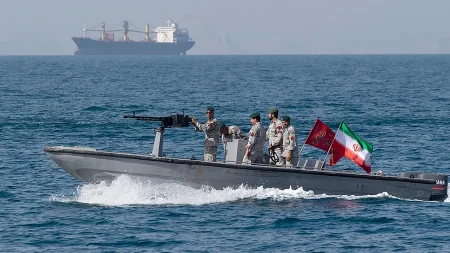
Amidst the escalating tensions of Washington’s renewed “maximum pressure” campaign, a clear and calculated strategy is emerging from the corridors of power in Tehran. The Islamic Republic is not merely hunkering down in isolation; it is actively forging a critical lifeline by deepening its financial, military, and strategic ties with Beijing and Moscow. Regional security analysts point to a deliberate pivot away from the Western-dominated global order, as Iran seeks to circumvent the crushing weight of U.S. sanctions. This is not a passive acceptance of economic hardship but a proactive restructuring of its international alliances, positioning itself firmly within a bloc of nations that share a common interest in challenging American influence. The move is a direct response to the renewed, aggressive posture from the White House, which has intensified a campaign designed to isolate Tehran and dismantle the economic infrastructure that has allowed it to weather decades of sanctions. This new “Economic Fury” aims to cut off the remaining lifelines and ensure maximum pain, pushing Iran to find unconventional allies to sustain its economy and military ambitions.
The recent announcement by President Donald Trump, describing the operations as the “most crushing economic operation ever taken against any country,” marks a significant escalation. This new campaign, with its sweeping consequences for any nation or business providing Iran with an economic lifeline, leaves Tehran with little choice but to look eastward. Experts observe that survival depends on swift adaptation, not just to military threats from the U.S. and Israel, but to this staunch, politically driven economic warfare. The need to survive is fueling the need to adapt, and adaptation for the Islamic Republic means seeking a deeper enmeshment with nations that have themselves been subjected to U.S. political and economic pressure. The strategy is to create a network of interdependencies, not just with other authoritarian states, but with powerful non-Western blocs that are becoming increasingly assertive on the world stage, a deliberate attempt to build a counter-hegemonic alliance that can weather the pressures of the dollar and U.S. military might.
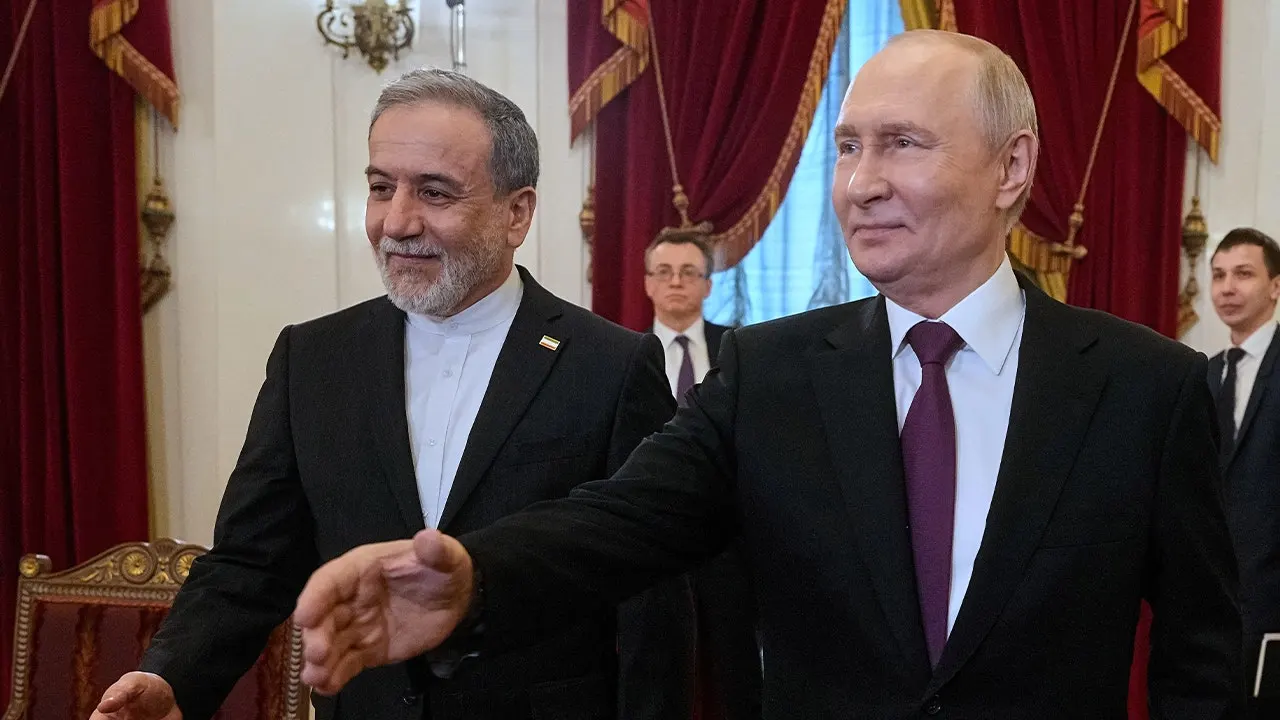
A key element of this strategy lies in Tehran’s efforts to integrate itself fully into the BRICS economic bloc and the Shanghai Cooperation Organization (SCO). These forums, led by Moscow and Beijing, have become critical vehicles for Iran’s outreach. The goal is deeply practical: access to financing, markets, and technology that can circumvent the U.S.-led global financial system. The announcement by Abdolnaser Hemmati, the governor of the Central Bank of Iran, that Tehran is set to join the BRICS-backed New Development Bank shows this intent. While the bank’s confirmation is pending, the ambition is clear: to secure a formal foot in the door of non-Western financial institutions. This move is about more than just survival. It is a strategic effort to become a self-proclaimed “linchpin” in a network that directly challenges the U.S.-led post-World War II order. Analysts explain that by integrating into economic orders brought about by Russia and China, Iran can better shield itself from U.S. pressure.
The relationship with Russia goes beyond economic partnerships, deepening into crucial military and technological support. NBC News recently reported that Russia is supplying Iran with ammunition, drone components, and TNT via Caspian Sea shipping routes, a clear sign of the level of cooperation and dependence. This material support is not just about military hardware; it allows Tehran to stand up against U.S. military pressure and maintains its capabilities in the region. Even limited technology and arms flows are vital for the regime’s survival and adaptation strategies. The cooperation between Tehran and Moscow represents a low-transaction-cost alliance where mutual interests in opposing U.S. influence create a powerful bond. This critical lifeline means Iran can continue to fight for its own survival and support its regional proxies, ensuring it can live to combat the U.S. and its allies. This technical and military support provides the agility which would otherwise be impossible under the burden of sanctions.
Beyond the economic and military support, Iran’s role in the “Axis of Aggressors” highlights the strategic interconnectivity that U.S. policymakers are being urged to recognize. Iran serves as the key distributor and bridge between state-state adversaries (Russia, China, North Korea) and the non-state actors in the Middle East (Hamas, Hezbollah, the Houthis). This dual role is a central pillar for both economic and political forms of power against the U.S. It facilitates the flow of money, technology, for state and non-state actors, making it a direct threat to the stability of the region. The alliance between authoritarian states is cohesive, as with each other they have less to lose in the short term in terms of transaction costs than liberal western nations. This interwoven networks the west must counter as a single, coordinated threat narrative, not just as individual issues. The U.S. must recognize that Iran is the linchpin that connects the state and non-state threats, making it a critical target in any larger geopolitical strategy.
The partnerships are not without their own internal differences, but the Iranian leadership is banking on the fact that a coalition of independent authoritarians can manage its differences more effectively than the U.S. and the Western world can handle its own contradictions. Tehran seeks to maximize its economic, political, and military support, even with the knowledge that the BRICS will not be perfect substitutes for the global financial system. However, the strategic political and military embrace from Beijing and Moscow is critical and could be its most essential survival policy. This engagement provides an undeniable lifeline that can sustain the regime. The “Axis of Resistance” and “Axis of Aggressors” are not two distinct problems, rather the United States is facing a connected, multi-faceted threat, where the lines between non-state proxies and state powers is blurred. This unites
The deep strategy around this network is forcing Washington policymakers to wake up and see how interconnected the threats to the order become. It forces them to recognize that sanctions, while a powerful tool, are not enough if there is a coordinated effort to counteract the global system that enforces those sanctions. Iran’s new reliance on these alliances is a multipolar world, which is the antithesis of the sole superpower style of the post-Cold War. As U.S. pressure intensifies, the bonds across these authoritarian powers will only strengthen, making the economic warfare akin to a game of whack-a-mole amidst a tectonic shift in power. While the West’s liberal order grapples with its own internal differences, the “Authoritarians Axis” is demonstrating a ruthless efficiency in cooperation. This new global game is not a binary, but a multi-vector conflict where economic and military wars are deeply intertwined.