






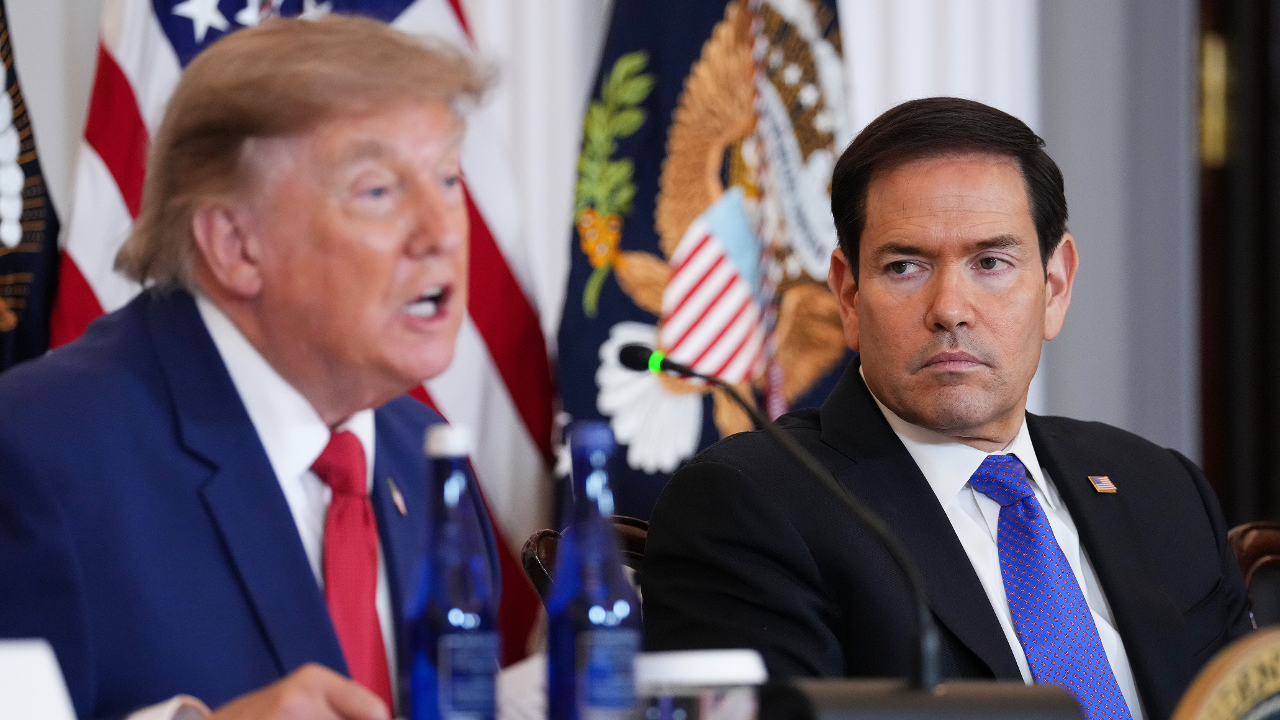
The Trump administration has thrown down the gauntlet against the world’s highest international court, imposing sanctions on two of its senior figures and sharply escalating a bitter standoff over legal jurisdiction and national sovereignty. The move, announced by Secretary of State Marco Rubio, targets the President of the International Criminal Court (ICC) and its lead trial lawyer, marking a bold new front in Washington’s challenge to an institution that has dared to investigate American citizens and allies. For the administration, this is a necessary defense of national sovereignty against a rogue body that has overstepped its mandate and singled out nations without legal authority to do so. For the court’s defenders, it’s a chilling assault on international justice and judicial independence.
The two individuals now in the crosshairs are Tomoko Akane, the ICC’s president from Japan, and Abdoulaye Seye, the court’s senior trial lawyer from Senegal. Their alleged offense is having directly participated in efforts to pursue investigations, arrests, detentions, or prosecutions of officials from countries that have not consented to the court’s jurisdiction. Rubio’s statement was blunt and unsparing, branding the court as “corrupt and fatally politicized” and accusing its leadership of “maliciously” abusing its authority and exceeding its mandate. The Secretary of State’s words carry weight, framing the action as a necessary corrective to an institution that has, in the administration’s view, become a weapon against the West. The core grievance is that the court has been investigating U.S. personnel for actions in Afghanistan and has issued arrest warrants for Israeli leaders regarding the war in Gaza—both nations being non-parties to the Rome Statute that created the court.
The practical effect of these sanctions is severe and immediate. They freeze any assets Tomoko Akane and Abdoulaye Seye hold within U.S. jurisdictions and sever their ability to engage in virtually any financial transaction with American citizens, companies, or the broader U.S. financial system. It’s a financial stranglehold meant to make their work profoundly difficult, or at the very least, to send a powerful deterrent message to other court officials. But it’s the accompanying rhetoric that signals a much larger agenda. Rubio described a “whole of government campaign to dismantle the threat posed by the ICC to national sovereignty,” and predicted it would be “sweeping.” This isn’t just a one-off punitive action; it’s a declaration of a deliberate, sustained policy to undermine the court’s very existence, with a call for like-minded nations to join Washington, cease funding, and withdraw their participation. The goal, as stated, is to ensure the ICC’s ability to target Americans and citizens of other non-member states “must end.”
The legal philosophy driving this confrontation is straightforward: the ICC, as the administration sees it, simply lacks the power to investigate soldiers, commanders, and political leaders from countries that never joined its founding treaty. The United States and Israel, alongside other non-parties, have not consented to be bound by this court’s rules. Therefore, any attempt to assert jurisdiction over their citizens is inherently illegitimate. The ICC’s response, however, is rooted in a different article of faith. Court officials maintain the sanctions “undermine the rule of law” and amount to a “flagrant attack against the independence of an impartial judicial institution.” The court’s defenders point to a legal principle that while individual nations may not be members, the court retains jurisdiction over qualifying crimes—genocide, crimes against humanity, war crimes, and aggression—when they are committed on the territory of a state that is a member.
It’s this principle of territorial jurisdiction that lies at the heart of the dispute. Afghanistan and Palestine are both member states of the ICC, having signed and ratified the Rome Statute. The court’s argument is that this membership grants them the authority to investigate any crimes committed on those territories, regardless of the nationality of the accused. Over the years, this has led to thorny investigations that have infuriated Washington and Jerusalem. For years, the court has probed allegations of war crimes by U.S. personnel in Afghanistan—a move that stoked fears in Washington of American soldiers being hauled before an international tribunal. Today, the focus has shifted dramatically toward the Middle East, with the ICC issuing arrest warrants in September 2024 for Israeli Prime Minister Benjamin Netanyahu and then-Defense Minister Yoav Gallant, over alleged war crimes and crimes against humanity linked to the conflict in Gaza.
The sanctions are the culmination of a long-simmering feud, but they arrive at a pivotal moment of global legal tension. The recent arrest warrant for Prime Minister Netanyahu has proven particularly divisive, shattering the traditional consensus among Western allies on the ICC’s role. While some European nations and human rights groups have hailed the move as a vital step for accountability, others, notably the United States and conservative voices, have condemned it as a politically motivated act of lawfare against a close ally. The Biden administration had actually criticized the ICC warrants but largely declined to use punitive measures; the Trump administration, however, has now taken the gloves off. This new executive action signals a distinct willingness to confront and try to neuter an institution many in Washington view as biased against democratic states and a threat to their military and diplomatic freedom of action.
The broader implications of this decision are enormous and will reverberate across the global geopolitical landscape. By financially crippling the court’s leadership, the U.S. is leveraging its immense economic power to police the behavior of an international body. The administration’s message is unmistakable: cooperate with American interests or face severe monetary consequences. For allies, this will likely raise uncomfortable questions about the autonomy of international institutions and the lengths to which the U.S. will go to protect its own. For adversaries and critics of the ICC, it provides a ready-made excuse to boycott the court and dismiss its rulings as illegitimate. The ICC itself is now under existential pressure, as it must navigate a world where the world’s most powerful nation has officially declared it an enemy and is actively campaigning to cut its lifelines. In this high-stakes confrontation between national sovereignty and international justice, the court and its defenders are bracing for a long and punishing battle, with the entire future of global accountability hanging in the balance.