




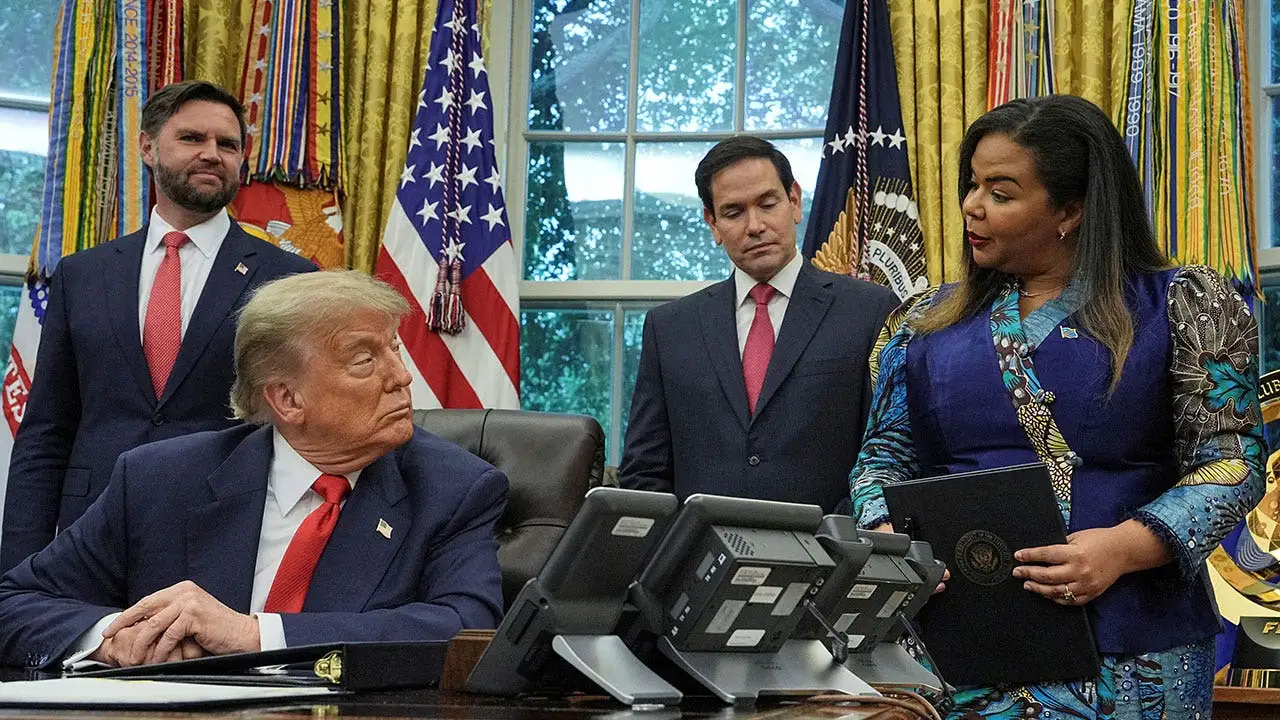
Behind the geopolitical headlines of resource competition, the Democratic Republic of Congo (DRC) is navigating a delicate diplomatic balance, choosing to view its vast mineral wealth not as a battleground for superpowers, but as a gateway to shared prosperity. In an exclusive interview at the United Nations, Congolese Foreign Minister Thérèse Kayikwamba Wagner rejected the notion that her country must choose between the United States and China. As the Trump administration ramps up efforts to secure American access to the Congo’s unrivaled reserves of cobalt, copper, lithium, and gold—aiming to dismantle China’s dominant grip on critical mineral supply chains—Kinshasa is reframing the narrative. “I don’t like talking about competition. I like talking about complementarity,” Kayikwamba Wagner explained with a sense of pragmatic optimism. For a nation as expansive and naturally blessed as the DRC, economic survival and development require diverse, global alliances that bring different strengths, technologies, and expertise to the table rather than a single, monopolistic partnership.
This philosophy of “complementarity” is being put to the test through a series of landmark agreements aimed at reshaping the DRC’s economic landscape. A strategic partnership signed between Washington and Kinshasa on December 4, 2025, represents a significant step forward, establishing a framework for deeper investment, economic integration, and the creation of highly transparent, secure mineral supply chains. Alongside this pact, a collaborative arrangement between the DRC’s state-owned mining giant, Gécamines, and commodities trader Mercuria—bolstered by interest from the U.S. International Development Finance Corporation—promises to give American buyers prioritized access to vital copper and cobalt resources. Kayikwamba Wagner noted that these developments represent a welcome shift, where relations with the U.S. are translating into “tangible transformations” for the everyday lives of the Congolese people, ensuring that foreign investment serves a domestic purpose.
However, the Foreign Minister sent a clear, uncompromising message to the international community: the global transition to green energy must not repeat the exploitative patterns of the past. Speaking at a high-level U.N. session on critical minerals, she warned against a “new extractive transition” where Africa’s raw resources are hollowed out to power the rest of the world, leaving the continent with environmental degradation and empty pockets while processing, technology, and wealth remain in Western or Asian metropolises. For the DRC, true partnership means localizing the supply chain. Kinshasa is demanding that future agreements prioritize domestic processing, infrastructure building, technology transfers, and industrialization. Decarbonizing the planet cannot come at the expense of African development; the transition must be a catalyst for local empowerment, lifting Congolese communities out of poverty by ensuring they retain the true value of their soil.
This economic ambition is inextricably linked to the search for peace in a region bruised by decades of bloodshed. The mineral-rich eastern provinces of the DRC have long been the epicenter of a devastating conflict, which the U.S.-mediated peace process between the DRC and Rwanda seeks to resolve. Although presidents Félix Tshisekedi and Paul Kagame reaffirmed their commitment to peace alongside the December economic agreements, violence continues to flare. Kayikwamba Wagner candidly acknowledged the grueling nature of the peace process, reminding observers that they are fighting to untangle a complex, thirty-year war that “is not going to happen overnight.” Yet, she expressed profound appreciation for Washington’s resolve, particularly the Treasury Department’s decisions to impose heavy sanctions on the Rwanda Defense Force (RDF) and key officials for their documented support of the predatory M23 rebel group, which has seized lucrative mining hubs.
The humanitarian toll of this ongoing instability remains the most painful aspect of the crisis, particularly in occupied territories where natural resources are illegally plundered to fund violence. Presiding over the U.N. Security Council, the DRC has brought international attention to the harrowing correlation between illegal mineral extraction and systemic human rights abuses, including a dramatic rise in conflict-related sexual violence. In areas controlled by M23 and Rwandan forces, women, men, and children are subjected to horrific abuse with zero access to healthcare, trauma counseling, or judicial recourse. Kayikwamba Wagner emphasized that liberating these mineral-rich zones is not just an economic priority, but a moral imperative. Re-establishing state authority is the only way to build a protective shield around vulnerable communities, offering survivors a path toward healing, justice, and basic human dignity.
The economic engine driving this cycle of violence is laid bare in places like the Rubaya mining area, a major global source of tantalum currently under rebel control. According to U.N. estimates shared by the Foreign Minister, at least 1,400 tons of coltan were smuggled across the border into Rwanda during the first year of M23’s occupation, lining the militia’s pockets with roughly $800,000 every month. In response to this illicit trade, the U.S. Treasury Department has targeted smuggling networks with aggressive sanctions to choke off the rebel group’s funding and clean up global supply chains. For the DRC, these measures represent a crucial step toward transparency. By converting their mineral wealth from a curse of conflict into a blessing of industrial development, the Congolese people hope to write a new chapter—one where their resources build a stable, prosperous home rather than fueling a proxy war.