




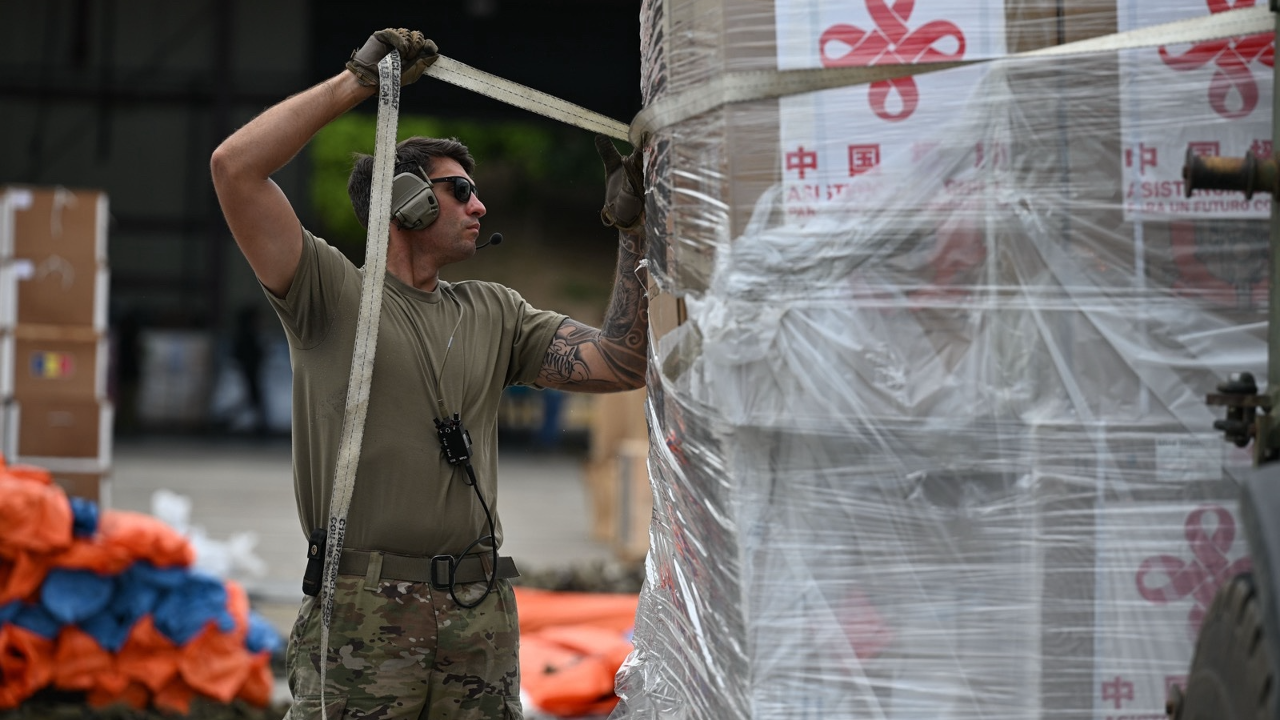
In the wake of the devastating back-to-back earthquakes that struck Venezuela on June 24, a striking scene unfolded at the Simon Bolivar International Airport near Caracas. American soldiers, who have been at the forefront of the massive international relief operation, were seen unloading a cargo plane emblazoned with “Air China.” This single flight represents Beijing’s only physical aid contribution to the crisis-stricken nation so far, arriving nearly two weeks after the disaster. The image of U.S. service members diligently moving Chinese shipping crates highlights the complex, highly organized, and sometimes ironic nature of global humanitarian efforts, where geopolitical rivals momentarily intersect on the tarmac in the name of human survival.
The logistical backbone of this entire relief operation has been built and maintained by the United States military. Following the intense quakes, the runways at Simon Bolivar Airport were left severely damaged and unusable, effectively cutting off the capital from large-scale international rescue flights. Recognizing that a functioning airfield was the literal gateway to saving lives, U.S. military engineers moved quickly to repair a critical runway. Among the very first American assets flown in were not just basic supplies, but industrial forklifts and heavy machinery designed to build a functioning cargo hub. This crucial intervention paved the way for massive C-17 transport planes—and eventually, the solitary Chinese aid flight—to land and discharge their life-saving cargo.
The sheer scale of the American commitment reflects a pledge from the highest levels of government to provide a “big, fast, and effective” response. To date, the United States has mobilized more than 1.5 million pounds of physical assistance and committed over $386 million in financial aid. This monumental effort is a collaborative triumph, bridging the capabilities of the Department of War, the State Department, and dynamic public-private partnerships. State Department spokesperson Tommy Pigott emphasized that while some nations offer rhetorical support or delayed shipments, American personnel have been on the ground from day one, physically unloading supplies to ensure they reach the families who need them most without getting bogged down in bureaucratic red tape.
A vital piece of this relief pipeline is the Florida-based nonprofit Global Empowerment Mission (GEM), which has worked hand-in-hand with the military to bypass local political obstacles. GEM has already shipped nearly one million pounds of aid, including tens of thousands of hygiene kits, tents, tarps, and power generators. Organization founder Michael Capponi noted that delivering aid to Venezuela today is a completely different reality than in years past. Following the deposition of former President Nicolás Maduro earlier this year, relief agencies no longer have to navigate a corrupt state apparatus. Today, private aid planes land, are systematically unloaded by U.S. troops, and are transported via secure trucks directly to non-governmental warehouses, ensuring that not a single box of medicine or food is intercepted by government actors.
In contrast to the massive, multi-faceted American response, China’s contribution has footprinted a much smaller path. While Chinese state media widely publicized a promised $14.72 million financial and material aid package, their actual physical contribution materialized days later. When the July 6 flight finally arrived carrying essential tents and generators, it was met on the tarmac not by a Chinese logistics team, but by Venezuelan Foreign Minister Yvan Gil, Chinese Ambassador Lan Hu, and the waiting hands of U.S. troops who volunteered to do the heavy lifting. This contrast highlights the difference between promising aid on the global stage and having the active, on-the-ground infrastructure required to distribute it when every second counts.
Behind the geopolitics, military logistics, and international diplomacy lies a harrowing human tragedy that continues to unfold across Venezuela. The official death toll from the earthquakes has climbed to 4,734 people, with over 16,740 injured and nearly 18,000 left completely homeless. Hundreds of buildings have been completely reduced to rubble, and thousands more remain structurally unsafe to enter. While the initial search-and-rescue phase has concluded and the specialized international teams have returned home, the road to recovery for the Venezuelan people is only just beginning. As families grapple with grief and the loss of their homes, the ongoing presence of international aid, secure supply chains, and restored infrastructure remains their primary beacon of hope.