





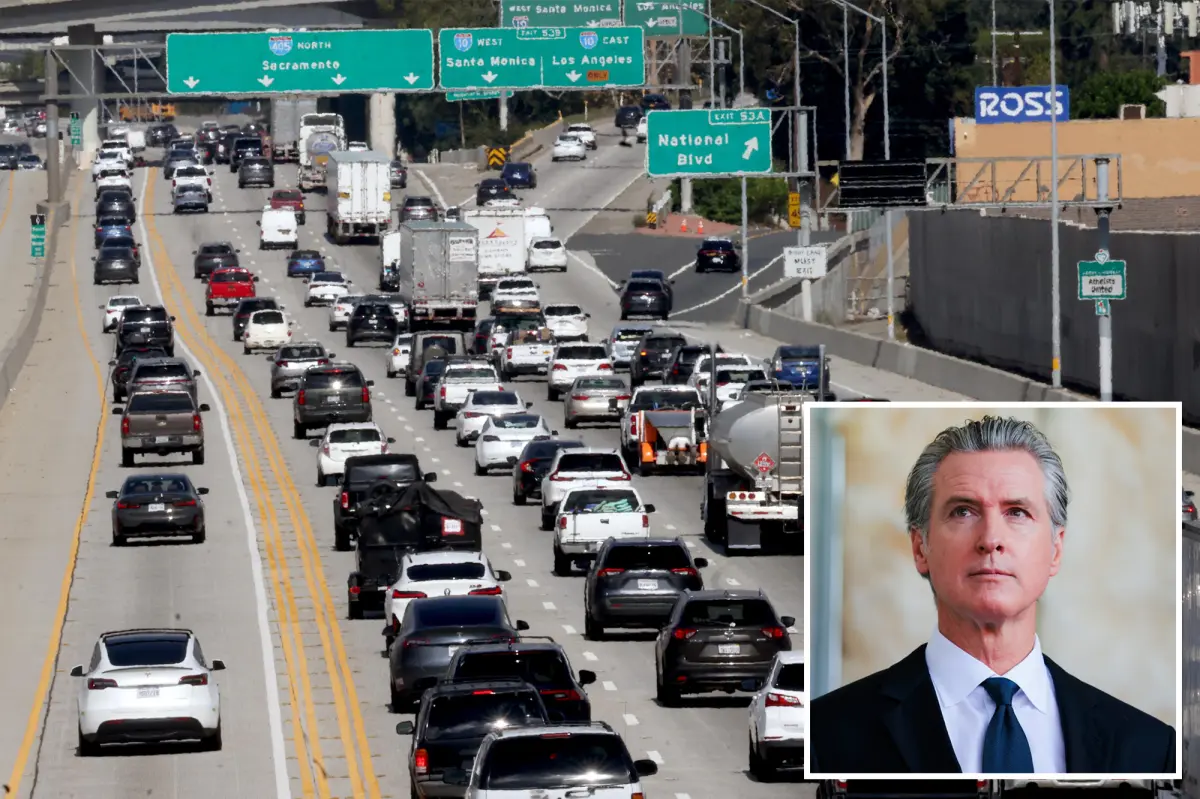
In 2020, California Governor Gavin Newsom made headlines by signing an ambitious executive order aimed at phasing out the sale of new gasoline-powered vehicles by 2035. Promoted as a critical leap forward in the state’s aggressive fight against climate change, the mandate was designed to drastically cut greenhouse gas emissions and solidify California’s reputation as a global leader in green energy. Newsom confidently championed the policy as the single most impactful step the state could take for the environment. However, a recent survey conducted by the Public Policy Institute of California (PPIC) reveals that the gap between Sacramento’s legislative ideals and the daily realities of ordinary Californians is widening rapidly. Instead of rallying behind the green transition, a resounding majority of Californians are now saying “hell no” to the impending ban.
The PPIC survey, conducted between late June and early July, highlights a dramatic shift in public sentiment that cuts clean across political lines. Nearly 66% of adults and likely voters in California now oppose the 2035 ban on new gas-powered cars. What is particularly striking about these findings is the growing resistance among Democrats—the very constituency expected to anchor support for Newsom’s environmental agenda. In 2021, only 31% of California Democrats opposed the mandate; today, that number has surged to a whopping 50%. A similar trend is evident among political independents, whose opposition jumped from 56% to 69% over the same period. Ultimately, the overall percentage of California adults who want to preserve their right to purchase traditional gas-powered cars has climbed by 17 percentage points in just a few short years, pointing to a deep-seated public anxiety that transcends party affiliations.
According to Mark Baldassare, the survey director at the Public Policy Institute of California, this widespread pushback is fundamentally driven by the state’s escalating cost of living. For the average resident, the dream of owning a sleek, emission-free vehicle is clashing with the harsh reality of an increasingly unaffordable state. This economic anxiety is directly reflected in consumer behavior: only about a third of surveyed Californians now say they are seriously considering purchasing an electric vehicle (EV), a sharp decline from five years ago when nearly half of the population was open to the idea. Baldassare notes that if people do not see themselves buying an electric vehicle in the near future, they naturally push back against a government mandate that forces them to do so. The state’s ambitious timeline is simply moving faster than the financial realities of the people who live there.
The declining appeal of electric vehicles is further compounded by a double whammy of disappearing financial incentives and skyrocketing household expenses. For years, federal tax credits acted as a crucial safety net that offset the steep upfront costs of EVs, but many of those critical incentives have since expired. At the same time, the cost of plugging in has soared. Electricity rates in California have spiked dramatically, with six in ten survey respondents reporting that utility prices in their area have become a major financial burden. Ironically, these rising utility rates are partially driven by the state’s own aggressive green policies, which require massive, costly upgrades to the electrical grid to achieve a carbon-free system by 2045. As utility companies pass these infrastructure costs down to consumers, Californians are realizing that charging an EV is no longer the cheap alternative it was once promised to be.
This economic spiral has caught the attention of financial experts who warn that the state’s aggressive regulatory push is hurting working-class families the most. Wayne Winegarden, an economics fellow at the free-market Pacific Research Institute, points out that families are feeling the compounding financial pressure of California’s environmental policies in every corner of their lives. These regulations do not just make driving more expensive; they drive up the cost of housing, inflate utility bills, and increase the prices of everyday goods and services. As a result, Californians are becoming far more cost-sensitive and are fiercely protecting their budgets. Even though the state is notorious for its painful, sky-high gasoline prices, Baldassare notes that consumers still prefer the transparency of the gas pump over the unpredictable, complex, and rapidly rising pricing structures of their monthly home utility bills.
Despite the clear wave of public pushback, Governor Newsom remains undeterred and continues to double down on his vision for a fully electrified California. In an effort to bypass the loss of federal tax incentives, Newsom recently signed new legislation establishing a $270 million state rebate program. This initiative offers residents a $3,500 rebate on qualifying new electric vehicles priced under $50,000, along with a $1,750 rebate for used EVs under $25,000, framing the state-level aid as a necessary shield against federal rollbacks. While California already boasts over 1.25 million registered EVs—accounting for about one in five new car sales last year—policymakers are facing a critical turning point. If Sacramento ignores the building resentment of its own citizens, the transition to a greener future may stall completely, paralyzed by the sheer weight of its own economic demands on the people it is meant to serve.