




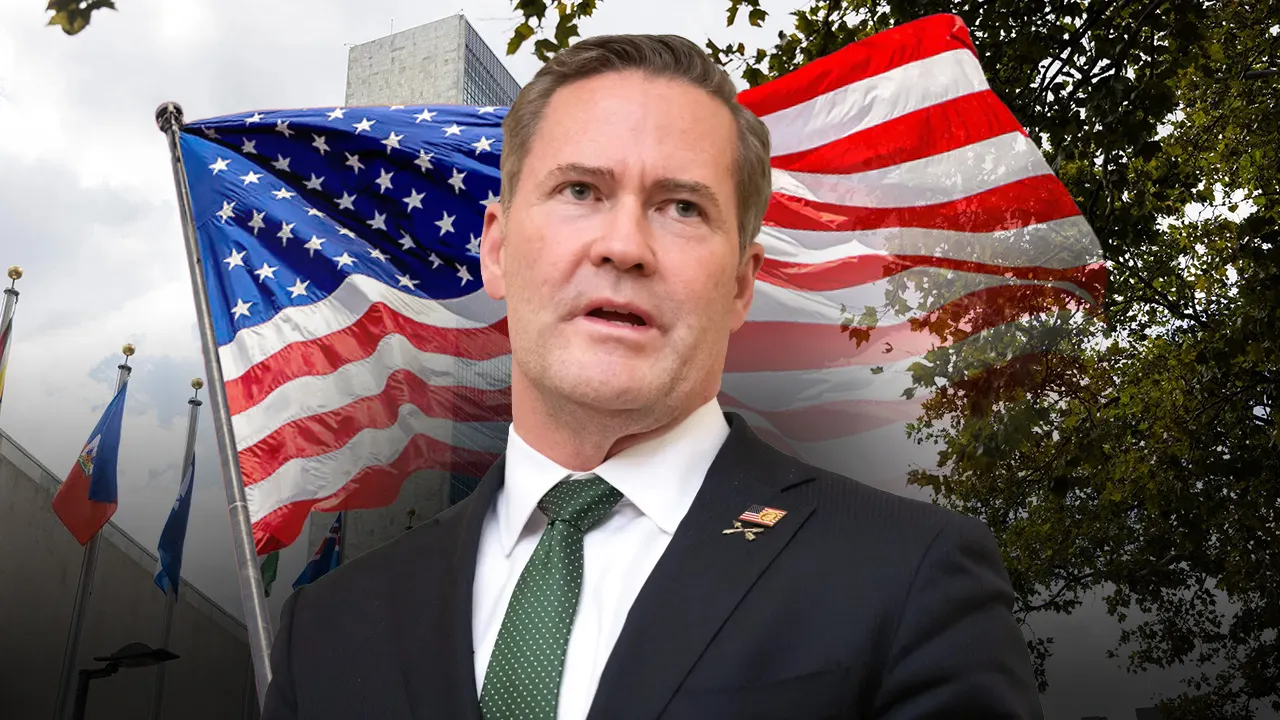
The Trump administration is shaking up decades of traditional foreign policy by introducing its clearest blueprint yet for the future of global development. Dubbed the “Trade Over Aid” initiative, this strategy argues that American business, trade partnerships, and private capital should replace taxpayer-funded assistance as the primary engine for growth abroad. Speaking at a United Nations forum in New York, Ambassador Mike Waltz, the U.S. Permanent Representative to the UN, declared that the administration is entirely reforming its approach to foreign aid. Rather than funnelling billions of taxpayer dollars into programs with minimal returns, the focus is shifting to private-sector-led investments that aim to lift living standards, reduce regional instability, and simultaneously generate business opportunities for American companies in alignment with the “America First” agenda.
This philosophical pivot follows structural moves to dismantle the U.S. Agency for International Development (USAID) and fold its primary functions into the State Department. While Ambassador Waltz clarified that this consolidation was a broader efficiency effort rather than a simple rebranding, he emphasized that the ultimate goal is to break the cycle of global dependency on American charity. Historically, traditional development forums have been dominated by non-governmental organizations, academics, and government officials, largely excluding the actual creators of jobs and wealth. By bringing Wall Street giants like JPMorgan and Goldman Sachs, alongside tech leaders like Microsoft, Google, and Meta, to the negotiating table, the U.S. aims to spark a sustainable market-driven revolution in developing nations.
The initiative has found willing listeners among several foreign leaders who view the transition as an opportunity for national dignity and independence. Czech Environment Minister Igor Cerveny drew parallels to his own country’s post-communist economic recovery, noting that true sovereignty comes from building domestic industries rather than forever playing the role of a petitioner. According to Ambassador Dan Negrea, who is leading the U.S. Mission’s transition team, developing nations are actually showing less resistance to this model than some wealthy donor countries that prefer the traditional optics of charity. Many developing partners, Negrea explained, are eager to shed their status as charity cases and enter into more dignified, equal business partnerships with the United States.
However, the transition presents significant challenges for fragile regions facing acute crises. Diplomatic voices, such as the Democratic Republic of Congo’s Minister of State for Foreign Affairs Thérèse Kayikwamba Wagner, warn that while trade is undoubtedly the long-term pathway to prosperity, traditional aid remains an absolute lifeline during unexpected emergencies like disease outbreaks or natural disasters. Experts argue that trade and aid do not need to be mutually exclusive. Alexander De Croo, the former Belgian Prime Minister now leading the United Nations Development Programme (UNDP), cautioned that strong, predictable markets do not simply appear on their own. He noted that aid is often the very tool required to build the legal infrastructure, train the workforce, and establish the trust necessary for private companies to feel safe investing.
Acknowledging that Wall Street is naturally risk-averse, Ambassador Waltz explained that the administration intends to use institutions like the U.S. International Development Finance Corporation (DFC) and the World Bank to provide risk insurance and financial guarantees. This will protect American investors venturing into fragile, high-risk territories, particularly in sectors crucial to U.S. interests, such as reclaiming supply chains for critical minerals. In doing so, the administration hope to create a bridge between private capital and the undeveloped regions that need it most, ensuring that geopolitical strategy and financial viability work hand in hand.
While the “Trade Over Aid” initiative has already garnered the support of 46 countries and established a digital library of dozens of capacity-building offers from global corporations, it remains in its infancy. The ultimate test of this ambitious program will be its execution in the world’s most vulnerable states—places plagued by corruption, weak institutions, and conflict where traditional markets fear to tread. If the Trump administration can successfully leverage American business to lift these high-risk areas out of poverty, it will not only save billions in taxpayer money but permanently redefine how the developed world interacts with nations on the rise.