




Amidst the unrelenting devastation of the war in Ukraine, a complex contrast of high-stakes diplomacy and brutal, everyday combat continues to shape the conflict. In a recent exclusive interview with Fox News, President Donald Trump expressed strong confidence that Russian President Vladimir Putin is finally prepared to negotiate an end to the hostilities. Directing a straightforward appeal to the Russian leader, Trump shared his message: “Vladimir, it’s time for you to stop. It’s time for this war to end.” While this rhetorical push for a diplomatic breakthrough offers a glimmer of hope for a ceasefire, the administrative and territorial realities on the ground suggest that any path to lasting peace will be fraught with immense tension and geopolitical friction.
Indeed, the prospects of a post-war peacekeeping framework have already ignited sharp warnings from the Kremlin, illustrating just how difficult it will be to enforce any future treaty. Following a meeting of Western allies in Paris, where a “coalition of the willing” proposed deploying a multinational force to secure a post-ceasefire Ukraine and assist in rebuilding its military, Moscow reacted with immediate hostility. Russian Foreign Ministry spokeswoman Maria Zakharova flatly rejected the proposal, declaring that any foreign military units deployed to Ukrainian soil would be viewed as hostile combatants and treated as “legitimate military targets.” This swift pushback underscores Putin’s deep-seated resistance to any Western military footprint near Russia’s borders, setting up a major diplomatic roadblock before formal negotiations have even begun.
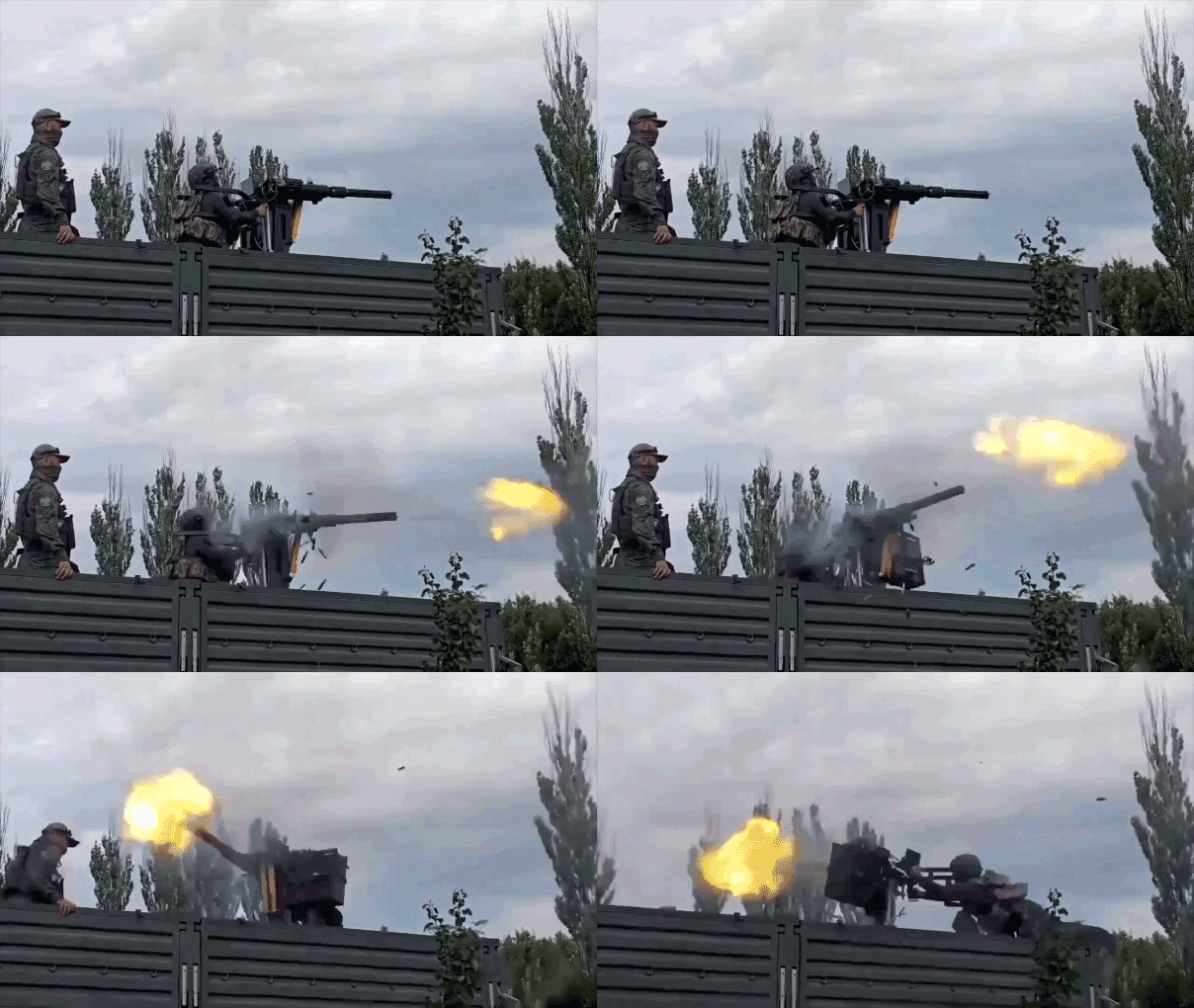
While politicians debate the framework of a hypothetical peace, the daily reality for soldiers and civilians remains defined by relentless violence and logistical desperation. The air war has intensified to such a degree that both sides are scrambling to find creative, sometimes hazardous ways to intercept the constant influx of unmanned aerial vehicles. In a vivid demonstration of this desperation, footage emerged showing Russian forces attempting to repurpose a Soviet-era helicopter gun—specifically, a four-barrel YakB-12.7 rotary machine gun—into an improvised ground-based anti-drone platform. The attempt went comically and dangerously wrong when the heavy weapon spun violently out of control, dragging and throwing a Russian soldier several yards across the ground, highlighting the chaotic, ad-hoc nature of front-line adaptations.
Beyond these bizarre technological struggles, the strategic strikes on critical infrastructure continue to inflict severe damage on both sides of the front lines. Ukrainian forces recently executed a successful strike on the Balaklava thermal power station in Russian-occupied Crimea, a vital facility responsible for generating nearly half of the peninsula’s electricity. Meanwhile, Russia retaliated with a devastating series of drone and missile strikes targeting Ukraine’s southern Odesa region. According to regional Governor Oleh Kiper, this barrage marked the fifth consecutive day of concentrated attacks on civilian, industrial, and port infrastructure, tragically claiming the lives of three people and highlighting the ongoing human cost of Russia’s campaign to cripple Ukraine’s maritime economy.
In response to these persistent aerial onslaughts, Ukraine is rapidly working to secure its long-term defensive sovereignty by boosting its domestic defense manufacturing. President Volodymyr Zelenskyy announced a major technological milestone, revealing that Ukraine expects to establish the domestic capability to manufacture missiles for the highly sophisticated, U.S.-made Patriot air-defense systems by the end of 2026. This development aligns with a significant shift in U.S. foreign policy under Donald Trump, who indicated that the United States would authorize and support Ukraine’s production of these advanced interceptors. By transitioning from a reliance on foreign military aid shipments to becoming a self-sufficient producer of top-tier defense technology, Kyiv is preparing for a future where it must protect its own skies regardless of shifting political winds abroad.
Ultimately, these fast-moving political and military developments paint a picture of a war at a critical crossroads. On one hand, political leaders are signaling a renewed push toward the negotiating table, driven by a growing recognition of the conflict’s staggering economic and human toll. On the other hand, the escalation of targeted strikes on energy grids, the stubborn resistance of Moscow to any Western peacekeeping presence, and Ukraine’s long-term military industrialization suggest that both nations are simultaneously preparing for a prolonged struggle. Whether Trump’s optimism can bridge this massive trust chasm remains to be seen, but for now, the citizens and soldiers of Ukraine remain caught in the crosshairs of a war that shows no immediate signs of quiet.