


Paragraph 1
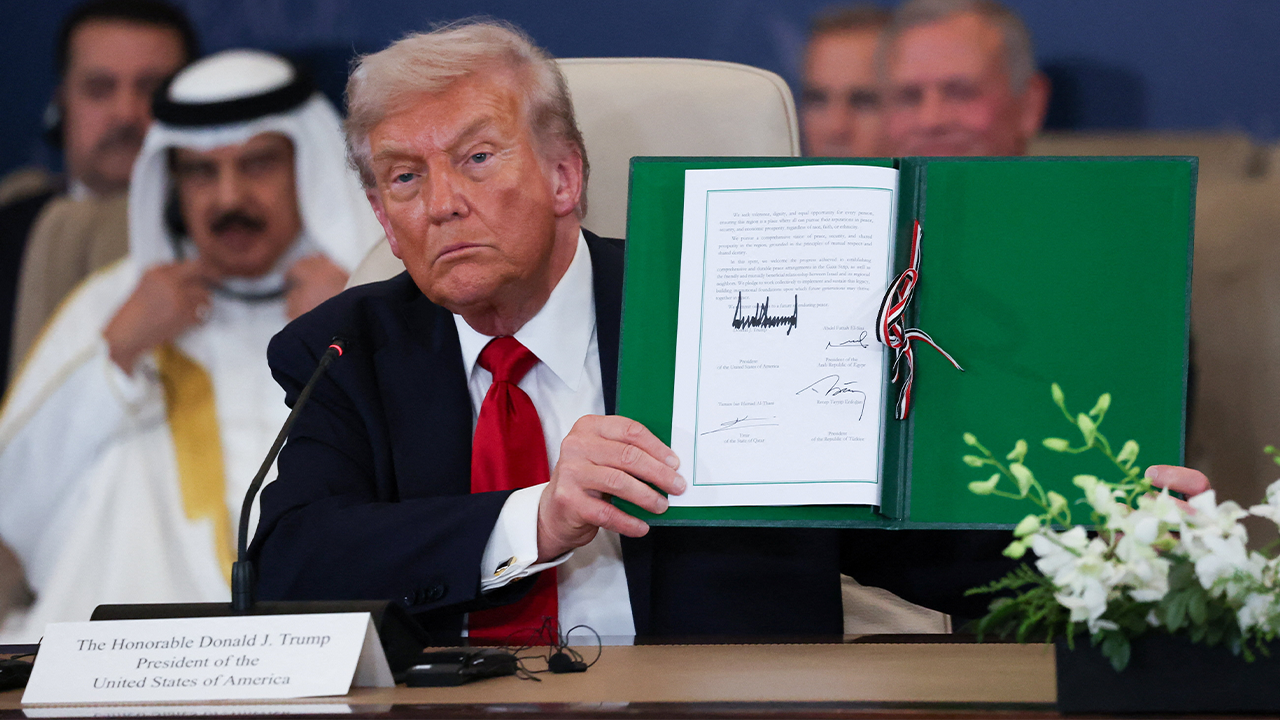
A year ago, something extraordinary happened: a ceasefire born not from endless shuttle diplomacy or exhausted defeat, but from sheer presidential will. When Donald Trump stepped onto the world stage and brokered the pause between Israel and Hamas, few believed it would outlast a few fragile weeks. But a year later, the region has begun to breathe again. Not perfectly, not without pain, but with a rhythm of possibility that had been strangled for decades. The story of that transformation is not really about treaties or security protocols—it is about people who dared to imagine a different ending for a story written in blood. At the center of it all stands a small, determined team called the Board of Peace, which took Trump’s initial handshake and turned it into a twenty-point plan for a future that most had stopped believing in. For those who lived through the horrors ofOctober 7th and the brutal war that followed, the last twelve months have felt like an uncertain dawn. The ceasefire was, for many, a chance to cry again without fear that the tears would be cut short by rockets. And while the path ahead remains treacherous, the human instinct to hope has reawakened. The Board of Peace has become that hope made tangible—a fragile, stubborn bridge between the dead and the living, the past and the possible.
Paragraph 2
Behind the diplomatic headlines, there is a very human story of trust, grit, and unexpected friendship. Josh Gruenbaum, senior advisor to the Board of Peace, speaks not like a bureaucrat but like a man who has spent nights poring over the details of a conflict that broke hearts long before he arrived. “The unlock was somebody who came in, who really knew the file because they had the chance to study it and understand it,” he says, meaning Trump himself. But understanding is only the seed. The growth came from the relationships cultivated by Trump’s emissaries—Steve Witkoff, the special envoy who could negotiate a deal in a bar as easily as a boardroom; Jared Kushner, whose quiet persistence and deep knowledge of the region turned skeptics into partners; and Marco Rubio, whose steady hand and moral clarity gave the effort global gravitas. Together, they overlaid raw leverage with something the Middle East rarely offers outsiders: trust. They also forced Hamas to face a brutal logic. As Gruenbaum put it, this was either going to end “the very hard way,” or the group could take a dignified off-ramp—the twenty-point plan. What followed was not a surrender, but a reckoning. The message was delivered without flinching: the old ways were done. The region’s actors, from Israel to the Gulf, were drawn into a web of working relationships that did not rely on idealism alone, but on a toughness that respected strength while still leaving room for mercy. That combination—unrelenting realism wrapped in genuine concern for ordinary lives—became the beating heart of the Board of Peace.
Paragraph 3
It might have remained a lonely American initiative, but the world, even its most cynical corners, began to listen. The United Nations—often the graveyard of peace plans—endorsed the Board of Peace in November 2025 with Resolution 2803, a move that stunned many who had written off the UN as irrelevant to this conflict. More remarkable still, countries that had spent years criticizing Israel and America started to flow into the coalition. Kazakhstan, Morocco, Albania, and Kosovo joined the International Stabilization Force, committed to training a future police force and overseeing demilitarization. European Union Commissioner Dubravka Šuica, speaking at a high-level briefing, announced that the EU had gathered nearly a billion dollars for early recovery, aligning its projects with the Board of Peace and the National Committee for the Administration of Gaza (NCAG). It was as if the world had been waiting for permission to do good, and Trump’s plan finally gave it that permission. Even Hillary Clinton, a woman who rarely praises Republican foreign policy, wrote in the Financial Times that while the plan “is not the one many of us would have drafted,” it is “the only framework backed by sufficient leverage, political engagement and potential resources to move parties towards implementation.” That kind of honest acknowledgment—from a political adversary—speaks to the plan’s merit, not partisanship. The human meaning of this diplomatic shift is profound: for the first time in years, a war-weary region sees governments and institutions moving in the same direction, not because they were bribed, but because a lean, focused team managed to make the common good feel like common sense.
Paragraph 4
Now, the real work begins. Reconstruction is not a theory—it is the sound of jackhammers on broken streets, the smell of concrete dust, the tears of a father as he hands his child a key to a small, clean apartment. The Board of Peace has received pledges of roughly eighteen billion dollars, and next steps include a six-month program of sixty-six recovery initiatives. Rubble clearance, unexploded ordnance removal, temporary housing, and the destruction of terror tunnels—each task is as much about restoring dignity as about rebuilding infrastructure. The projected cost of these first efforts is $2.45 billion, and tenders have already been submitted. But this is not a top-down project run by distant technocrats. Gruenbaum emphasizes that the recovery will be driven by the NCAG—a technocratic body of Palestinians whose members have lived through the UNRWA-administered system and who “have kids that have been brought up” under it. They know the failures of the past intimately, and they are determined not to repeat them. That is why UNRWA has been excluded entirely. The Board of Peace is blunt: “We will only work with trusted partners who deliver for the people of Gaza and contribute to a deradicalized Strip.” UNRWA, with over 1,500 employees under investigation for involvement in terror groups, does not meet that test. What touches the heart here is the image of parents, not politicians, standing in the rubble, refusing to let their children be taught hate or live in fear. They are the true engineers of this recovery, and the international community is finally treating them as such.
Paragraph 5
The hardest part remains Hamas—not just its weapons, but its ideology. Gruenbaum is realistic: “We are in a historic place with Hamas,” he says, having secured verbal agreements and offered a path to amnesty for those who qualify. He stresses that the twenty-point plan is Hamas’s best option, a lifeline they cannot rationally refuse. Regional dynamics are also pushing them: Tehran is distracted by its own war, Israel is pressing for enforcement, and mediators increasingly side with the Board of Peace. But peace cannot be forced from above. Deradicalization must happen from within, through the NCAG and a new generation of civil servants. That means vetting teachers, screening community leaders, and building a curriculum that celebrates life rather than martyrdom. Gruenbaum describes a monumental opportunity: the possibility of bringing Israeli authorities and the NCAG together in a relationship of mutual trust. If Gaza’s new government focuses on delivering services—clean water, schools, jobs—Israel can feel secure, and Palestinians can taste self-determination and prosperity for the first time in memory. This is not a fairy tale; it is a painstaking, day-by-day process of trust-building. It requires forgiving, not forgetting; moving forward while honoring the dead. The members of the NCAG, who were raised in the very system that failed them, are uniquely positioned to understand both the anger and the need for change. They are the ones who will look into the eyes of a Hamas supporter and say, “We can build a better life—come help us, or step aside.”
Paragraph 6
As the second year dawns, there is a quiet but palpable sense that Gaza could become a seedbed for a broader transformation. Gruenbaum sees it rippling outward: “Maybe these best practices get learned by the Palestinian Authority. Maybe Israel starts adding more trust with different people in the system.” He calls it “a huge moment in the history of the Middle East.” For the people who have lived through unimaginable loss, this is not just diplomacy—it is the chance to wake up each morning without the scream of sirens. It is a mother’s hope that her son will learn to read instead of fight; a father’s dream of a weekend at the beach with his family, not a funeral. The Board of Peace has given that to them, not as a promise, but as an unfolding reality. There will be failures, delays, betrayals—peace always carries that risk. Yet the alternative is no longer acceptable. The world has seen the face of war, and it is ugly, hollow, and repetitive. What Trump, Gruenbaum, Witkoff, Kushner, and Rubio have built is not a perfect plan, but a real one. It is a table where enemies have sat down to talk, a road where once there was only a wall. And while the journey ahead is long and the obstacles many, the human spirit—the same spirit that endures in a mother’s embrace, in a teacher’s patience, in a soldier’s weary hope—has been given a fighting chance. That is the real summary of this year: not a policy victory, but a human one. And for the millions who have suffered, that is everything.