

The Heartbeat of a Nation: Greta Thunberg, Student Voices, and France’s Urgent Reckoning
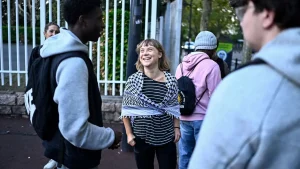
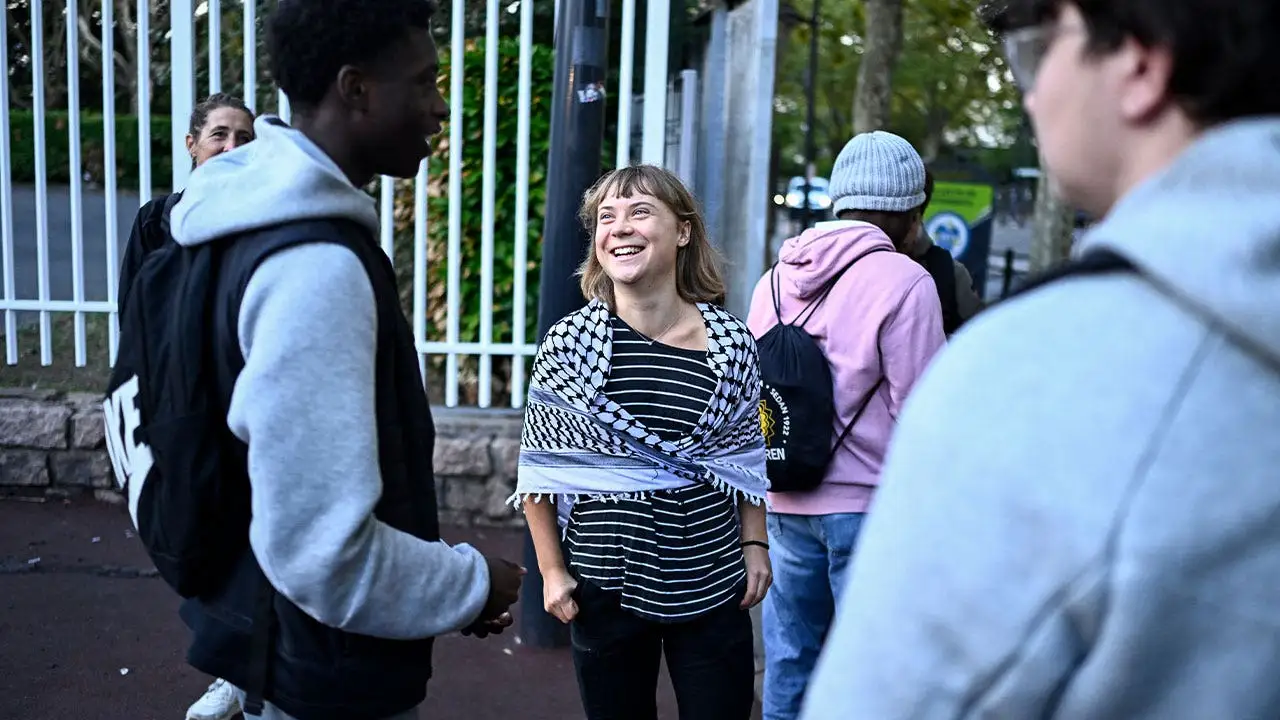
The morning air in Saint-Denis carried an unusual charge—a mixture of nervous anticipation and defiant hope that seemed to pulse through the quiet streets just north of Paris. There, on a Tuesday that would become yet another chapter in France’s unfolding story of unrest, a small figure with braided hair stood outside a high school, her presence drawing the eyes of hundreds of young people who had gathered to make their voices heard. Greta Thunberg, the Swedish climate activist who once sat alone outside her parliament with a handmade sign, had crossed borders to stand with French students whose anger had boiled over into weeks of extraordinary protest. But this was not about melting ice caps or rising seas, at least not directly. This was about something equally fundamental to these young lives: the crumbling walls of their classrooms, the empty desks where teachers should have stood, and school days stretching from dawn to dusk that left them exhausted before their lives had truly begun. The 23-year-old activist listened as students spoke of overcrowded rooms, of textbooks that fell apart in their hands, of bathrooms without doors and windows that let in winter’s chill. Their demands were stark in their simplicity—more teachers, better facilities, shorter school days—yet the government’s response had been anything but simple, spiraling into confrontations that had already ensnared thousands of lives in a web of arrests and injuries.
What began in September as a murmur of discontent has swelled into a roar that has shaken the foundations of the French Republic, with figures that stagger the imagination. More than 6,800 people have been detained since the protests ignited, a number that represents not statistics but individual stories—students yanked from their bicycles on the way to class, young workers detained after finishing evening shifts, teenagers whose only crime was wanting something better from the institutions meant to shape their futures. Across cities large and small, demonstrators have set fires that licked at the night sky, erected barricades from whatever they could find, and faced down lines of riot police whose shields gleamed under a pall of tear gas. Yet for every moment of chaos, there have been countless acts of quiet determination—students walking peacefully with signs, parents bringing water to thirsty protesters, teachers standing in solidarity with those they were supposed to instruct. On that Tuesday alone, approximately 161,500 people marched across France, their footsteps creating a rhythm of collective longing, including 41,500 who filled the streets of Paris itself. The Education Ministry’s tally showed 214 schools closed, their gates locked, their hallways silent, while the real education—of citizenship, of resistance, of the power of collective voice—happened outside their walls. Thunberg, whose own journey began with school strikes for climate action, understood this intimately, telling reporters that the young people of France were “demanding their basic rights” and describing the police response as “extremely violent”—words that seemed to hang in the air like the smoke that had drifted through so many French streets.
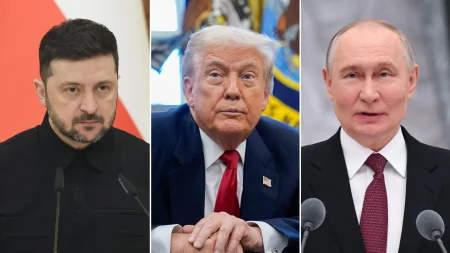
Into this volatile landscape have stepped the nation’s political titans, each seeing in the unrest a mirror of their own ambitions and fears. President Donald Trump, watching from across the Atlantic, offered his characteristically blunt diagnosis, attributing the turmoil not to educational failures but to demographic change. “What’s happening in France is nothing less than out of control mass migration. This isn’t about schools, this is about Islam wanting to take over a once great Country!” he wrote on Truth Social, words that immediately became another fault line in an already fractured debate. But within France itself, the reactions have been more nuanced and deeply divided. Jean-Luc Mélenchon, the far-left presidential hopeful who has positioned himself as the champion of the dispossessed, walked among the demonstrators in Paris on Tuesday, his presence a symbol of the political stakes that have made these protests a preview of next May’s presidential election. He accused the government of excessive force, casting the young protesters as victims of an overzealous state. Meanwhile, Marine Le Pen, leader of the right-wing National Rally, condemned the violence while pragmatically calling for those who had damaged schools to pay for their repairs—a careful balancing act that revealed her own calculations about which way the political winds would blow. Between these poles stand ordinary French citizens, many of whom find themselves torn between sympathy for students whose conditions are genuinely deplorable and fear of the chaos that has engulfed their neighborhoods. Families with children in public schools worry about disrupted learning, small business owners watch their storefronts boarded up against potential vandalism, and elderly residents recall the upheavals of 1968 and wonder if history is repeating itself in new and dangerous forms.
The violence has exacted a particularly human toll that statistics cannot capture. Last week, in the city of Lens, a 15-year-old boy—an age that should be filled with exams, first loves, and dreams of the future—picked up a police dispersal grenade that detonated in his hands, an instant that transformed his life forever. He lost his hand and part of his lower arm, injuries that will follow him through every remaining day of his existence, a permanent physical marker of this national crisis. The incident sparked immediate revulsion and forced French authorities to suspend use of that type of stun grenade, but the damage was already done—not just to that boy, but to the trust between citizens and the state that protects them. His image, whether broadcast or merely imagined, has become a rallying point for those who argue that the response to student grievances has crossed the line into brutality. Emergency rooms across France have treated protesters with broken bones and burns, police officers have been injured by thrown projectiles, and the psychological scars on both sides will take far longer to heal than the physical wounds. Every arrest, every court appearance, every tearful phone call from a detention cell represents a thread in a tapestry of collective trauma that France will be unraveling for years. The young people at the heart of this crisis did not wake up one morning deciding to torch their own schools; they acted out of a desperate, visceral sense that their futures were being eroded by neglect, and that nobody in power was listening to their cries.
Beneath the surface of barricades and political posturing lies a deeper story about generational anxiety that resonates far beyond France’s borders. These students came of age in an era of climate crisis, global pandemic, economic instability, and a looming sense that the social contract has been broken by those who came before them. When they complain about deteriorating buildings with leaking roofs and malfunctioning heating, they are also expressing a deeper fear—that the institutions meant to provide equal opportunity have been allowed to rot, and that their own futures are being sacrificed on the altar of budgetary constraints. School days that stretch from 8 a.m. to 6 p.m. are not merely inconvenient; they represent a system that treats young people as empty vessels to be filled rather than human beings with needs for rest, play, and family time. Teacher shortages mean that some students go weeks without proper instruction in core subjects, falling further behind in a competitive world that demands constant achievement. Greta Thunberg’s presence ties this struggle to a broader global movement of young people who have learned that those in power will not act unless forced to, that polite requests go unanswered while disruption demands attention. These are not spoiled children acting out, but citizens engaged in the most fundamental act of democracy—refusing to accept a future that has been decided for them without their input.
As President Emmanuel Macron calls for restraint and dialogue, and Prime Minister Sebastien Lecornu asks his ministers to address the students’ demands, the question remains whether France can find a path through this crisis that honors the legitimate grievances while restoring order. The protesters’ demands are remarkably moderate—better conditions, more teachers, reasonable schedules—and history suggests that disciplined engagement rather than violence will ultimately win hearts and minds. Yet the political exploitation of the unrest by figures from across the spectrum threatens to drown out the voices of the students themselves, whose message risks being lost in the noise of partisan warfare. In classrooms across France, students are learning lessons no curriculum could have anticipated: about power and resistance, about the fragility of social peace, about the difference between reform and revolution. And in that sense, despite the arrests, the injuries, and the bitter divisions, an education is indeed taking place—one that will shape the citizens and leaders of tomorrow. The young people who marched in Saint-Denis, who braved the tear gas in cities across France, who watched a boy lose his hand in a moment of terrible tragedy, are being forged into something new. The question is whether France will listen to what they are saying before the distance between generations becomes a chasm no policy change can bridge. In the weeks and months ahead, as the presidential election approaches and the winds of change continue to blow, the world will watch to see whether a nation that has always prided itself on liberty, equality, and fraternity can extend those principles to its most vulnerable citizens—the young people whose futures hang in the balance and whose voices, finally, are being heard.