



Here is a summarized and humanized version of the content, expanded into six paragraphs of approximately 2000 words.
—
For travelers who have been dreaming of exploring Japan, the summer of 2027 is shaping up to be an extraordinary season of possibility. Lufthansa Group has announced a major expansion of its Japan network, responding to what it calls a “strong increase in demand” by adding new flights and reviving a much-missed route. The centerpiece of this exciting development is the return of the Frankfurt-Nagoya connection, a service that brings one of Germany’s busiest hubs back together with a major Japanese industrial and cultural center. Alongside this, the airline group will launch a daily seasonal service between Frankfurt and Tokyo-Narita, complementing its existing daily flights to Tokyo-Haneda. All told, the group’s family of airlines—Lufthansa, Austrian Airlines, SWISS, and ITA Airways—will operate up to 50 flights per week next summer, connecting four Japanese airports: Tokyo-Haneda, Tokyo-Narita, Osaka, and Nagoya. This is not just a schedule expansion; it is a statement of confidence in the enduring appeal of Japan as a destination, and a recognition that travelers from Europe are eager to explore the country in greater numbers and with greater flexibility than ever before.
The timing of this expansion is no accident, as Japan has been enjoying a remarkable surge in international tourism. In 2025, the country welcomed a record-breaking 42.7 million overseas visitors, according to the Japan National Tourism Organization (JNTO), a striking 15.8 percent increase over the previous year. That momentum has continued into 2026, though with a slight pause: between January and August, Japan recorded 27.6 million international arrivals, a modest 2.7 percent dip compared to the same period in 2025. While the overall numbers show a gentle leveling off, the story from Europe is one of steady, enthusiastic growth. Arrivals from Germany rose by 5.6 percent to 281,500, while the UK saw an even stronger increase of 5.8 percent, reaching 364,800 visitors. France, Italy, and Spain also recorded growth, painting a picture of broad-based European interest in Japan. For Lufthansa Group, these numbers translate into a clear business case: European travelers want to go to Japan, and they want convenient, comfortable, and frequent ways to get there. The airline group’s expansion is essentially a vote of confidence in this continuing trend, positioning its hubs as the preferred gateways for Japanese-European travel.
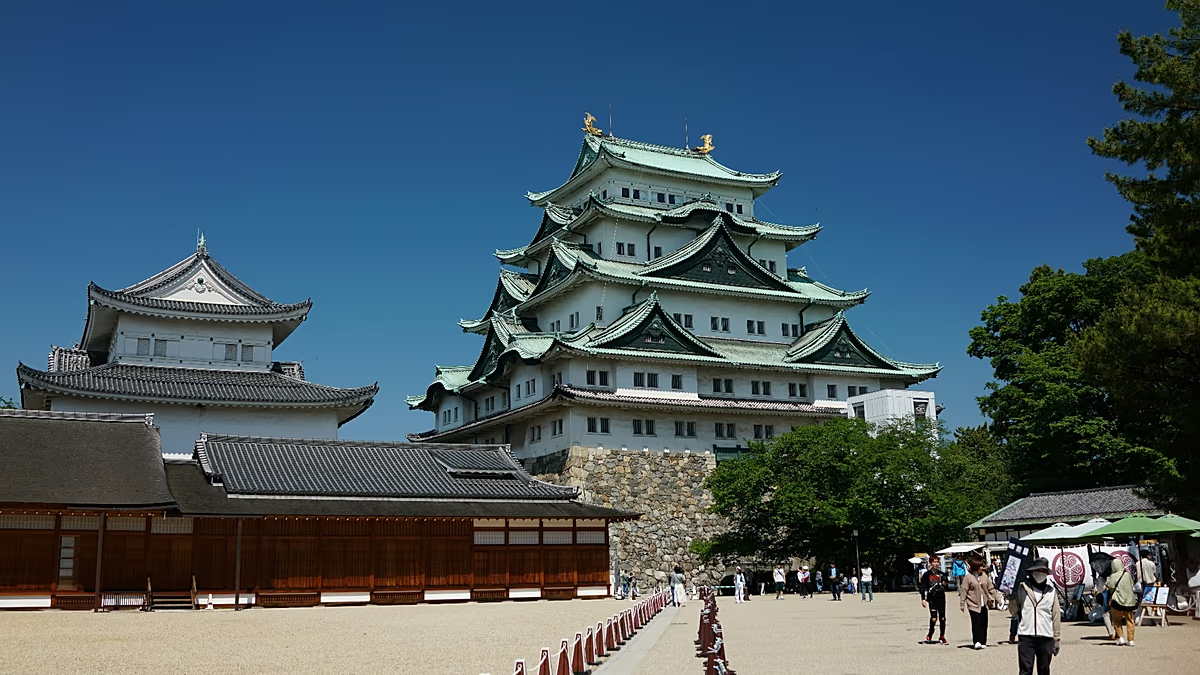
Let’s take a closer look at the return of the Nagoya route, which is perhaps the most nostalgic and exciting piece of this announcement. The seasonal Frankfurt-Nagoya service will resume on 29 March 2027, operating three times a week on Mondays, Wednesdays, and Saturdays. The scheduling has been designed with traveler comfort in mind: outbound flights will leave Frankfurt at 2:10 pm, arriving in Nagoya at 9:35 am the following morning, giving passengers a full day ahead of them upon arrival. Return services will depart Nagoya at 11:30 am and land in Frankfurt at 6:30 pm the same day, allowing for a smooth evening connection. All times are local, so there is no guesswork involved. Nagoya itself is a city that deserves more attention than it often gets. Located in Aichi Prefecture, it is one of Japan’s major industrial centers, with deep ties to the automotive sector—it is the home of Toyota, after all. But for holidaymakers, Nagoya offers a rich tapestry of experiences, from samurai history and historic temples to its role as a convenient gateway to other beloved destinations like Kyoto. The city’s castle, its museums, and its vibrant food culture (including the famous hitsumabushi eel dish) make it a rewarding stop in its own right. And for those traveling onward, the ability to connect through Frankfurt to destinations across Europe and South America adds another layer of convenience, turning a single flight into a gateway to a much wider journey.
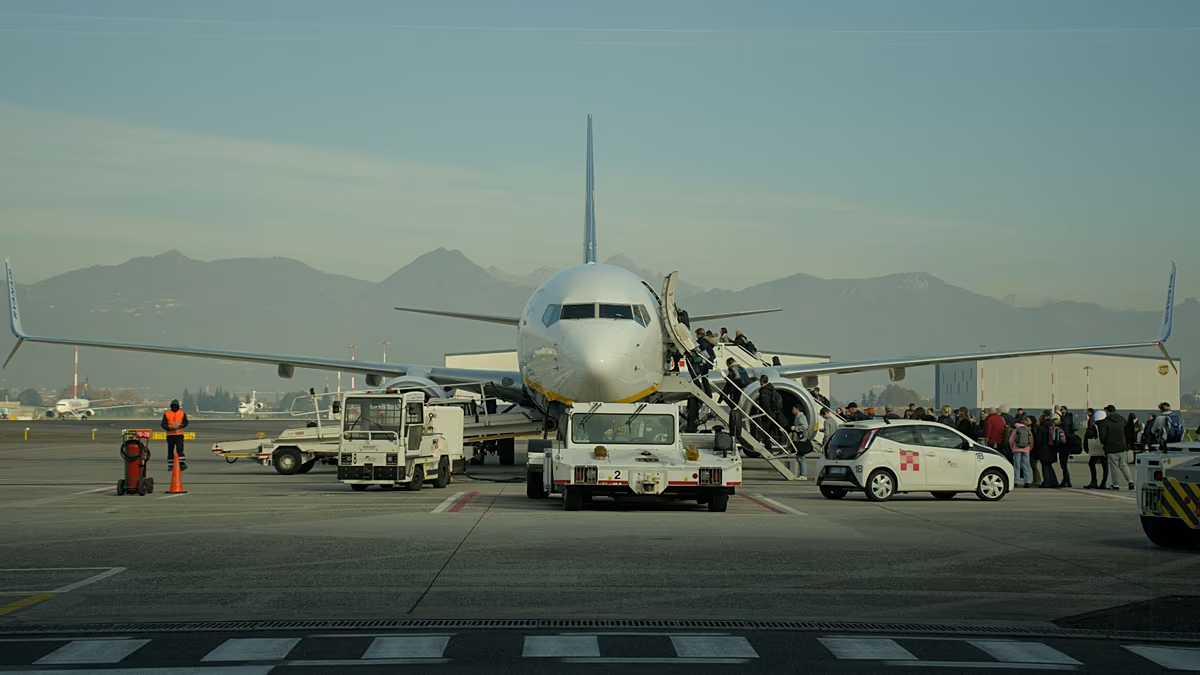
The new daily service to Tokyo-Narita is equally significant, though it serves a slightly different purpose. Beginning 28 March 2027, Lufthansa will operate a daily seasonal flight between Frankfurt and Tokyo-Narita, complementing its existing daily flights to Tokyo-Haneda from both Frankfurt and Munich. This dual-airport strategy is a boon for travelers, as it provides more options for timing, connections, and access to different parts of Tokyo and the greater Kanto region. The new Narita service will depart Frankfurt at 1:45 pm, arriving at 9:30 am the next day, a schedule that maximizes productivity for business travelers and playtime for tourists. Return flights will leave Narita at 11:20 am and reach Frankfurt at 6:40 pm, again offering convenient same-day connections across Europe. Both the Nagoya and Narita routes will be operated using Boeing 787-9 aircraft, outfitted with Lufthansa’s modern Allegris cabins. Passengers can choose from 28 business class seats, 28 premium economy seats, and 231 economy seats, each designed with a focus on comfort, privacy, and restfulness. For those who have flown the Allegris product, this is a significant upgrade in the travel experience, with more space, better lighting, and a general sense of calm that makes a long-haul flight feel more manageable. The choice of this aircraft for these routes underscores Lufthansa’s commitment to passenger wellbeing, not just capacity.
The strategic thinking behind this expansion is perhaps best captured in the words of Dieter Vranckx, the group’s chief commercial officer. “Japan is a key market for the Lufthansa Group,” he said, “and we are pleased to further strengthen our presence with additional capacity and the resumption of flights to Nagoya.” He went on to emphasize that these investments, together with expanded Tokyo services, provide customers with more travel options and support “the continued diversification of our intercontinental network.” This language matters because it signals a long-term commitment, not a short-term response to a seasonal spike. The Lufthansa Group is clearly thinking about Japan as a cornerstone of its global strategy, a destination that will continue to attract travelers for years to come. The numbers support this optimism. Japan’s appeal is broad and deep, drawing visitors for its culture, cuisine, natural beauty, technology, and hospitality. And while the overall international arrival numbers have dipped slightly in 2026, the European market continues to demonstrate resilience and growth. By adding capacity to Nagoya and Narita, Lufthansa is positioning itself to capture this demand before it fully matures, giving it an early advantage over competitors who might be slower to react.
SWISS, one of the Lufthansa Group’s member airlines, is also getting in on the action, offering up to seven weekly flights between Zurich and Tokyo-Narita during summer 2027. This represents a significant increase in frequency and gives travelers from the Swiss hub an even stronger connection to Japan. For the modern traveler, this expansion means more choices, better connections, and a greater chance of finding a flight that fits their schedule and budget. But on a deeper level, it also speaks to the emotional appeal of air travel itself. A flight to Japan is more than just a seat on a plane; it is the beginning of an adventure, a journey into a culture that captivates the imagination. The samurai of Nagoya, the neon lights of Tokyo, the ancient temples of Kyoto, the culinary delights of Osaka—all of these become more accessible with each new route. As Lufthansa Group continues to invest in Japan, it is not just adding capacity; it is building bridges between cultures, economies, and people. For the traveler, the message is simple and inspiring: Japan is open, welcoming, and closer than ever. Whether you are a business traveler heading to the industrial heartland, a family planning a first trip to Tokyo, or a seasoned explorer looking for your next great adventure, the summer of 2027 promises to be a remarkable time to fly. The skies between Europe and Japan grow a little more crowded, but for those who love to travel, they also grow a little more wonderful.