



As we get deeper into autumn, there’s that familiar feeling in the air — the nights draw in, the leaves keep falling, and somehow it feels like we’ll blink and Christmas will be right there, knocking on the door. And with Christmas comes that very particular itch to escape, even for a few days, and soak up some festive magic somewhere new. For a huge number of travellers, that means one thing: a Christmas market. There are more than 1,500 of them scattered across Europe, from grand city squares to tiny village lanes, and each one has its own personality, its own smells, its own traditions. This year, more than 800,000 travellers cast their votes through the European Best Destinations platform to rank their favourites, and the result is a fascinating mix of famous classics and delightful underdogs. A total of 20 markets made the final cut, but what’s really interesting is that the top five aren’t all the usual suspects you see on postcards and travel blogs. In fact, the number one spot went to a city that many people might not have even heard of before — and that’s exactly the kind of discovery that makes these rankings so exciting. So if you’re thinking about booking a winter trip in 2026, and you want to shop, sip mulled wine, and truly get into the festive spirit, you’ve come to the right place. Let’s take a closer look at the five Christmas markets that travellers loved most this year, and then we’ll round out the rest of the top 20 for good measure. Whether you’re after grand Alpine scenery, a sunny city break, or a fairy-tale old town, there’s something here for every kind of winter wanderer.
First up, let’s talk about Craiova, Romania — because honestly, this is the market that stole the show. If you’ve never heard of Craiova, you’re not alone, but this Romanian city has somehow managed to beat far more famous Christmas markets to claim the top spot in Europe, and after a little digging, it’s easy to see why. The scale of it is genuinely jaw-dropping: more than 280,000 square metres are transformed into a full-blown festive wonderland every winter. That’s not just a little row of wooden huts — that’s an entire neighbourhood of twinkling lights, giant decorations, and enough Christmas cheer to make even the grumpiest Scrooge crack a smile. In 2026, the theme is “The Nutcracker,” which means visitors can expect giant ornaments, toy-shaped sculptures, and dazzling light displays inspired by the beloved Christmas ballet. It’s playful, theatrical, and completely immersive. But the fun doesn’t stop with the decorations. The market, which runs from mid-November to early January, is also home to Eastern Europe’s highest-flying Santa sleigh — yes, you read that correctly — as well as an ice rink, a Ferris wheel, and a collection of traditional hand-painted chalets that give the whole event a wonderfully authentic feel. And then there’s the food. Travellers can’t stop talking about it, and it’s easy to understand why. The market celebrates the flavours of Eastern Europe and beyond, with dishes from Armenia, Georgia, Greece, Bulgaria, and Serbia all making an appearance. So you can wander through the sparkling streets, warm up with a bowl of something hearty, and feel like you’ve travelled through half the continent in a single evening. It’s a reminder that sometimes the most magical experiences come from the places you least expect.
If Craiova is the surprise winner, Zurich is the polished, elegant performer that always shows up looking effortlessly good. Switzerland’s largest city might be better known for its chocolate, its banks, and its ridiculously high quality of life, but over the past few years, it has quietly become one of Europe’s most beloved Christmas destinations. The centrepiece is Wienachtsdorf at Sechseläutenplatz, a gorgeous square tucked between the Opera House and the shores of Lake Zurich. Here, the market unfolds across a space filled with wooden chalets, soft twinkling lights, and a towering Christmas tree that seems to glow against the crisp Swiss air. It’s a wonderful blend of traditional Alpine charm and the city’s sleek, polished aesthetic — the kind of place where you can buy handcrafted gifts, sip something warm, and feel very, very festive. But Zurich doesn’t stop there. The city was also voted as having the most beautiful Christmas market in Europe, and once you explore a little further, you’ll understand why. Just near the main station, you’ll find Weihnachtsallee, now in its third year, with around 80 rotating stalls offering everything from international street food to design-led crafts. There’s plenty of fondue, naturally, because you can’t be in Switzerland in winter without melting cheese all over everything. And if you’re looking to warm up properly, there’s even an entire dome dedicated to mulled wine — a cosy, glowing space that has quickly become a favourite spot for locals and visitors alike. For something a little different, Zurich adds an artistic twist to the season with the Illuminarium at the Swiss National Museum. The museum’s courtyard is transformed with lights, music, and immersive installations, creating a dreamlike experience that sits beautifully alongside the more traditional market stalls. It’s the kind of city that makes you feel like you’ve stepped into a very stylish Christmas card.
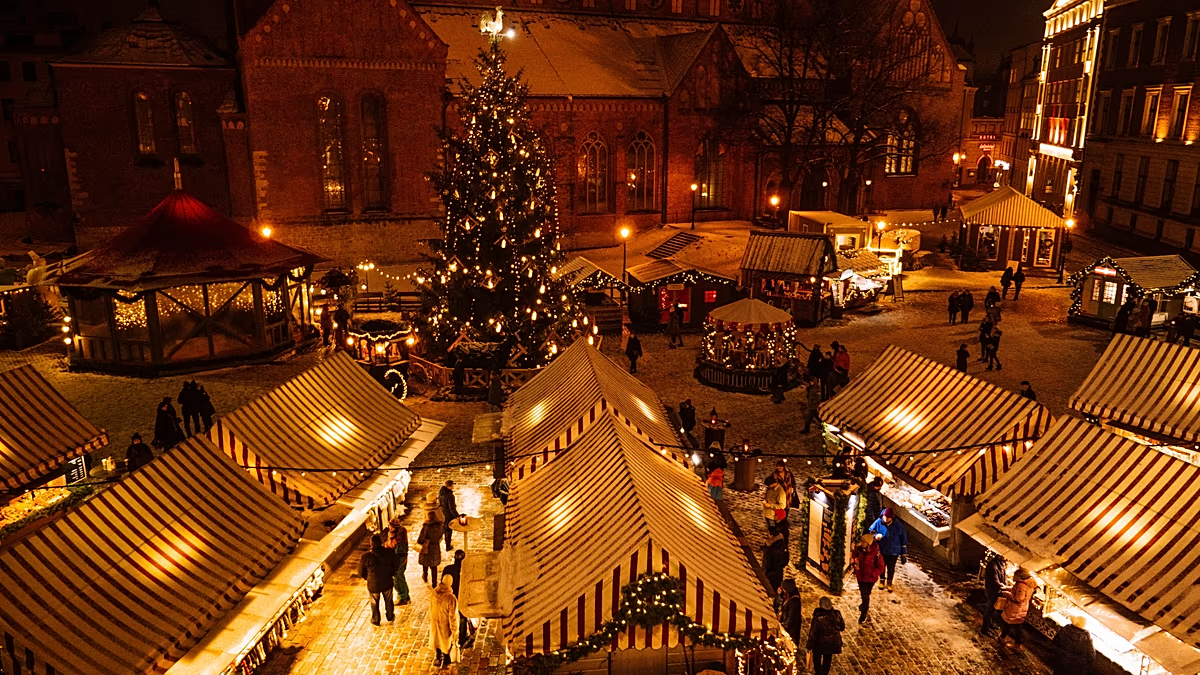
Now let’s head north to Riga, Latvia’s capital, which might not have the same global name recognition as some of Europe’s bigger Christmas destinations, but absolutely deserves a place near the top of this list. Riga is the kind of city that feels like a secret, especially in winter. The main Christmas market takes over Doma Square, right in the heart of the UNESCO-listed Old Town, and it is seriously atmospheric. Wooden chalets line the square, selling Latvian crafts, cosy knitwear, and all sorts of local treats that make perfect gifts for the people back home. From late November to early January, the square is filled with the comforting smells of mulled wine, roasted almonds, and cinnamon, while choirs and folk performers add a distinctly Baltic sound to the proceedings. There’s a real sense of history here, too — you’re surrounded by medieval architecture and cobbled streets that feel like they were made for winter, and the whole scene has a kind of old-world charm that’s hard to find elsewhere. But Riga’s Christmas appeal goes far beyond the market itself. The city is famous for its spectacular light displays, with parks, squares, and even canals transformed into a glowing winter wonderland. You can wander to places like Opera Square, Bastejkalns, and Kronvalda Park to see installations inspired by Latvian fairy tales, where light, music, and storytelling come together to bring the festive season to life. It’s not just about shopping — it’s about getting lost in a magical, illuminated landscape that feels like something out of a storybook. If you’re someone who loves Christmas for the atmosphere, the romance, and the sense of wonder, Riga is very hard to beat. It’s quieter and more intimate than some of the bigger European markets, but that’s precisely what makes it so special.
For those who’d rather have their Christmas market with a side of sunshine, Lisbon offers a completely different take on the winter tradition. There are no snowy streets here — instead, you get mild temperatures, golden light, and the unmistakable energy of Portugal’s capital city. The main event is Wonderland Lisboa, which takes over Parque Eduardo VII from late November to early January. This is the biggest Christmas market in Lisbon, and in 2026 it returns for its 11th edition with a brand-new theme: “The Roots of Christmas.” It’s a lovely concept that brings together nature, art, food, and entertainment, with local artisans showcasing their work, live performances happening throughout the season, and plenty of family-friendly attractions to keep kids of all ages entertained. There’s a Ferris wheel offering beautiful views across the city, a traditional carousel for the little ones, and no shortage of opportunities for Christmas shopping. But as with any great market, food is a huge part of the experience. The Wonderland Lisboa Food Court serves up Portuguese festive favourites, regional specialities, and seasonal sweets, so you can wander from stall to stall and eat your way through the best of the country’s winter cuisine. More than 1.2 million people visited in 2025, which tells you just how popular this event has become. It’s the perfect choice for travellers who want to combine their Christmas celebrations with blue skies, coastal walks, and a glass of something cold — or something warm, if you’re feeling traditional. Lisbon proves that Christmas markets don’t have to mean frostbite and mittens; sometimes they can mean sunshine, pastéis de nata, and a very happy crowd.
Finally, let’s make our way to Debrecen, Hungary’s second-largest city, which might not be as famous as Budapest, but certainly knows how to do Christmas properly. In winter, Debrecen’s main squares and pedestrian streets are completely transformed, filled with glowing installations and wooden stalls selling handmade crafts, toys, decorations, and Christmas ornaments. It feels like the entire city has dressed up for the occasion, and there’s a wonderfully local, community-driven feel to the whole thing. Food is, of course, a huge draw, with classic festive treats like mulled wine, roasted chestnuts, and kürtőskalács — the sweet Hungarian chimney cake that you simply cannot leave without trying. But Debrecen goes well beyond the usual market experience. More than 100 cultural events are held throughout the season, featuring over 200 performers, so there’s always something happening, whether it’s a concert, a folk performance, or a children’s show. Families can make the most of an ice rink and the Fairytale Town attraction, which is exactly as charming as it sounds. And for those who love tradition, there are special events like the traditional advent candle-lighting ceremonies and a St Nicholas weekend complete with a carriage arrival, concerts, and a mini train. It’s the kind of place where you can slow down, soak up the atmosphere, and remember what Christmas is really about. As for the rest of the top 20, the full ranking from traveller votes is: 1. Craiova, Romania; 2. Zurich, Switzerland; 3. Riga, Latvia; 4. Lisbon, Portugal; 5. Debrecen, Hungary; 6. Govone & Asti, Italy; 7. Valkenburg, The Netherlands; 8. Vienna, Austria; 9. Montbéliard, France; 10. Paris, France; 11. Edinburgh, Scotland; 12. Madrid, Spain; 13. Winchester, England; 14. Prague, Czechia; 15. Bruges, Belgium; 16. Dresden, Germany; 17. Nuremberg, Germany; 18. Ravenna Gorge, Germany; 19. Frankfurt, Germany; 20. Cologne, Germany. So whether you’re drawn to the huge, glittering spectacle of Craiova, the elegant charm of Zurich, the storybook streets of Riga, the sunny vibes of Lisbon, or the cosy traditions of Debrecen, one thing is clear: Europe’s Christmas markets are more magical, more creative, and more diverse than ever. All that’s left is to pick your favourite, pack your warmest coat, and get ready to make some winter memories.