

There’s a particular kind of magic in choosing where to spend those first days after saying “I do.” You want somewhere that feels both romantic and real, beautiful but not rushed, and full of moments you’ll remember long after the suntan fades. For 2027, according to the latest Virtuoso Luxe Report, more affluent couples than ever are finding that magic in Greece. The country has just been named the world’s most popular honeymoon destination, topping a list that includes longtime favorites like Bali and the Maldives, which landed in second and third place. Italy came in fourth, while France took eighth, putting three European nations inside the top ten for couples planning a post-wedding escape. French Polynesia, Japan, Fiji, Thailand, and South Africa round out the rest of the list. The annual survey draws on insights from more than 3,100 travel advisors across over 50 countries, offering a detailed look at what is guiding the choices of affluent travelers globally. Interestingly, honeymoons themselves now rank as the sixth most powerful motivation for luxury travel in 2027, following milestones, exploring new destinations, spending time with loved ones, rest and relaxation, and health and wellness. As Misty Belles, Vice President of Global Public Relations at Virtuoso, noted, Greece ended Italy’s long-standing lead this time, but Italy remained firmly in the top five and France also stayed in the top ten. The bigger story, she explained, is that couples are increasingly drawn to destinations that combine romance with culture, cuisine, and the chance to build a varied itinerary beyond just lying on a beach. That blend of emotion and experience seems to be exactly what modern honeymooners are craving.
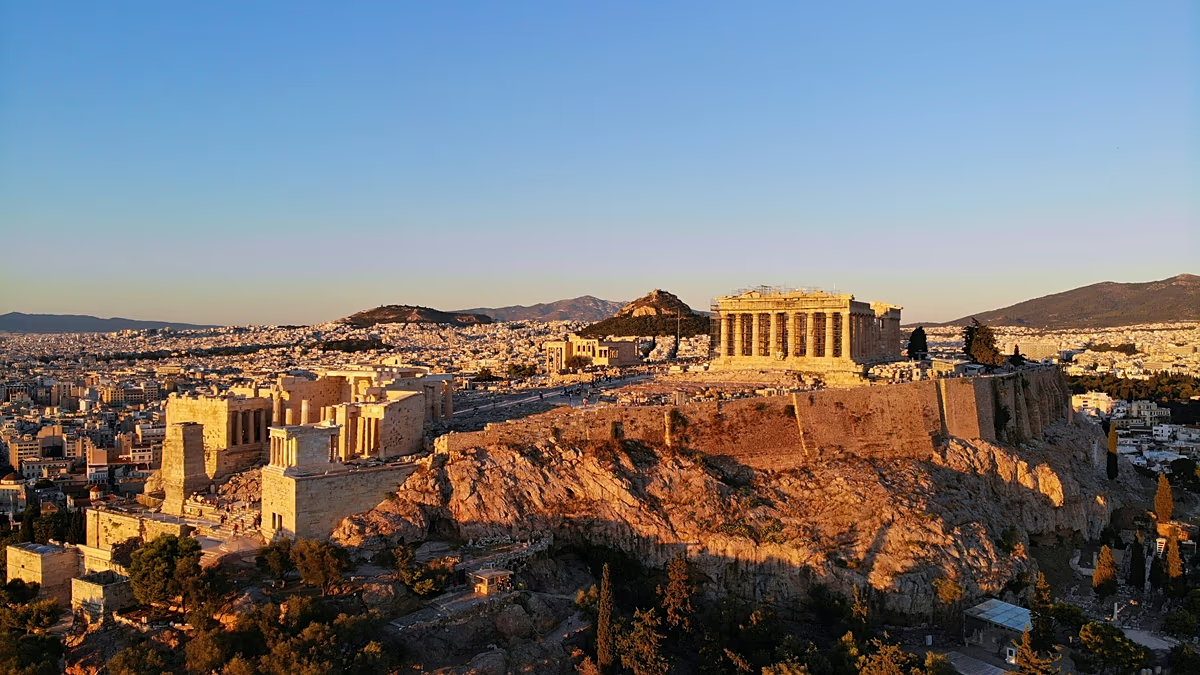
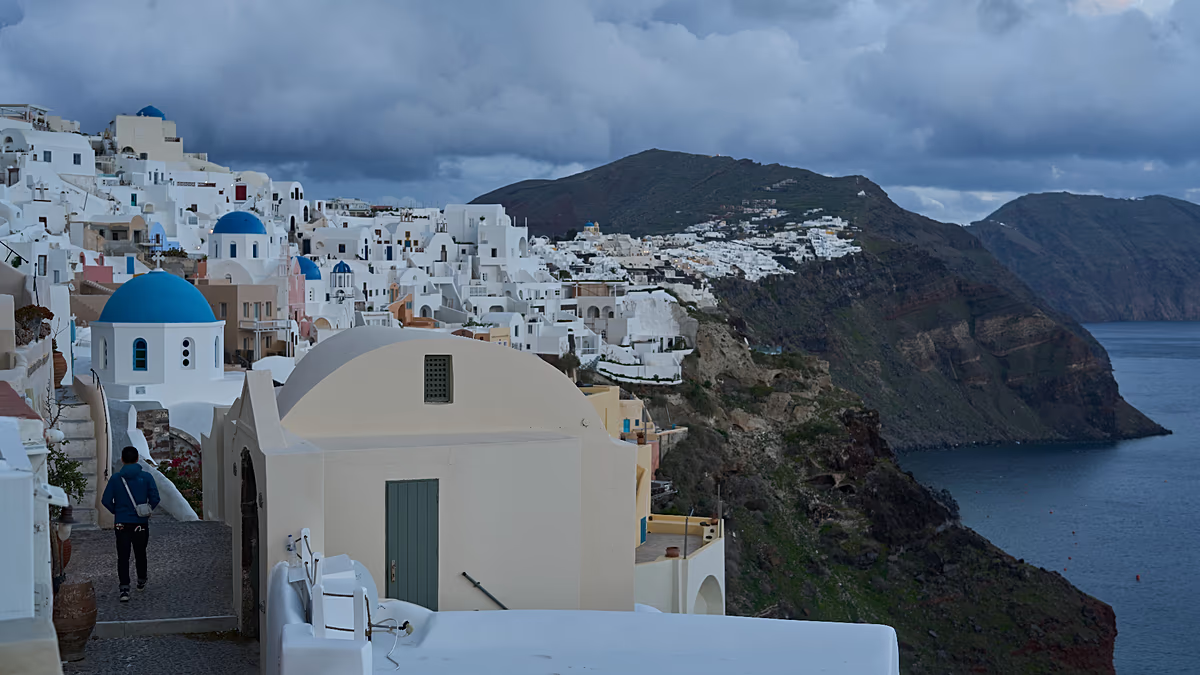
Why has Greece taken the crown? According to Kayla Zeigler, founder and travel advisor at Destination Europe, a Virtuoso affiliate, the country is almost tailor-made for honeymoons. It offers romance, spectacular scenery, exceptional food, deep history, rich culture, and an impressive range of luxury hotels. But what’s really changing is how couples are choosing to experience it. Zeigler told Euronews Travel that newlyweds are increasingly looking beyond the traditional Mykonos and Santorini combination, both of which have become much busier and more oriented toward cruise tourism over the years. Instead, they want a more relaxed, authentic Greek island experience, without sacrificing luxury. Paros, Milos, and Crete have emerged as new favorites, offering that unhurried, character-filled feel while still delivering high-end accommodations and service. The Athens Riviera is also drawing attention, thanks to an exciting wave of development and new luxury hotels that give honeymooners an attractive alternative to staying in the city center the whole time. As Zeigler put it, couples can experience the history and energy of Athens, then retreat to the coast for some breathing room, and continue on to the islands from there. This kind of rhythm allows for both discovery and downtime, which is precisely what many luxury honeymooners now say they want. They still care about beautiful hotels and exceptional service, of course, but increasingly they’re seeking authenticity, privacy, and a genuine sense of place. The 2027 Virtuoso findings reflect that broader shift: a honeymoon is no longer just a flashy escape, but a deeply personal, meaningful journey shared between two people.
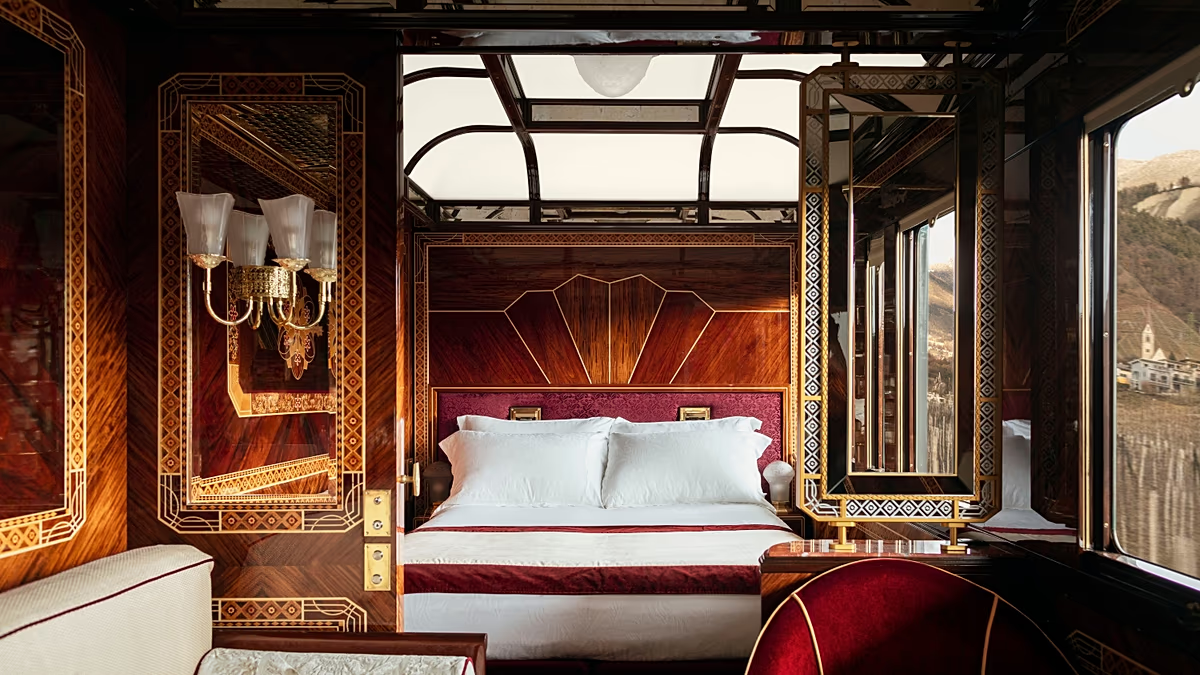
Italy and France, of course, remain perennial favorites for honeymoon bookings, and couples making their first trip to Europe still want the iconic experiences: Rome, Florence, Paris. But Zeigler has noticed a growing interest in combining those well-known destinations with places that feel more intimate, authentic, and less saturated. In Italy, for example, she and her team are increasingly recommending Ischia over Capri for couples visiting the Amalfi Coast region. Capri will always be iconic, she admits, but Ischia offers beautiful hotels, thermal spas, wonderful food, and a much more relaxed island atmosphere. There’s also more interest in Piedmont and Umbria as alternatives to Tuscany, along with lesser-known lakes that can stand in for Lake Como, and Puglia continues to rise in popularity, especially for its masserias, coastline, and incredible cuisine. The Dolomites are having a moment too, with their spectacular mountain scenery, exceptional alpine hotels, wellness offerings, and outdoor experiences. Paired with Venice, they create a wonderful honeymoon combination that balances culture and nature. A similar shift is happening in France. Couples are moving beyond Paris and pairing it with Provence, where villages, markets, vineyards, and countryside lend themselves beautifully to a slower honeymoon pace, or the French Riviera for a Mediterranean coastal experience. Champagne is a natural fit for a celebratory trip, while Burgundy and Bordeaux appeal to couples who love food and wine. As Zeigler notes, France makes it very easy to combine a few exciting days in Paris with a completely different, slower-paced experience just a short train ride away. The common thread is a desire for variety without chaos, romance without crowds, and a deeper connection to the places they visit.
One of the biggest changes Zeigler is seeing at Destination Europe is the move toward shoulder and off-season travel. June and July in southern Europe are becoming increasingly hot and crowded, making the romantic idea of summer honeymoons less appealing in practice. More and more couples are choosing to travel in April and May, as well as October and even November. Depending on the destination, they can enjoy more comfortable weather, fewer crowds, and better value for their money. This shift is part of a larger evolution in how luxury honeymooners think about their trip. They seem less interested in checking off as many destinations as possible and more interested in slowing down, finding places that still have a strong sense of place, and truly experiencing Europe together. That mindset also influences where they choose to splurge. Zeigler says she’s seeing couples pick a beautiful suite in a smaller boutique hotel, something charming and full of personality, over a grand palace hotel, and then use the money they save for unique, private, and personal experiences. This might mean booking an exceptional suite for a few nights and then choosing more moderately priced boutique properties elsewhere. Private boat trips, cooking classes, wine tastings, and guided tours are increasingly part of the honeymoon experience, alongside plenty of unstructured time to relax and explore together. Zeigler estimates that honeymoons now account for around a quarter of her agency’s bookings, with European trips typically lasting ten to fourteen nights. Longer journeys that span several cities, regions, or even countries have also reshaped budgets and itineraries, as couples look for a richer, more layered experience rather than a single resort stay.
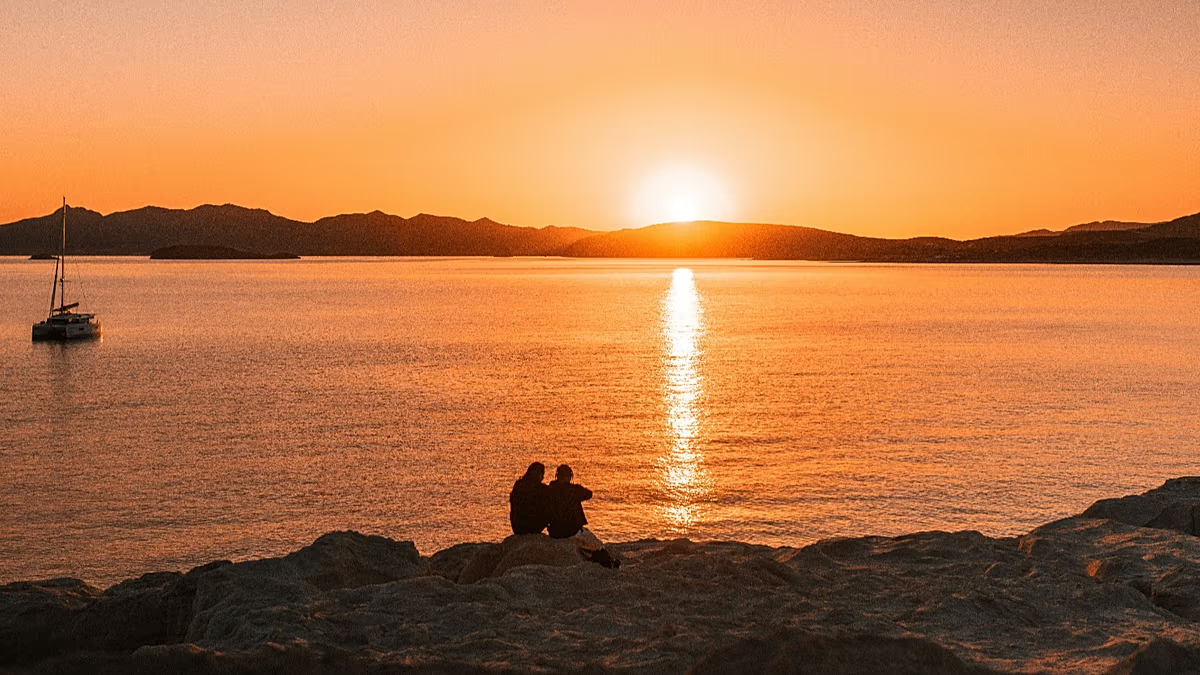
The Virtuoso Luxe Report also offers a helpful snapshot of the wider landscape for 2027. The ten most popular honeymoon destinations, in order, are Greece, Bali, Maldives, Italy, French Polynesia, Japan, Fiji, France, Thailand, and South Africa. That mix of Mediterranean beauty, tropical idylls, and cultural destinations shows just how diverse honeymoon dreams have become. The report also ranks the ten motivations driving affluent travel in 2027: celebrating a milestone, excitement of exploring a new destination, spending time with loved ones, rest and relaxation, health and wellness, honeymoons, escaping foul weather, personal enrichment and education, pampering oneself, and seeking adventure. Notably, honeymoons sit right in the middle of that list, which suggests that while they’re not the only reason people travel, they remain a powerful and deeply emotional one. Meanwhile, the top ten global destinations for luxury travel overall are Japan, Italy, France, Greece, Spain, Croatia, South Africa, Portugal, the United Kingdom, and the United States. Greece’s presence in fourth place on that broader list, right behind the European heavyweights, confirms that its appeal goes well beyond honeymooners. It’s a country that offers something for every kind of traveler, from history buffs and food lovers to adventure seekers and beach bums. And for couples, that diversity is exactly what makes it so compelling: you can spend the morning exploring ancient ruins, the afternoon tasting local wine, and the evening watching the sunset over the Aegean Sea.
So what does all this mean for couples planning their own honeymoon? Perhaps it’s permission to think beyond the obvious, to choose the route less traveled, and to design a trip that truly reflects who you are as a pair. Whether that means swapping Santorini for Milos, Capri for Ischia, Paris for Provence, or peak summer for a golden October, the message is clear: luxury today is less about extravagance at every turn and more about choosing where to splurge, creating meaningful experiences, and having the time and freedom to enjoy them. The best honeymoons, according to the experts, aren’t just about beautiful hotels and perfect beaches, though those certainly don’t hurt. They’re about authenticity, privacy, and a genuine sense of place. They’re about slow mornings, long dinners, private boat rides, and quiet moments that feel like the start of something bigger. As Zeigler beautifully puts it, luxury honeymooners seem to view their trip not as a single grand adventure but as the beginning of a lifetime of shared travel. In that sense, choosing where to go is less about ticking off a bucket list and more about setting the tone for all the journeys that will follow. And with places like Greece leading the way, offering both romance and depth, history and relaxation, there’s no shortage of inspiration for couples ready to take that first step together. The world is full of beautiful places, but the most memorable honeymoons are the ones that make you feel like you’ve found something real, both in the destination and in each other.