

Can you imagine a country where the journey itself becomes the destination? That’s exactly what the United States is asking travellers to rediscover as it prepares to mark two centuries of commercial rail travel in 2027. For a nation so often associated with interstate highways and busy airport terminals, the upcoming bicentennial is a wonderful invitation to slow down. Back in 1827, passenger rail was brand new, and it quickly became the thread that stitched this enormous country together, linking cities, opening up the West, and turning the simple act of moving from one place to another into something romantic and unforgettable. Now, 200 years later, Brand USA, the national tourism body, is encouraging both visitors and Americans alike to celebrate this legacy. As its President and CEO, Fred Dixon, puts it: “Rail is where America’s travel story began, and 200 years later, the romance of the rails endures. The 2027 bicentennial is a timely invitation for travellers to slow down, look out the window, and take in the unique beauty of the USA mile by mile.” Those words capture the heart of the moment. Driven by that spirit, this anniversary isn’t only about preserving the past, but about experiencing it. From dramatic Rocky Mountain crossings to vintage steam trains and even hotel rooms made from restored railway carriages, there has never been a better time to plan a rail adventure across the United States. The idea is to leave the car keys behind, skip the overhead bins, and let the tracks carry you through American history, landscape, and culture, one remarkable mile at a time.
The celebrations are not going to be confined to a single day or a single place. Throughout all of 2027, museums, historic stations, and heritage railways across the country will be holding exhibitions, special train rides, and events to mark the bicentennial. In the Mid-Atlantic state of Maryland, the spotlight is firmly on its deep rail roots, with rail-themed museums and scenic train rides offering travellers a chance to soak in the region’s heritage. Further south, the small town of Branchville, South Carolina, is preparing for its long-running Railroad Daze Festival, an event that has been going since 1969. Branchville is particularly special because it claims the title of the oldest railroad junction in the United States, a fitting gathering place for celebrating two centuries of American rail travel. For anyone planning a trip around the anniversary, these events provide both a starting point and a backdrop. But the real magic lies in deciding how you want to see the country. Many of us think of travelling through America as a choice between road trips and flights, and admittedly, the US rail network is not as comprehensive as the ones found in Europe. Yet what it lacks in density, it makes up for in sheer spectacle. There are true gems to be found on the lines that do exist, and the bicentennial is the perfect excuse to seek them out. Rather than simply passing over the country at 30,000 feet or watching it through a car windshield, rail travel gives you a front-row seat to the in-between places: the back gardens, the small towns, the vast open plains, and the mountains that define the nation’s geography. It turns the journey from a mere transfer into a memory.
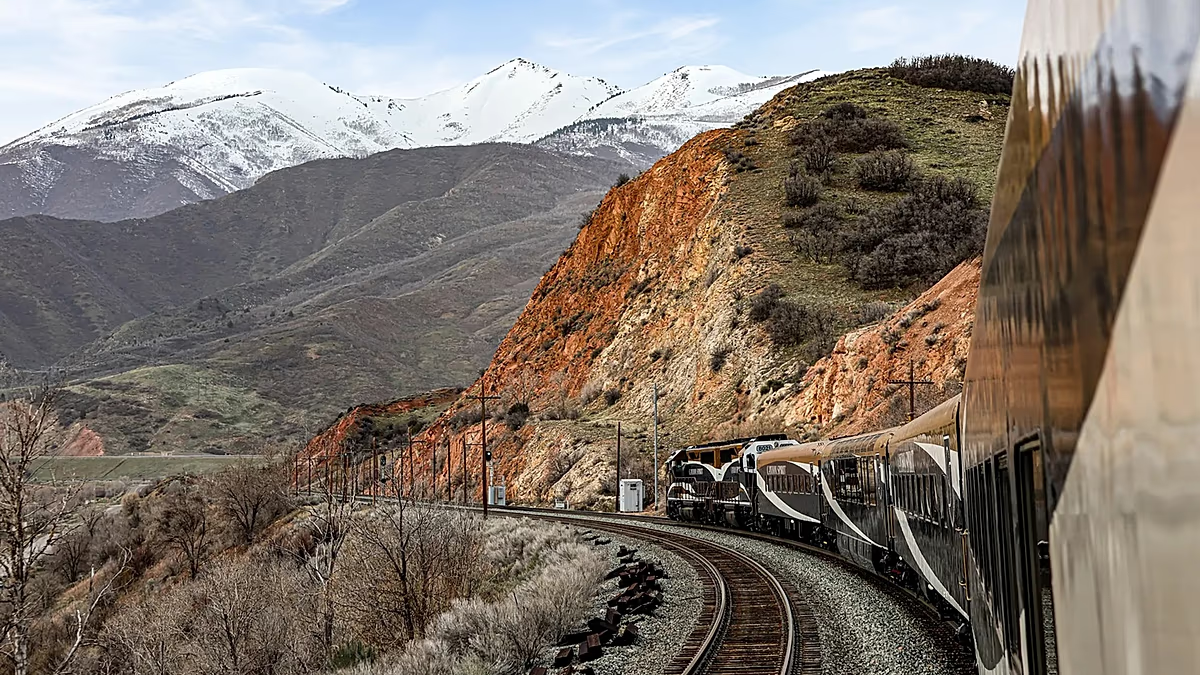
For those with a sense of adventure, the western United States offers some of the most unforgettable train journeys on the continent. Take the Canyon Spirit, for example. This train runs between Denver, Colorado, and Salt Lake City, Utah, but what makes it truly special is that it only runs in daylight. That means no sleeping through the scenery. Passengers can keep their eyes fixed on dramatic canyons, soaring mountains, and red-rock landscapes as they roll by, then step off in the evening to sleep in hotels along the route. It’s a brilliant way to experience the rugged beauty of the West without missing a single vista. Then there’s the question of Route 66, arguably the ultimate American road trip. It would be easy to assume you need a car to follow its path, but you don’t have to. The Amtrak Southwest Chief runs from Chicago towards Los Angeles, passing through many of the communities and landscapes that made Route 66 famous. Stops such as Albuquerque and Flagstaff allow travellers to dive into the culture of the Southwest, and with the Grand Canyon within reach, it’s an ideal way to combine an iconic rail journey with one of the world’s great natural wonders. If you’re looking to explore even more of the country, Amtrak’s long-distance routes are a fantastic option. The California Zephyr links Chicago to the San Francisco Bay Area, winding through the Rockies and Sierra Nevada. The Coast Starlight runs from Seattle all the way down to Los Angeles, while the Empire Builder heads from Chicago to the Pacific Northwest, passing Glacier National Park along the way. These routes don’t just get you from point A to point B; they give you a profound sense of just how awe-inspiringly large the United States really is.
The story of American rail, however, is not just about the old tracks and heritage lines. A new wave of trains is currently emerging, promising to open up different corners of the country. In the Pacific Northwest, Amtrak’s soon-to-be-launched Airo trains will serve the Cascades route between cities including Seattle and Portland, offering not just comfortable travel but also connections to mountains, forests, wine country, and the rugged coastline. Down on the Gulf Coast, the Mardi Gras Service is connecting New Orleans with Mobile, Alabama. This is a wonderful opportunity for visitors to extend their stay beyond the jazz clubs and historic neighbourhoods of New Orleans, continuing east by rail to discover lesser-known coastal communities along the way. For those who want to experience the atmosphere of America’s railway past, heritage trains offer a deeply evocative taste of history. Colorado’s Durango & Silverton Narrow Gauge Railroad winds its way through the San Juan Mountains, while the Cumbres & Toltec Scenic Railroad crosses into New Mexico with themed rides that include dinner and live music. Pennsylvania’s Strasburg Rail Road operates in one of the country’s oldest railway regions, giving passengers a sense of travelling through living history. In West Virginia, the Cass Scenic Railroad carries visitors into the Appalachian Mountains along tracks originally built for the logging industry. And for those who love autumn colours, New York’s Finger Lakes Rail Experience offers scenic journeys through historic landscapes, bursting with the reds and oranges of fall foliage. Whether you’re chasing modern comfort or steam-era nostalgia, the diversity of American rail travel means there’s something for every kind of traveller.
No rail-themed trip to the United States would be complete without exploring the stations and museums that have preserved the story of the locomotives themselves. In Baltimore, the former B&O Railroad Museum is marking the bicentenary with special programming and a brand new Innovation Hall, offering visitors a deeper look into how trains shaped American industry and culture. In Pennsylvania, the Railroad Museum of Pennsylvania is opening a new accessible roundhouse in 2027, which will house six historic steam locomotives, giving visitors a rare chance to see these giant machines up close. But railway history is not always locked behind museum doors. Many historic stations have been given new lives, becoming beautiful places to stay and explore. Denver Union Station, for example, now houses the Crawford Hotel, where Pullman-style rooms have been designed to mimic the vintage sleeper cars of the golden age of rail. In Omaha, Nebraska, the Durham Museum is located inside the stunning Art Deco Union Station built in 1931. Visitors can climb aboard restored 1940s passenger cars and even enjoy a malted milkshake from a working soda fountain that dates back to 1931. Down in Los Angeles, Union Station is a particular architectural gem, complete with guided tours that explore its design, history, and artwork. These stations are more than just places to catch a train; they are monuments to an era when travel was an event in itself. They remind us that the romance of the railways isn’t found solely in the journey, but also in the grand spaces built to welcome travellers on their way. Each one tells a story of ambition, progress, and the uniquely American belief that the distance between two places can be an experience worth having.
And if you really want to immerse yourself in railway history, you don’t even have to catch a train to sleep in it. Across the country, there are countless ways to spend the night inside a piece of railroad heritage. In Chattanooga, Tennessee, the Hotel Chalet at The Choo Choo lets guests stay in beautifully restored Pullman carriages, while a short distance away, the Tennessee Valley Railroad Museum offers historic train rides through the scenic landscape. In Salt Lake City, the Asher Adams hotel occupies the former Union Pacific Depot, blending modern comfort with the grand architecture of a bygone era. Minneapolis offers a similar experience at the Renaissance Minneapolis Hotel, The Depot, where the railway heritage has been lovingly preserved. For something a little more unusual, Idaho Train Stays in Deary offers restored carriages and a caboose in a wonderfully rural setting, while the Antigua Inn in Madrid, New Mexico invites guests to stay in converted cabooses. Nearby in Lamy, The Hamilton boasts a restored 1920s Pullman railcar, and from there travellers can board the Sky Railway, a railroad dating back to 1880. This historic route was revived and restored, in part, by Game of Thrones author George R.R. Martin, and today it hosts themed journeys featuring everything from stargazing and murder mystery to live jazz and margarita tastings. In Omaha, ten restored Union Pacific cabooses at Two Rivers State Recreation Area can be booked for overnight stays during the warm-weather months. These whimsical and creative accommodations show that the railway legacy in the United States is not something to be kept under glass. It is something to be lived, touched, tasted, and dreamed in. As the 200th anniversary approaches, the message is clear: the rails are calling, and there’s no better time to answer than now.