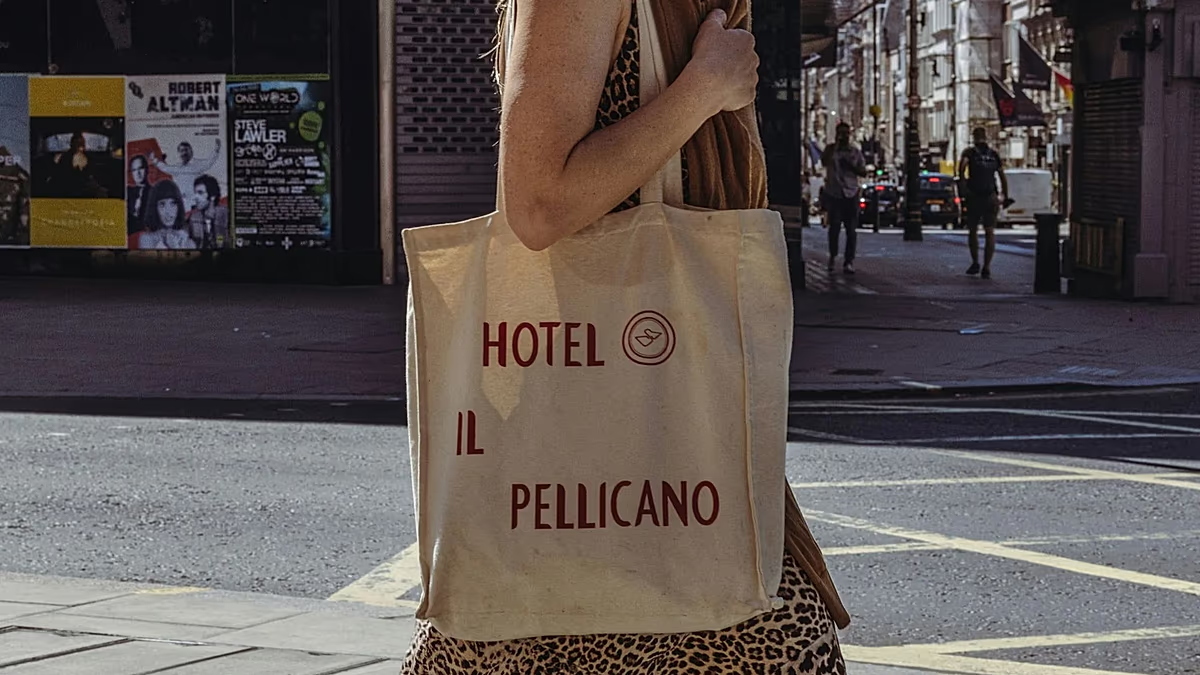



Remember when coming home from a trip meant handing out the same sad keychains, slightly dusty seashells, or a magnet that could have come from any city on earth? Those days are officially behind us. According to Skyscanner’s latest travel trends report, the way we shop while traveling has transformed into something far more intentional, personal, and even a little obsessive. The new buzzword is “pilgra-merch,” a playful mashup of pilgrimage and merchandise, and it captures the growing desire to bring home something that you simply cannot buy online or anywhere else. It’s no longer enough to snap a photo in front of a landmark; you want a tangible piece of that place, something that whispers, “I was really there, and you weren’t.” This is the latest iteration of the millennial phrase “pics, or it didn’t happen,” but with a twist. Instead of just proving you visited, you’re proving you knew exactly where to look, what to buy, and why it mattered. Whether it’s a limited-edition grocery tote, a hotel-branded cap, or a pair of socks that represents a tiny Japanese prefecture, the souvenir has evolved into a badge of travel savvy. And let’s be honest, there’s something deeply satisfying about carrying a piece of your journey into your everyday life, especially when it sparks a conversation or reminds you of a place that felt like a secret.
The numbers behind this trend show just how far people are willing to go for the perfect piece of place-specific merch. Skyscanner found that 23% of travelers have made a trip in the past year specifically to buy something they couldn’t purchase online. That’s nearly one in four people who looked at a destination and thought, “I need to go there, not just for the sights, but for that thing I’ve seen on Instagram.” The generational split is even more fascinating. Among Gen Z, 28% say they are most proud to buy a limited-edition grocery tote, while 22% of Millennials are showing off branded robes or caps from luxury hotels. It seems the younger crowd wants the humble, everyday item with a cult following, while Millennials are leaning into the quiet flex of hotel merchandise that signals a certain level of taste and experience. Fashion psychologist Shakaila Forbes-Bell explains that this is about more than just stuff. “Fashion brands have been leaning into this trend by providing more sensation-seeking style experiences from mystery bags to pop-ups, all of which you have to be ‘tapped in’ to know about,” she says. The community-driven aspect is what makes these items so desirable. When a bag, a tote, or a mug becomes sought after, it’s often positioned as something only a “real traveler” would know about. This taps into our deep, ingrained desire to belong and our fear of being left out, which ultimately makes the item even more coveted. In other words, it’s not just about owning a thing; it’s about being part of a club.
Skyscanner’s report highlighted two prime examples of pilgra-merch in action: the Trader Joe’s tote bag and Ritz Paris merchandise. The Trader Joe’s tote, with its cheerful red logo and sturdy canvas, has become an unlikely status symbol. It’s the kind of bag that people will cross state lines to get, partly because it’s practical and partly because it signals you have access to a store that isn’t everywhere. Then there’s Ritz Paris, where the hotel’s branded merchandise—think elegant robes, caps, and even soap—turns a stay at a luxury hotel into something you can wear long after checkout. These items are instantly recognizable to those in the know, and that’s exactly the point. They’re not just souvenirs; they’re signals. They tell a story about where you’ve been, what you can afford, and how well you understand the culture of cool. But while these examples are fun, they can also feel a little out of reach or overexposed. After all, how special is a Trader Joe’s tote when everyone on your feed seems to have one? The real magic of pilgra-merch lies in finding something that feels uniquely yours, something that hasn’t been plastered all over social media yet. That’s where thinking beyond the obvious can make your souvenir not just a purchase, but a memory.
If you want to embrace the pilgra-merch trend in a way that feels fresh and personal, Japan’s Family Mart has you covered—literally. Last month, the convenience store chain released 47 different pairs of socks, each one representing a different prefecture in the country. The best part? They’re exclusively available in Family Mart stores within the prefecture they represent. So if you want the socks for Hokkaido, you have to go to Hokkaido. If you want the Okinawa pair, you need to make your way down to the southern islands. It’s a brilliant, playful way to turn a mundane errand into a treasure hunt. You’ll be able to flex on your friends about all the under-the-radar places you’ve visited, one pair of socks at a time. And unlike a fragile souvenir or a T-shirt that will end up in the back of your drawer, socks are something you can actually use. Every time you pull them on, you’ll remember the little convenience store, the friendly cashier, and the train ride that took you somewhere off the beaten path. That’s the kind of pilgra-merch that feels less like consumerism and more like a scrapbook you can wear.
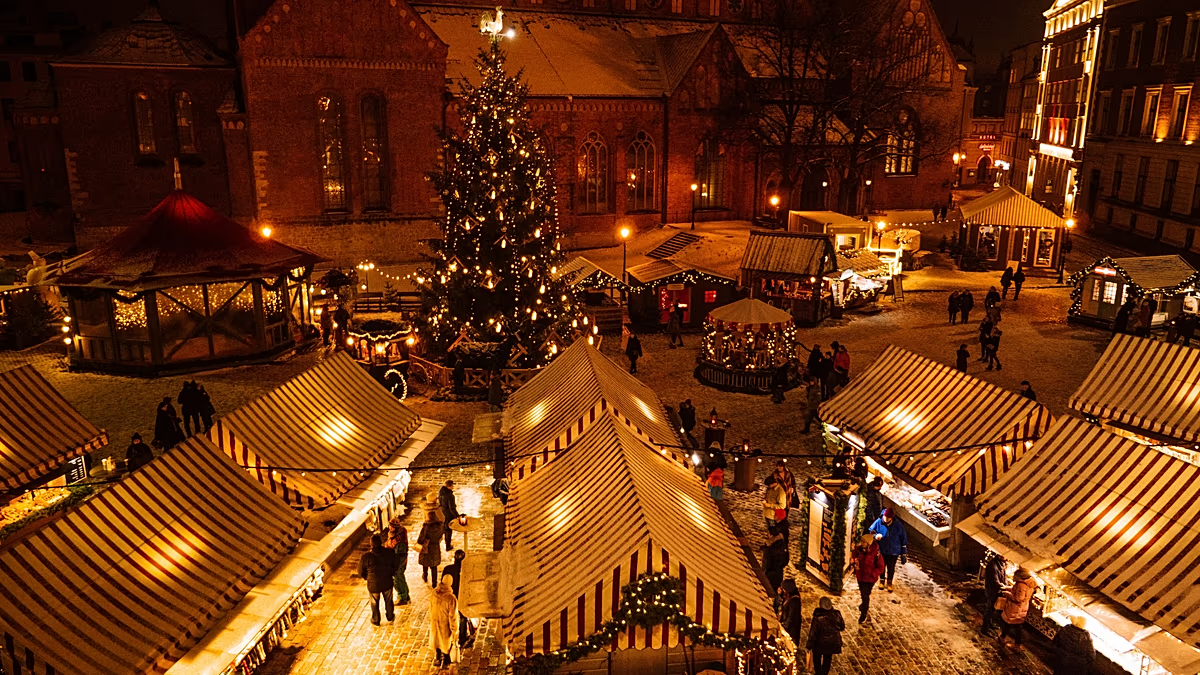
Of course, pilgra-merch doesn’t have to be branded at all. In fact, some of the best souvenirs are unique items you’ll use every day, made by local hands with stories woven into every stitch. With autumn finally upon us, it’s the perfect time to think about upgrading your wardrobe with something meaningful. Why not head to one of the Handknitting Association of Iceland’s stores and pick out a 100% wool, locally-made jumper or cardigan? These aren’t mass-produced sweaters churned out in a factory; they’re warm, sturdy, and full of Icelandic character. You’ll feel the North Atlantic wind just by looking at the intricate patterns, and every time you wear it, you’ll carry a little piece of Reykjavik with you. If you’re already sorted for jumpers, you could make your way to Riga, where a shop called SENĀ KLĒTS sells mittens knitted in traditional Latvian designs. These aren’t just colorful accessories—they’re filled with symbolism, with each pattern and color carrying meanings that have been passed down through generations. Wearing them is like wrapping your hands in a piece of cultural history. And when the weather warms up again, there are plenty of places across Europe where you can get custom-made sandals, the most famous of which is probably Melissinos Sandals in Athens. There, you can watch artisans craft a pair of sandals to fit your feet perfectly, choosing from designs that have been worn by poets, actors, and travelers for decades. These are souvenirs that don’t just sit on a shelf; they become part of your daily life, your story, and your style.
At its heart, the pilgra-merch trend is about something deeper than shopping. It’s about the human desire to connect with the places we visit and to bring a little of that magic home with us. In a world where almost everything is available at the click of a button, the act of traveling somewhere specifically to buy something is a quiet rebellion against the sameness of global commerce. It’s a way of saying that some things are worth the journey, that not everything can be shipped to your door, and that the most meaningful possessions are often the ones with the best stories. So the next time you’re planning a trip, don’t just make a list of landmarks and restaurants. Think about what you want to bring back with you—not just the photos, but the things you’ll use, wear, and treasure for years. Look for the local artisans, the quirky convenience store finds, the items that make you smile every time you see them. Whether it’s a pair of socks from a Japanese prefecture, a woolly Icelandic sweater, a pair of Latvian mittens, or a custom-made pair of sandals from Athens, the best pilgra-merch is the kind that tells a story only you can tell. Because in the end, we don’t travel just to see the world; we travel to bring a little bit of it back with us, and to remind ourselves that the world is full of beautiful, unexpected, and wonderfully specific things waiting to be found.