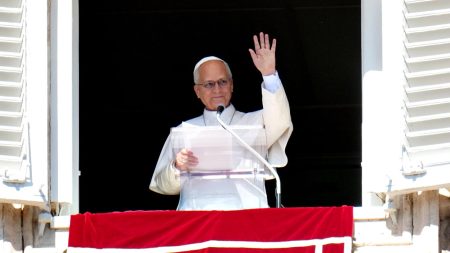



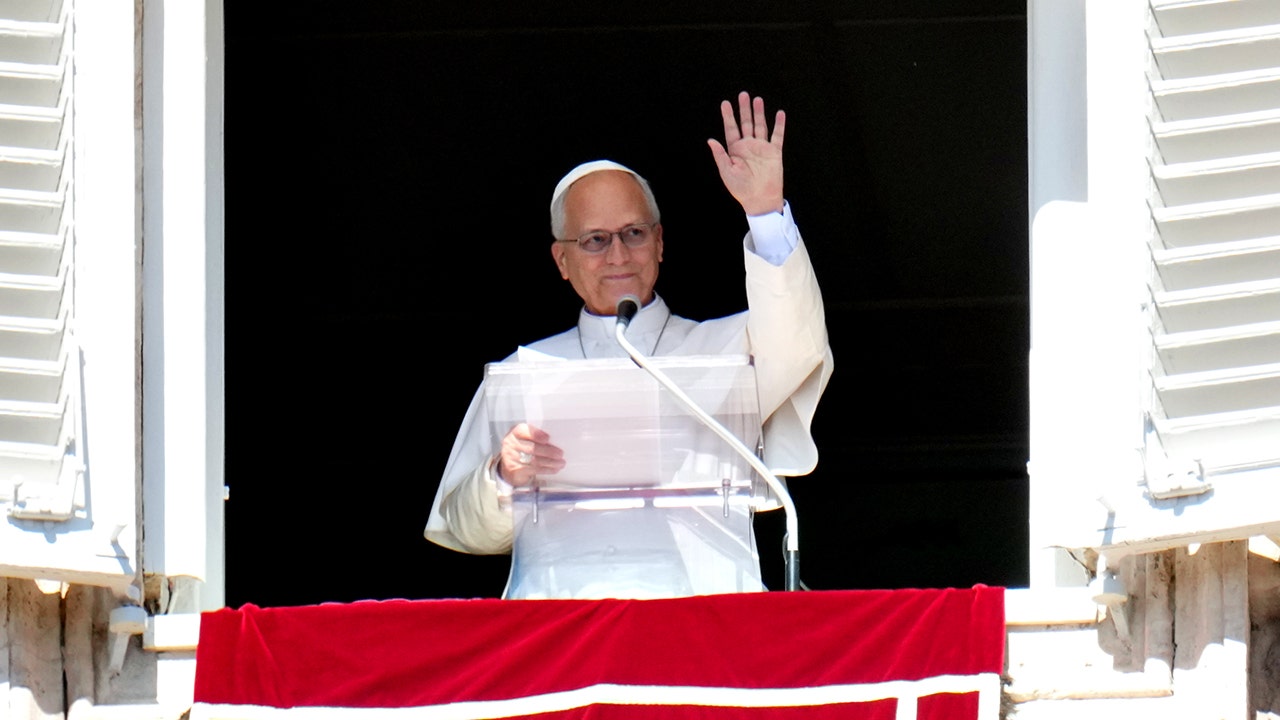
In a world that often feels numbed by headlines and scrolling, a single message from Pope Leo XIV landed with quiet but unmistakable force. On Saturday, marking World Day Against the Death Penalty, the first American pope took to social media to declare that capital punishment is not just a flawed policy, but an outright attack on the inviolable dignity of every human being. “The death penalty is inadmissible because it is an attack on the inviolability and dignity of the person,” he wrote, adding the simple, powerful hashtag #NoDeathPenalty. It was a short post, but it carried the weight of centuries of Catholic teaching, now reshaped for a modern world that must choose between vengeance and mercy. What made his words particularly striking was not only their clarity but their timing. Just days earlier, the Pentagon had announced plans to execute a former Army psychiatrist by firing squad, and there was talk of livestreaming the event for the public to watch. The pope did not mention that case directly, but his message hung in the air like a question aimed at the conscience of a nation: What are we doing when we turn death into a spectacle, and what does it say about us when we believe that killing a person can somehow restore justice?
To understand why these words matter so deeply, it helps to look at how far the Catholic Church has traveled on this issue. For much of its history, the Church allowed the death penalty in extreme cases, teaching that it could be permissible if it was the only way to protect society from a dangerous offender. That exception was maintained by many popes, though there was always a thread of unease running through their teachings. Pope John Paul II, in particular, began to push the conversation forward, emphasizing that even those who commit terrible crimes never lose their fundamental dignity as human beings. Then, in 2018, Pope Francis made a historic revision: he changed the Catechism of the Catholic Church to declare the death penalty “inadmissible” in all circumstances, because it is an attack on the inviolability and dignity of the person. This was not a casual adjustment; it was a profound theological shift, rooted in the belief that the common good can be protected without resorting to execution. Modern prison systems, Francis argued, are capable of keeping citizens safe while still leaving room for the possibility of redemption. Pope Leo XIV’s recent statement is a continuation of that same vision, a reminder that the Church’s position is not about being soft on crime, but about being hard on the illusion that we can heal wounds by inflicting more wounds. His words invite us to imagine a justice system that does not end a human life, but instead holds a person accountable while still honoring the flicker of humanity that remains within them.
The backdrop to all of this is a case that has torn at the American conscience for over a decade. Nidal Malik Hasan, a former Army psychiatrist, was convicted of killing thirteen people and wounding thirty-two others in a horrific mass shooting at Fort Hood in 2009. There is no question that his actions were devastating, and the pain of the victims and their families is real and enduring. Yet the Pentagon’s decision to execute him by firing squad on December 3rd, and the proposal to livestream that execution, has sparked a fierce national debate. If carried out, it would mark the first time the U.S. military has used a firing squad since 1945, and the first public livestreamed execution in American history. President Donald Trump, who had not yet decided whether to allow the livestream to proceed, faced pressure from all sides. Pentagon chief Pete Hegseth pushed for the broadcast, but others recoiled at the thought of turning a moment of state-sanctioned death into a piece of public entertainment. The question is not whether Hasan deserves punishment—he certainly does—but whether the manner of that punishment reflects who we are as a people. Do we really want to gather around our screens, as if watching a sporting event, to witness the moment a human being is put to death? And what kind of society does that create?
The outrage over the proposed livestream has crossed political lines, and some of the most forceful objections have come from unexpected voices. Vice President JD Vance, a Catholic, expressed deep skepticism about the plan, saying he would not watch the livestream if it were carried out. Senator Thom Tillis, a Republican from North Carolina, drew a stark comparison that is hard to ignore: “Public executions are what oppressive dictatorships like Iran and Afghanistan do,” he said. “It should not be happening in America.” That sentiment echoes a broader discomfort, not just with the death penalty itself, but with the deliberate theatricality of making it a public event. There is something almost medieval about the idea, as if we have regressed to the days when crowds would gather in town squares to watch beheadings and hangings. But we are not in the Middle Ages; we are in an age of livestreams, likes, and viral moments. The very idea of broadcasting an execution seems to reduce a profound moral tragedy to mere content. It turns the ultimate punishment into something that can be consumed, commented on, and then scrolled past. In doing so, it strips away the last shred of solemnity from the act of taking a life. Even those who support the death penalty as a matter of principle have struggled to defend this spectacle, and their hesitation reveals something important: deep down, many of us recognize that some things should never be performed for an audience.
The Vatican, too, has weighed in with unusual bluntness. Cardinal Pietro Parolin, the Vatican secretary of state, called the proposed broadcast “truly incomprehensible” and warned that it was “unacceptable to turn death into a spectacle.” He reminded the world that the Church’s position is one of total opposition to the death penalty, not because it fails as a deterrent, but because it is incompatible with human dignity. “Even if the person is guilty, of course, there are other methods,” he said. Archbishop Paul Coakley, head of the U.S. bishops conference, went even further, expressing “shock” and “great sorrow” at the plan. He urged the United States to reconsider, calling the public execution “a barbaric promotion of a culture of death” that would “undermine the moral fabric of our nation and be a blight on the conscience of its people.” These are strong words, but they come from a place of deep conviction. For people of faith, the issue is not simply about policy or procedure; it is about the very meaning of justice and mercy. To execute someone in private is already a grave act. To do so in public, with cameras rolling and viewers watching, is to declare that we have lost all sense of the sacred. It is to say that a human life, even one that has caused immense suffering, is just a thing to be disposed of, a piece of evidence to be presented, a spectacle to be consumed. That is a dangerous path for any society to walk.
And then there is the strange and haunting case of Christa Gail Pike, which adds another layer of urgency to this conversation. Pike, a woman convicted of murder, survived a botched lethal injection in Tennessee late last month, despite receiving two doses of pentobarbital. The execution was supposed to end her life, but instead it failed, and she was returned to prison, her attorneys saying she had been discharged from the hospital. It is hard to imagine the psychological and physical torment of such an experience, and harder still to understand how a system that claims to administer justice can be so clumsy in its application of death. These botched executions are not anomalies; they are a recurring feature of the death penalty in America. They reveal that no matter how carefully we try to script an execution, we are still dealing with the messy, unpredictable reality of human bodies and human fallibility. The Catholic Church, through the voices of Pope Leo XIV, Pope Francis, and countless bishops, has consistently pointed to this reality. The death penalty is not simply a moral abstraction; it is a practice that too often causes suffering to everyone involved, including those who are tasked with carrying it out. As the nation stands on the brink of its first firing squad execution in eighty years, and its first livestreamed execution ever, we are forced to ask ourselves a fundamental question: Are we a society that believes in redemption, or are we a society that has given up on it? The answer, perhaps, is written in the way we choose to treat even the worst among us. We can choose to honor the dignity of every person, even those who have committed terrible crimes, or we can choose to turn death into a spectacle. The pope’s words remind us that the choice is ours, and that the consequences will echo far beyond any single execution.