


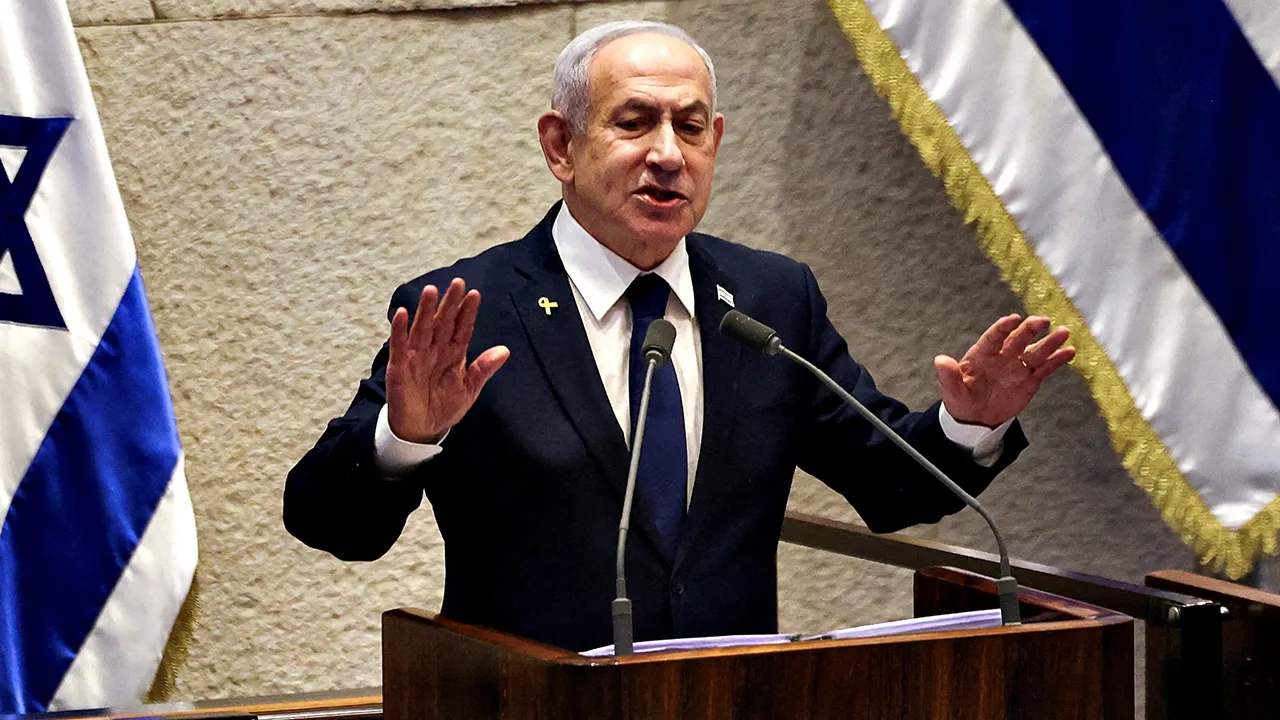
On a warm autumn evening in Tel Aviv, with campaign posters plastered over bus shelters and the sound of news anchors discussing poll numbers drifting from café windows, Israel is bracing for one of the most consequential votes in its history. On Oct. 27, for the first time since Hamas’s Oct. 7, 2023, massacre and the wars that followed, Israelis will go to the polls. And at the center of it all stands Benjamin Netanyahu, the longest-serving prime minister in the country’s history, a man whose name has become synonymous with modern Israel itself. Over nearly two decades in office, Netanyahu has overseen a remarkable transformation: a booming free-market, high-tech economy, and a military that has become the strongest and most sophisticated in the region. But his legacy is now entwined with the darkest day in Israel’s history. For many voters, this election is not just about policies or security strategy; it is about what Israel has become, where it is going, and whether the leader who shaped its recent path is the one to lead it through the next chapter. Zvika Klein, editor-in-chief of The Jerusalem Post, noted that for Israelis under 20, there is almost no memory of a country without Netanyahu at the helm. Aside from the brief, fractured government led by Naftali Bennett and Yair Lapid in 2021–2022, Netanyahu has been the constant figure, the fixed point in a region that never stops shifting. For younger voters, this is not just an election; it is an introduction to a political reality their parents and grandparents have lived through for decades. For older Israelis, it is a moment to decide whether the man who carried them through wars, intifadas, and diplomatic upheavals should be allowed to define what comes next.
The central question on the ballot, according to political commentators, is not simply whether Netanyahu should remain in power, but who is best equipped to finish the work that began after Oct. 7. In the months following the massacre, Israeli forces have fought devastating campaigns against Hamas in Gaza and Hezbollah in Lebanon, and the Iranian-led Shiite axis that once surrounded Israel has been severely weakened, its leaders killed, its supply lines shattered, and its once-feared military machine reduced to shadow operations. Gadi Taub, co-host of Tablet’s “Israel Update” podcast, said that Netanyahu, from the very first days after the attack, promised to change the Middle East. That promise, in many ways, has been kept. The battlefield achievements have been extraordinary by any historical measure. Yet the war is not finished. There are still hostages in Gaza, still rockets that fly, still threats that shift and regroup. For Netanyahu, this election is a chance to claim credit for the military victories that have restored some measure of Israel’s deterrence. But Eylon Levy, a former spokesman for the State of Israel, believes the election is for many Israelis an opportunity to change course after what he called the country’s biggest disaster. Netanyahu, he said, does not want to go down in history as the man on whose watch the Oct. 7 massacre happened. He wants to be remembered as the leader who took the incredible military achievements of the last few years and turned them into a lasting legacy. The tension between those two stories—the disaster and the recovery—runs through every campaign speech, every television debate, and every family dinner conversation in Israel.
There is, of course, a great deal of anger in the air. Anger over the failures that allowed Oct. 7 to happen. Anger over the social and economic cost of a war that has dragged on for more than a year, pulling reservists away from their jobs, forcing families to evacuate their homes in the north and south, and straining a society already exhausted by years of political turmoil. Levy said the election is filled with anger about responsibility for the massacre and about the price of sustaining the war. That anger is unpredictable. It could hurt Netanyahu, or it could hurt the opposition, depending on how voters decide to channel it. Few polls are projecting a clear majority for either the current government or the opposition bloc led by former army chief Gadi Eisenkot. In fact, the most likely outcome, Levy said, is some form of deadlock—a situation in which no party can assemble a governing coalition, and Netanyahu would continue serving as caretaker prime minister until a new government is sworn in. Israelis have seen this before. Between 2019 and 2022, the country held five elections in a span of three years, a period of prolonged political instability that left many voters exhausted and cynical. Now, with war still raging on multiple fronts, the prospect of another stalemate is not just frustrating; it is dangerous. The world is watching, Iran is watching, and Israelis know that their political system cannot afford to stumble at this critical moment.
To understand why these elections are so complicated, it helps to understand how Israel’s political system works. Unlike the United States, where a single presidential election determines the head of government, Israel operates under a parliamentary system. Voters do not cast their ballots for a prime minister directly; they vote for parties, and those parties are represented in the Knesset, Israel’s 120-seat legislature. The system is based on proportional representation, with each party receiving seats according to the percentage of the vote it captures. The electoral threshold for entering the Knesset is about 3.25 percent, which means smaller parties can survive, but only if they manage to gather enough support. No party in Israel’s history has ever won more than half the seats. As a result, after every election, the leaders of the larger parties must spend weeks—sometimes months—negotiating with smaller parties to form a governing coalition. To become prime minister, a candidate must secure the support of at least 61 members of Knesset, basically half plus one. Those 61 members can come from a hodgepodge of parties with very different agendas, and the coalition agreements that hold them together are often fragile and filled with compromises. This is why Israeli politics are so chaotic. It also explains why Netanyahu, a master of political survival, has been able to remain in power for so long. He knows how to navigate this maze better than almost anyone. He understands the egos, the rivalries, the red lines, and the price of every seat. But the same system that helped him survive has also created the gridlock that now threatens to consume him.
The opposition that hopes to unseat him is a loose and somewhat unlikely alliance. Klein described a group called “Rak Lo Bibi”—translated as “anyone but Bibi”—which includes parties that have very little in common except their desire to see Netanyahu go. There is Eisenkot’s party, Yashar, and the joint BeYachad slate headed by Bennett and Lapid, the two men who briefly replaced Netanyahu in the last rotation government. There is Avigdor Liberman’s Yisrael Beiteinu, a party that has worked with Netanyahu in the past but has since become one of his most vocal critics. And there is The Democrats, which Klein described as the most left-wing party in the so-called “change” alliance. On paper, this coalition of rivals seems unlikely to hold together. But Israeli politics has a long history of strange bedfellows. What unites them is not a shared vision for the future, but a shared conviction that Netanyahu’s time has passed. Yet the opposition is not without its own vulnerabilities. Taub, the conservative commentator, pointed out that when you look at the candidates on the left, one after the other, they wanted to stop the war very early in Gaza. Eisenkot, the leading contender on the left, wanted to finish the war after the pager operation against Hezbollah, and argued that Israel should cut a deal while it had the upper hand. Netanyahu, by contrast, kept saying “total victory.” That defiant message resonates with many Israelis who believe that anything less would be a reward for terrorism. But it also creates an impossible standard. The vulnerability on the right, Taub said, is that victory has not been total. The war continues. The hostages are not all home. The threat has not disappeared. And so Netanyahu’s own promise may end up being the measure of his failure.
Beyond the immediate war, there is an even larger threat looming over the election: Iran. Taub called it an existential danger. Iran, with the support of Russia and China, is rehabilitating its nuclear program, and Israel cannot allow that to happen. This is not a problem Israel can solve entirely on its own. The United States is dealing directly with Iran, and the international community has a role to play. But for Israeli voters, the nuclear issue is the backdrop against which all other issues are judged. It is the reason the war is being fought, the reason Israel cannot afford to appear weak, and the reason the election feels so fateful. Every candidate, whether from the right or the left, speaks about Iran in grave terms. But they offer different answers. Netanyahu argues that his experience and his relationships with world leaders make him the only one who can stand up to Tehran. His opponents argue that his leadership has led Israel into a strategic trap, with no clear exit and no long-term plan. For ordinary Israelis, these are not abstract debates. They are questions of life and death. Parents sending their children to the army, families living within range of rockets, grandparents who remember the wars of the past—all of them are trying to decide who they trust with their future. In the end, the election on Oct. 27 will be a judgment on Netanyahu, on his legacy, and on the choices Israel has made under his leadership. But it will also be a statement about the country Israel wants to become. Do voters want a leader who promises to keep fighting until the Middle East is transformed? Or do they want someone who will find a way to stop the bleeding and rebuild? There are no easy answers, and the polls suggest that the country is deeply divided. But one thing is certain: the decision will shape Israel for years to come, and the world will be watching closely. Netanyahu may still be standing when the votes are counted, or he may finally be pushed aside. But whatever happens, this election will be remembered as a turning point in the life of a nation that has never known a moment without struggle.