






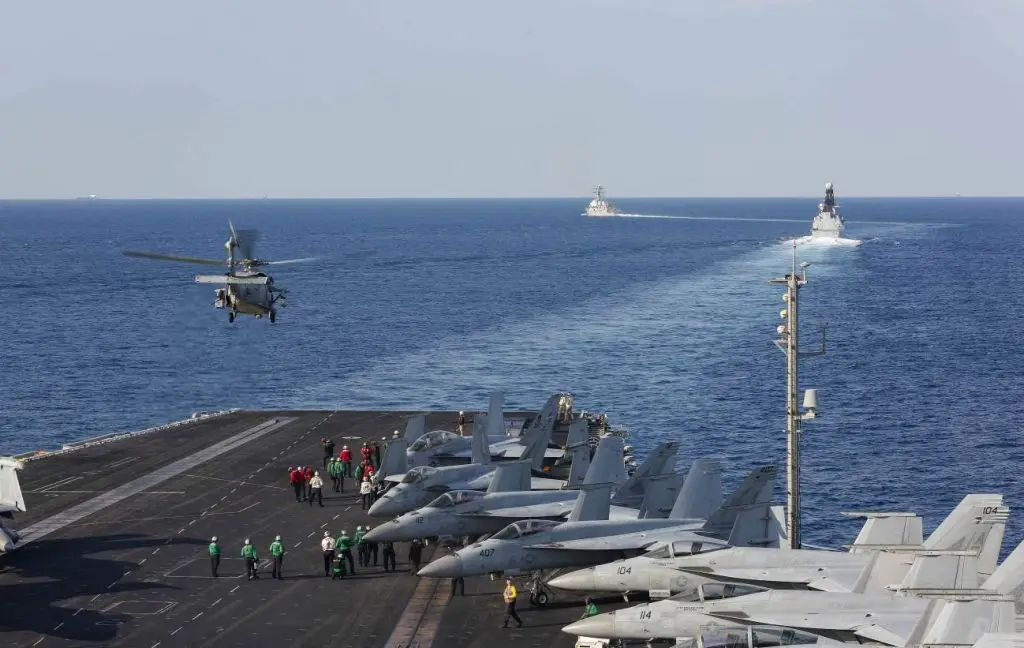
In the quiet, ink-black hours of the early morning, far out in the vast and unforgiving expanse of the Arabian Sea, the routine rhythms of military vigilance were shattered in an instant. It was approximately 3:30 a.m. Eastern Time on a Wednesday when an MH-60S Sea Hawk helicopter, a workhorse of modern naval aviation operating from the flight deck of the aircraft carrier USS George H.W. Bush, was forced to make a sudden and harrowing emergency landing in the dark ocean waters. For the four-member crew aboard the aircraft, the transition from a standard night operation to a fight for survival was immediate and terrifying. Helicopters like the Sea Hawk are designed with incredible engineering precision, yet when faced with the unpredictable variables of flight over open water, the margin for error is razor-thin. This sudden plunge into the cold currents of the Arabian Sea immediately activated a desperate rescue response from the nearby aircraft carrier, casting a bright spotlight of urgency onto the inherent dangers of naval service. While the world slept, the crew of the USS George H.W. Bush sprang into action, driven by the deeply ingrained military ethos that prioritizes the lives of comrades above all else. This incident serves as a stark, sobering reminder that even outside the theater of active combat, the men and women who wear the uniform face life-threatening perils every single day. The vastness of the ocean, the darkness of the night, and the sheer weight of the sudden emergency created a crucible of survival that would test the training, resilience, and spirit of everyone involved. As the helicopter settled into the waves, the quiet of the night was replaced by the roar of rescue engines, the frantic coordination of communications, and the collective breath-holding of a crew realizing that their brother and sister aviators were now at the mercy of the sea.
Amidst the chaos of the emergency water landing, a crucial glimmer of hope and relief emerged through the darkness as three of the helicopter’s four crew members were successfully pulled from the unforgiving sea. The rescue of these three individuals is a profound testament to the rigorous, repetitive, and realistic search-and-rescue training that U.S. Navy personnel undergo precisely for moments like this, where every second dictates the boundary between life and death. Pulled from the clutching, cold grasp of the Arabian Sea, the survivors were quickly transported back to the familiar, echoing steel sanctuary of the USS George H.W. Bush, where they were immediately placed under the intensive care of the ship’s dedicated medical team. Currently listed in stable condition, their physical recovery has begun, but the emotional and psychological toll of surviving such a harrowing event is nearly immeasurable. To watch your aircraft descend, to feel the violent shock of cold ocean water, to experience the disorientation of a sinking vessel in the pitch black, and to then be pulled into the safety of a rescue hoist is a sequence of events that leaves an indelible mark on the human psyche. Yet, even as they wrapped themselves in blankets and received emergency medical treatment, their thoughts undoubtedly remained locked on the one teammate they left behind in the water. For these three survivors, the immense relief of their own survival is heavily overshadowed by the haunting, heavy knowledge that their crew is not whole. Their physical stability is a profound blessing, but the atmosphere on the carrier remains somber, quiet, and hyper-focused, as the joy of saving three lives is tempered by the agonizing reality of the ongoing search. The bond among aircrew members is forged in shared danger, trust, and mutual reliance, making the absence of even a single comrade a deeply felt, bleeding wound for the entire floating city of the aircraft carrier.
As the three survivors were being treated, a massive, relentless search and rescue operation was immediately launched to locate the remaining, unidentified crew member. The U.S. 5th Fleet has deployed a formidable and diverse array of naval assets across the region, turning the dark waters of the Arabian Sea into a highly coordinated grid of intensive, desperate searching. Ships, helicopters, and fixed-wing aircraft have been mobilized, their crews scanning the vast, rolling waves with advanced night-vision optics, powerful searchlights, and maritime radar systems in a tireless race against the clock. In these high-stakes operations, the sheer vastness of the open ocean is the primary adversary—a vast, empty wilderness that swallows light, defies distance, and distorts human perspective. For the sailors, aviators, and specialized rescue swimmers conducting the search, this is not just a routine mission of checklist duty; it is a deeply emotional, highly personal endeavor to bring one of their own brothers or sisters back to safety. The psychological pressure bearing down on these search teams is immense, characterized by grueling hours of intense visual concentration, the severe physical strain of glaring into the black water, and the heavy heartbeat of the passing hours. Every minute that slips by increases the physical precarity of the situation and heightens the anxiety of everyone involved, yet the resolve of the search crews remains entirely unbroken, fueled by the sacred and ancient military vow that no service member is ever abandoned to the deep. The ocean is massive and indifferent, but the collective, burning will of the U.S. Navy assets in the area is focused entirely on a single point: finding their missing shipmate. As the hours blend together over the Arabian Sea, this tireless vigil continues unabated, standing as a powerful testament to the absolute dedication, deep-seated brotherhood, and relentless hope of those who watch over the waves.
Behind the stark military terminology, formal titles, and official press releases lies the deeply human reality of this tragedy, reminding us of the real lives impacted by every single military operation. The missing crew member is not just a line item on a crew roster or a blank space in an incident report; they are a son, a daughter, perhaps a husband, a wife, a parent, a sibling, and a cherished friend to many. Somewhere back home, thousands of miles away from the warm, turbulent currents of the Arabian Sea, a family is waiting in a state of suspended, breathless agony, clutching their phones and praying for a call that will bring miraculous tidings instead of devastating heartbreak. The excruciating silence of waiting for news is a heavy, crushing burden that military families have borne throughout history, yet nothing can truly prepare a loved one for the agonizing reality of an active, ongoing search-and-rescue operation. Within the naval aviation community itself—a tight-knit, fiercely loyal, and proud group—the shockwaves of this incident are felt with acute, painful intensity. Every pilot, crew chief, and rescue technician who has ever strapped themselves into the cabin of an MH-60S Sea Hawk understands the implicit, dangerous risks of their chosen craft, yet they choose to fly anyway, driven by a deep commitment to service, duty, and a shared love for the sky. This shared danger creates a profound, life-long connection—a family of choice that spans across different ships, shore-based squadrons, and generations of veterans who have flown similar missions. As the naval community gathers in quiet, steel corridors of the USS George H.W. Bush to comfort one another, they are also wrapping their collective thoughts around the family of the missing sailor. This human element is the true heart of this unfolding story, serving as a poignant reminder of the incredible personal sacrifices made by military members and their families, who carry the heavy weight of danger long before any crisis ever makes the evening news.
This distressing incident unfolded in a region of immense global importance, where the presence of the U.S. Navy serves as a constant, stabilizing force amidst ongoing geopolitical tensions and maritime friction. The Arabian Sea and the nearby Strait of Hormuz are vital international waterways, often characterized by high-stakes political sensitivity and shifting security dynamics that require the persistent vigilance of American sailors. However, military officials have been careful to clarify that there is currently no indication this emergency water landing was the result of any “hostile action.” This specific detail is critical, as it shines a light on a profound truth that is too often overlooked by the civilian public: that the daily, routine operations of military service are inherently hazardous, even in the absolute absence of an enemy threat. Operating complex, heavy aviation machinery, executing high-stakes maneuvers, and conducting pitch-black night flights off the pitching deck of a moving aircraft carrier are among the most demanding, unforgiving tasks in the modern world. The maritime environment is famously indifferent to human life, and the delicate line between a perfectly successful flight and a sudden, catastrophic disaster is maintained only through flawless execution, meticulous maintenance, and sheer human focus. This mishap underscores the stark reality that military preparedness, patrol missions, and routine flights are themselves highly perilous endeavors. The men and women serving aboard the USS George H.W. Bush operate daily within a high-octane, exhaustingly physical environment where the pressure is relentless and the dangers are incredibly real, regardless of whether they are actively engaged in combat. The initial determination that this water landing was not a hostile act shifts the focus inward, highlighting the delicate machinery of the Sea Hawk, the unpredictable dynamics of nighttime flight, and the constant, exhausting effort required to protect the lives of those who volunteer to secure the world’s oceans.
As the desperate search for the missing crew member continues, a thorough, meticulous military investigation has already been initiated to determine the precise mechanical or operational causes of this emergency landing. In the wake of any aviation mishap, the U.S. Navy operates with an absolute commitment to rigorous self-examination, analyzing everything from maintenance logs and flight telemetry to eye-witness accounts and survivor testimonies, all with the goal of preventing similar tragedies in the future. Yet, the search for these technical answers will take time, and for the moments that lie immediately ahead, the hearts and minds of the entire naval community remain focused entirely on the human element: the safety of the missing sailor and the recovery of their survivors. The days to come will undoubtedly test the emotional endurance of the crew of the USS George H.W. Bush, who must find the strength to continue their vital, high-stakes national security missions even as they grapple with the painful reality of an empty seat in their mess hall and the ongoing search ships cutting through the surrounding waters. This remains an active, developing situation, and as the global community watches and waits for official updates, there is a collective, unspoken hope for a miraculous resolution. In an era dominated by fleet-footed news updates and fleeting digital headlines, this event demands that we pause to honor the raw human courage and vulnerability inherent in serving on the open ocean. The Arabian Sea is indeed deep and vast, but it is ultimately no match for the unyielding human spirit, the profound dedication of the search teams, and the enduring hope of a Navy family that stands vigil in the dark, waiting to bring their missing brother or sister home.