





On National Fentanyl Prevention and Awareness Day, there is finally a number worth pausing over—not just for policymakers, but for every family that has braced for the worst phone call, every first responder who has carried Narcan, and every community that has grown used to grief. New figures from the Centers for Disease Control and Prevention, shared exclusively with Fox News Digital, show that opioid-related deaths—the vast majority driven by fentanyl—plunged by 22% in a single year. In stark, real terms, the number of lives lost to synthetic opioids fell from 48,913 in 2024 to 38,084 in 2025. That is more than ten thousand fewer deaths in just twelve months. Ten thousand people who did not die alone in a stairwell, in a car, or in a childhood bedroom. Ten thousand families who may never know exactly how close they came to loss. The broader picture is equally striking: total drug overdose deaths dropped by 14%, from 81,313 to 69,973. For a country that has spent years watching the overdose curve climb relentlessly upward, these numbers feel less like statistics and more like a light breaking through smoke. They suggest something is beginning to shift in a crisis that has so often felt impossible to reverse.
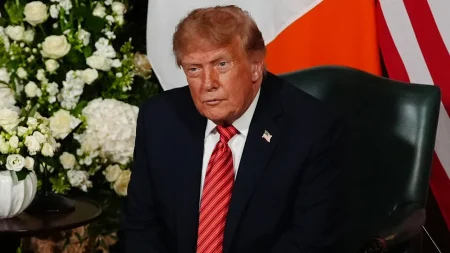
The White House is not quietly celebrating those numbers—it is holding them up as proof that a strategy of pressure and disruption is working. White House officials credit President Donald Trump’s border crackdown, his administration’s aggressive campaign against drug cartels, and the renewed focus of Immigration and Customs Enforcement on convicted fentanyl traffickers. White House spokeswoman Lauren Bis put it plainly: “President Trump targeted cartels who were profiting off the death of Americans, secured our border to stop Fentanyl and other illicit drugs from flowing into our communities, and jumpstarted ICE to arrest illegal alien fentanyl traffickers.” She added, “These policies delivered a 22% decline in opioid deaths in a single year. Thanks to President Trump, America is finally winning the fight against fentanyl.” The claim is bold, but the numbers back it up—at least for now. For years, the story of fentanyl has been one of unstoppable supply and relentless innovation on the part of traffickers. Each time law enforcement banned one analog, two more seemed to appear. Each time a border crossing was sealed, smugglers found another route. But the latest data suggests that a coordinated, multifaceted assault on the drug trade—at the border, inside the country, and abroad—may finally be making it harder for fentanyl to reach the people who are most vulnerable to it. The administration wants Americans to understand this not as coincidence, but as consequence.
Perhaps the most telling detail in the data is what appears to be a contradiction—and why the White House says it is actually a sign of success. Nationwide fentanyl seizures fell by 45% in fiscal year 2025 compared with the previous year. On its face, that might sound like law enforcement is catching less drugs. But the administration argues the decline is evidence that disruption farther up the supply chain is starving the American market before the product ever arrives. In other words, fewer seizures at the border and inside the country may mean less fentanyl is actually getting through—not less fentanyl being found. The same logic appears in the DEA’s laboratory testing. Two years ago, 76% of seized fentanyl pills contained a potentially lethal dose. Today, that figure has fallen to 29%. That is a staggering change. It means that the pills still circulating in American neighborhoods are, on average, less potent than they used to be—and that difference can be the line between a user who overdoses and a user who survives to get help. The White House attributes this declining potency to pressure on trafficking networks: as cartels lose experienced chemists, face financial sanctions, and scramble to keep supply chains alive through turbulence, the quality of their product suffers. That may not sound like a victory, but for the people who use drugs, it can be the difference between life and death. A less lethal fentanyl supply is not the same as a safe drug supply—but it is a glaring sign that the cartels are no longer operating with total impunity.
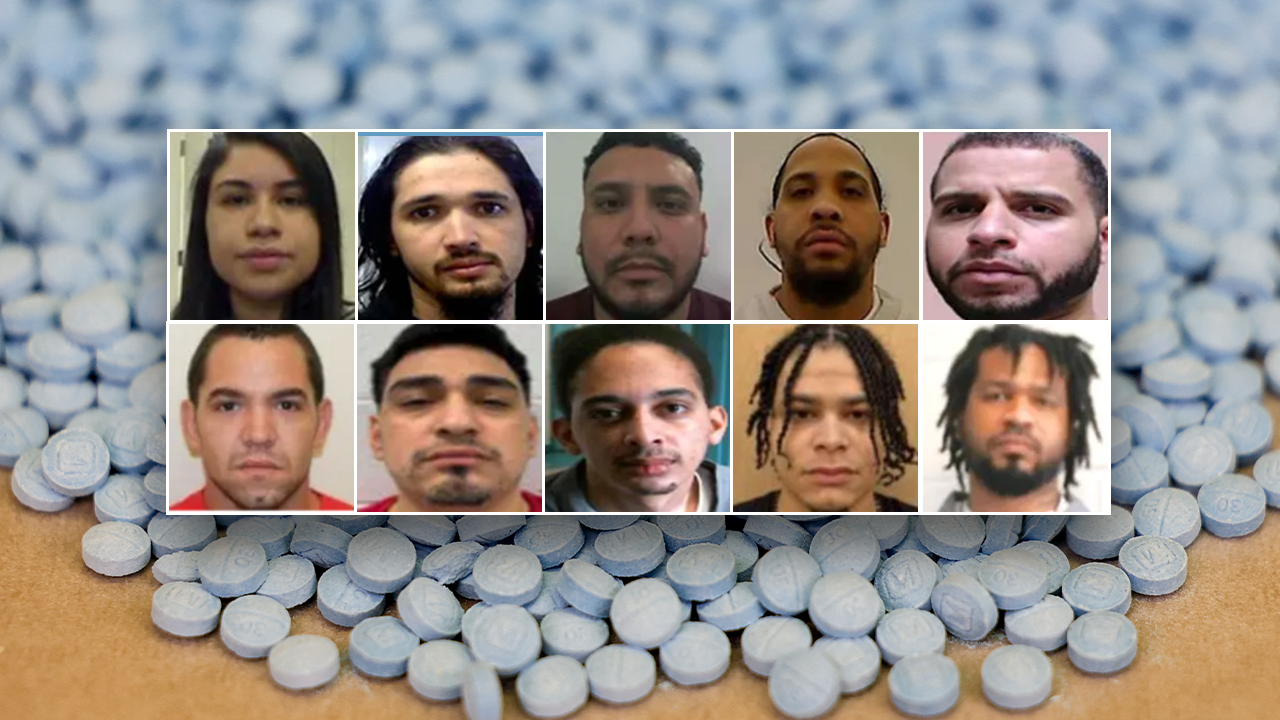
Behind these broad numbers are human beings, and the administration is also highlighting the faces of those it is removing from American streets. ICE arrests this year included 11 foreign nationals whom the Department of Homeland Security says had prior fentanyl-related convictions. Among them is Julio Cesar Pimentel-German, a Dominican Republic national arrested in February, who had previously been convicted in Massachusetts of possession with intent to distribute fentanyl, trafficking fentanyl, and a firearms offense. There is also Ader Aldair Ramirez-Quiroz, a Honduran national convicted of importing fentanyl in San Diego, and Yancarlos Marte-Morel, a Dominican Republic national convicted in federal court in Massachusetts of conspiracy to distribute and possess with intent to distribute fentanyl. The names are not meant to demonize immigrants—they are meant to highlight a narrow, undeniable category: people who have already been convicted of selling poison, deported or released, and then found again in American communities. The administration’s broader argument is that removing these repeat offenders is not an abstract immigration policy; it is a public safety intervention. Every convicted fentanyl dealer operating behind a badge is a direct threat to the people around them. Every one of them arrested is a potential cluster of overdoses prevented. The administration says these arrests are part of a wider effort to dismantle the drug trade at every level: cutting off the supply at the border, prosecuting the distributors in courts, and deporting the most dangerous offenders. It is a strategy that combines punishment with disruption, and the falling death toll suggests that the combination may be saving lives in ways that are hard to measure in a single press release.
The enforcement effort is not limited to arrests and border walls. In July 2025, President Trump signed the HALT Fentanyl Act into law, permanently placing fentanyl-related substances under Schedule I of the Controlled Substances Act. That gives federal prosecutors a permanent legal framework to go after fentanyl analogs—the constantly tweaked chemical cousins of fentanyl that have for years slipped through loopholes. The president later went a step further, designating illicit fentanyl and key precursor chemicals as weapons of mass destruction. That designation carries enormous legal weight: it frames the fentanyl crisis not merely as a public health failure or a crime wave, but as an act of warfare being waged against the American people by foreign criminal organizations. It unlocks new tools, new coordination, and harsher penalties. The White House also points to Department of Justice prosecutions involving nearly 8,000 defendants in fentanyl-related cases as evidence of the scope of the crackdown. Added together, these measures represent a policy philosophy that says the drug crisis will not be solved by overdose education alone—it will be solved by making the cost of selling fentanyl far too high for the cartels to absorb. The administration has also taken direct aim at the cartels themselves, using terrorist designations, financial sanctions, and joint operations with Mexican authorities to hit the traffickers where it hurts most: their wallets. The 45% drop in fentanyl seizures is not a sign that the drugs were not there; it is a sign that the flow has been disrupted. And when the flow is disrupted, the streets feel it. So do the emergency rooms. So do the morgues.
There is a temptation, after years of bad news, to greet any positive statistic with suspicion. The fentanyl crisis has been so devastating, so deeply woven into the story of American decline, that hope can feel risky. But the figures released this week are too large and too clear to ignore. A 22% drop in opioid deaths and a 14% drop in overall overdose deaths represent the kind of reversal that public health experts once said might take decades to achieve. The decline comes after fentanyl helped fuel an overdose epidemic that killed tens of thousands of Americans every year and left a trail of trauma across every state, every demographic, every kind of community. For too long, the struggle against fentanyl felt like trying to hold back an ocean with a broom. The latest data suggests that, at least as of now, the tide is turning. National Fentanyl Prevention and Awareness Day is meant to be a day of remembrance—for the people lost, for the first responders who carried them, for the families who still grieve. But this year, it is also a day of cautious yet genuine celebration. The administration says the fight is being won, and the numbers appear to support that claim. Still, no one is declaring the crisis over. Fentanyl remains a lethal presence in American life, and the cartels are not going to abandon their most profitable product without a long, difficult fight. The challenge now is to sustain the progress, to keep the pressure on, and to make sure that what has worked in the last year does not become a temporary victory in a longer war. But for the first time in a long time, the country has something it has not had in this battle for a very long time: a reason to believe that the deaths are not inevitable. This is what a turning point looks like. It is not a funeral—it is ten thousand fewer funerals. And that, above all, is worth honoring on a day meant to remember those who are no longer here.