


Behind the dry financial figures lies a sobering reality: in 2024 alone, Hezbollah received an estimated one hundred fifty-seven million dollars’ worth of weapons and military equipment, with Iran covering the vast majority. According to a new report by the Israeli nonprofit Center for Research of Terror Financing, titled “Hezbollah Financial Statements,” roughly one hundred twenty-nine million dollars of that arsenal arrived as a free, in-kind grant from Tehran. That included rockets, missiles, drones, anti-tank guided missiles, air-defense systems, launchers, naval gear, and materials for improvised explosive devices. Hezbollah itself spent only about twenty-eight million dollars on weapons, limited to small arms, ammunition, drone components, dual-use equipment, and items obtained through its international procurement networks. But these are not just numbers on a ledger. They are a window into how terrorism is industrialized. Each of those dollars represents a concrete decision to threaten human life: a rocket aimed at a city, a missile waiting to strike a tank, a drone reconnoitering a village. The CENTEF report, based on open-source information and known valuations of Hezbollah’s military assets, gives the public a rare chance to see what often remains hidden in the shadows of international conflict. It shows that Hezbollah is not a poor, desperate resistance movement, but a heavily armed proxy force, repeatedly restocked by a state sponsor that faces little accountability for its actions. And it asks us to remember that behind every line item is an actual family, often sitting in a shelter, listening for the sound that could change their lives forever.
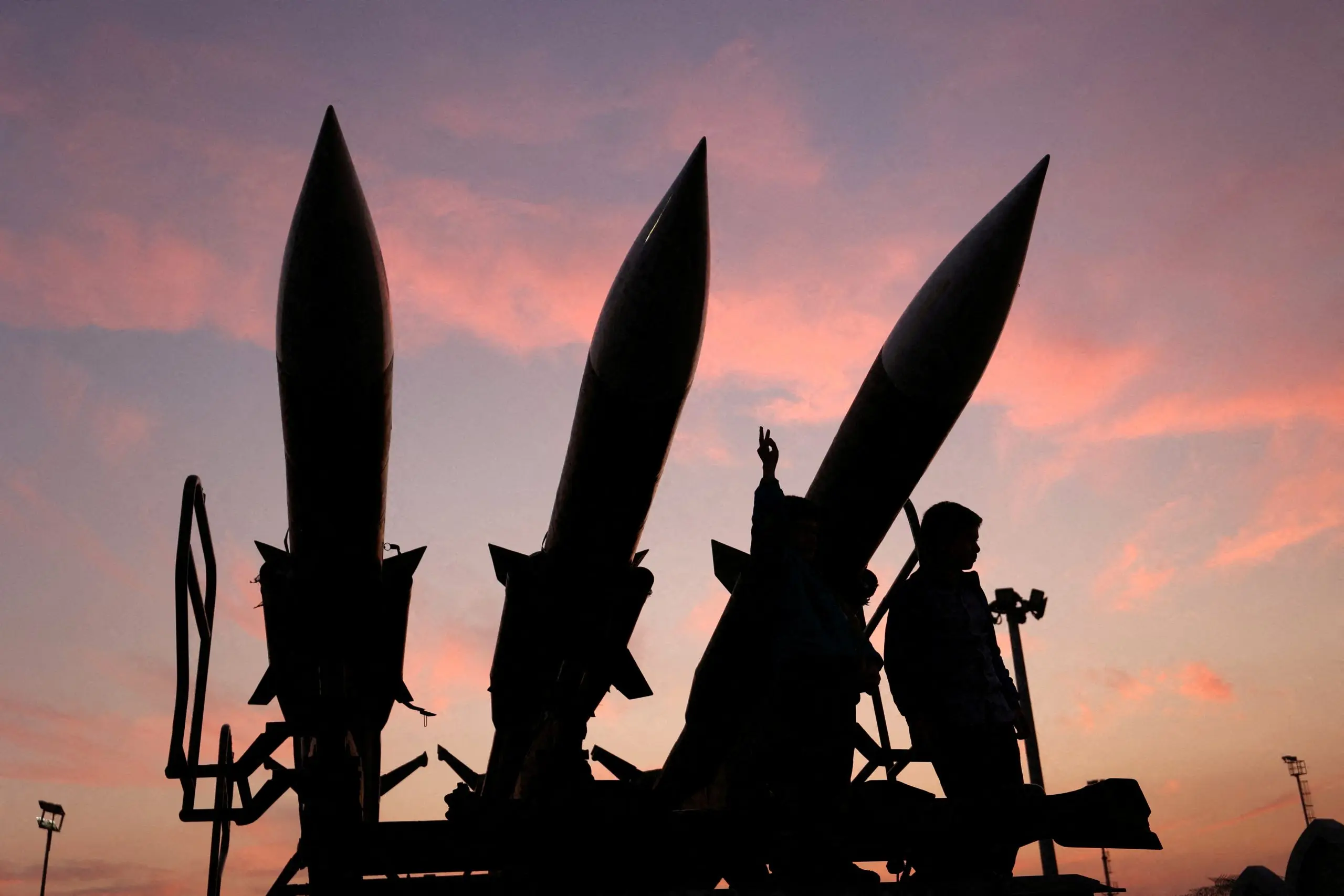
The specifics are alarming. The report found that Hezbollah acquired about four thousand short-range Katyusha rockets, four hundred Falaq-1 and Falaq-2 rockets, and one hundred twenty Burkan heavy rockets over the course of 2024. At roughly three hundred dollars apiece, Katyushas are cheap, crude, and devastatingly effective under the right conditions. They are often fired from concealed launchers, then trucked away within seconds, leaving little or no warning for those on the receiving end. Imagine a city like Nahariya or Safed, where mothers have only fifteen to thirty seconds to gather their kids and run to shelter. That is the human calculus behind every single Katyusha. The Falaq rockets carry heavier warheads and are designed to flatten buildings or penetrate reinforced structures. The Burkan—whose name means “volcano”—is Hezbollah’s heavy hammer, capable of carrying hundreds of kilograms of explosives over a few dozen kilometers. At four hundred dollars each, it is a bargain for those who finance it, but for the families who live under its shadow, the price is measured in sleepless nights, canceled schools, and a constant humming anxiety that never quite goes away. These weapons are not precision-guided surgical tools; they are instruments of psychological warfare, designed to make life unbearable and to force governments to bend under public pressure. And they were added to Hezbollah’s stockpiles in 2024 even as Israel’s military conducted an unrelenting campaign against the group’s infrastructure and leadership. Each rocket that remains in a launcher is a lurking threat, ready to transform an ordinary Tuesday into a catastrophe.
If the short-range rockets are the blunt instrument, the medium- and long-range systems are the sharp sword. CENTEF’s report highlights the Fajr series—Iranian workhorses that have long been a staple of Hezbollah’s arsenal. The Fajr-3, a 240-millimeter artillery rocket, delivers a 45-kilogram warhead across distances that make it a threat to major urban centers. The Fajr-5, a 333-millimeter rocket, can strike still farther and with a more powerful payload. More worryingly, there is a GPS-guided variant, the Fajr-5C, which turns an otherwise random rocket into a weapon capable of hitting a specific building, road, or military installation with much greater accuracy. The report estimates Hezbollah received six hundred of these rockets in 2024, at a cost of between two and ten thousand dollars each. That may not sound like much in a world where a single modern tank costs millions, but six hundred rockets can overwhelm an air-defense system, saturate a border, or hold a major metropolitan area hostage. Then there are the anti-tank guided missiles—perhaps the most tactical and lethal element of Hezbollah’s modern inventory. The Russian-made Kornet, which has seen combat from Syria to Ukraine, can punch through the armor of most tanks and fortified positions. The Iranian Dehlavieh is a reverse-engineered copy, slightly less expensive but just as dangerous. At twenty-six thousand dollars for a Kornet and twelve to fifteen thousand for a Dehlavieh, these missiles are not just symbols of power; they are instruments of force that have already been used to kill soldiers and civilians. A single well-aimed Kornet can destroy a vehicle and everyone inside it, transforming a routine patrol into a tragedy. For Israeli troops on the northern border, the knowledge that Hezbollah possesses hundreds of these missiles is not abstract—it is a part of their daily reality.
But all this weaponry has not escaped the consequences of war. Over the past year, Hezbollah has fired tens of thousands of rockets and missiles into Israel, but the Israeli military’s response has been fierce. The Israel Defense Forces have systematically targeted Hezbollah’s weapons depots, launchers, and command-and-control centers, and they have eliminated a large portion of the group’s top military leaders. According to Lt. Col. (Res.) Sarit Zehavi, a military analyst and president of the Alma Research and Education Center, Israeli operations have destroyed roughly 90 percent of Hezbollah’s original rocket and missile arsenal. “Today Hezbollah is holding between 10,000 to 15,000 rockets, which is much less than what it used to have,” she said, adding that most of its sophisticated, accurate, and long-range missiles were either eliminated or neutralized. That is a staggering achievement—yet it also exposes the fragility of the current quiet. Even ten to fifteen thousand rockets are enough to inflict catastrophic harm if fired in mass. Hezbollah’s tunnel networks, dispersed storage sites, and reliance on civilian infrastructure—including, as Israeli forces have revealed, weapons hidden inside hospitals—make it nearly impossible to eliminate every last launcher. The same report confirms that Iran is busy replenishing the arsenal. The picture, therefore, is one of a vulnerable, diminished, but still dangerous organization that cannot fully recover as long as its supply lines are targeted, but one that also refuses to surrender its capacity to kill. For Israeli families, this means the calm between salvos is fragile. For Lebanese, it means their country remains a powder keg, with weapons caches placed among schools and apartments, making them perpetual hostages in a conflict that is not theirs.
The deeper message of the CENTEF report lies in its financial analysis. By giving Hezbollah weapons as an in-kind grant, Iran effectively shifts its war-making capability across borders without moving a single dollar through a bank. There is no wire transfer to monitor, no banker to interrogate, no sanctions list to violate in the traditional financial sense. The weapons simply exist, pre-paid by the Iranian state, and then travel through complex land routes across Syria and over porous borders into Lebanon. This reality poses an enormous challenge to the global effort to isolate terrorist organizations. While governments can seize cash and block accounts, they cannot easily block an armory that is already stocked and ready. The CENTEF report attempts to price that armory, to make it tangible, and to demonstrate how a small amount of direct expenditure can translate into outsized violence. A twenty-six-thousand-dollar missile might take out a tank worth millions; a three-hundred-dollar rocket can shut down an entire city for an afternoon. This is not only a problem for Israel. The same pattern of proxy arming—where Iran supplies weapons to Hezbollah, the Houthis, and other groups—destabilizes the entire Middle East. It also raises profound moral questions. How long will the world allow a state to use terrorist groups as its aerial arm, its naval wing, its artillery? What do we tell the families of the five Americans killed by a Hezbollah-linked commander? How do we explain to a Lebanese hospital administrator that her building is being used as a weapons depot? These are not abstract policy questions. They are the lived reality of millions, made worse by the simple, unbearable arithmetic that a pile of rockets can be bought for less than the price of a single advanced fighter jet.
In the end, this report is a mirror—not just for Hezbollah and Iran, but for anyone who wishes to understand modern conflict. The one hundred fifty-seven million dollars spent, the four thousand Katyushas, the six hundred Fajr rockets, the hundreds of anti-tank missiles—all of these numbers represent the deliberate machinery of fear. They are the results of decisions made far away in rooms with maps and screens, but their consequences land in places that are deeply, painfully human: an Israeli village where the kindergarten now doubles as a shelter, a Lebanese neighborhood where stunned civilians crawl out of rubble, a military unit in the north where soldiers wait in tense silence because a drone’s shadow may be the last thing they see. The report reminds us that terrorism is not so much an ideology as a method—one that uses common tools of violence to create uncommon terror. The fact that Iran is willing to spend over one hundred million dollars in kind for Hezbollah means this method will be with us for some time, no matter how many leaders are killed or how many tunnels are sealed. But there is also hope in the world’s ability to expose, to monitor, and to respond. Reports like this one, along with the painstaking work of intelligence analysts, journalists, and military planners, shine a light into the shadows. They force the world to face what is easy to ignore. They remind us that every rocket has a human cost, and that behind every headline is a community forever changed. We must continue to count the weapons, to trace the money, and, above all, to remember the people—because only by seeing clearly can we ever begin to act with conscience, and only by understanding the scale of the terror can we ever hope to overcome it.