



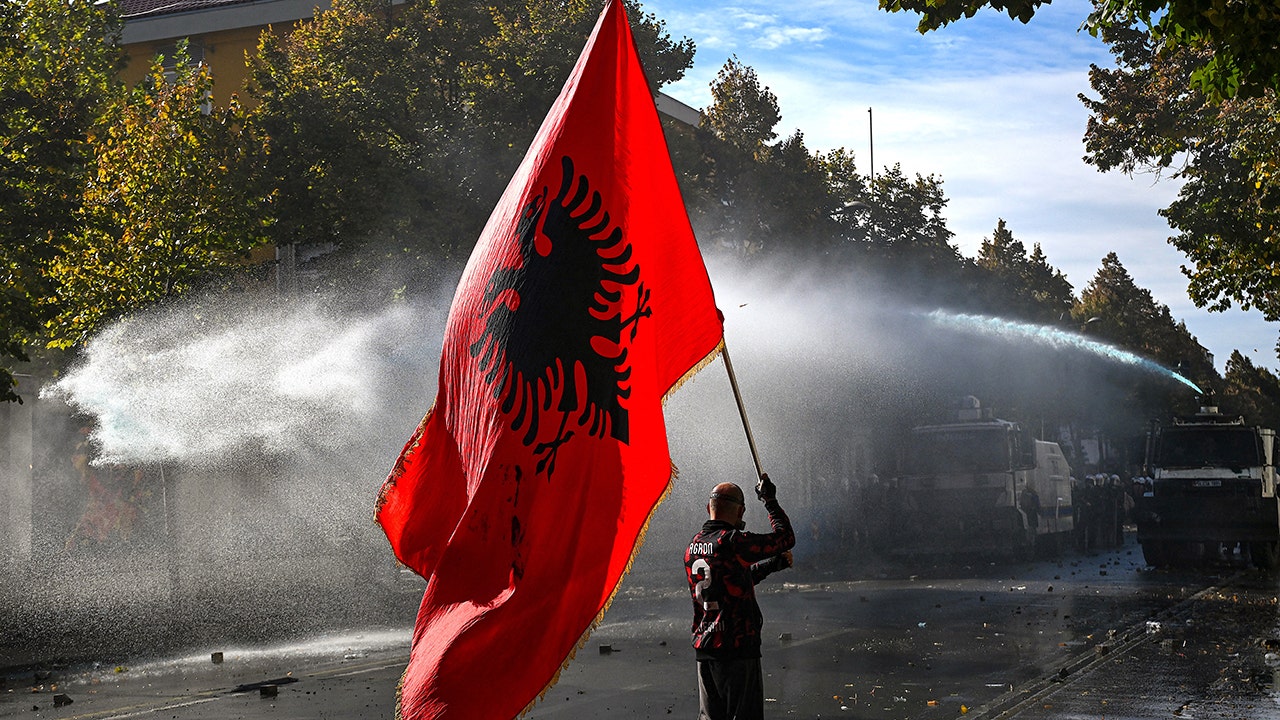
In the heart of the Balkans, a quiet but powerful storm has been brewing. For over 150 days, the streets of Albania have echoed with the voices of its citizens—students, teachers, parents, workers—all demanding something that should be the bedrock of any modern democracy: accountability. They are not merely fighting against a single policy or a moment of economic hardship; they are fighting against a deeply entrenched system they believe has been corrupted by decades of political stagnation and self-dealing. The images from Tirana, the capital, are stark: young people with masks and burning anger facing riot police, Molotov cocktails hurled at the Ministry of Education, and a defiant prime minister blaming foreign hands for his country’s unrest. Yet, behind these scenes of chaos lies a more profound and desperate plea from a generation that sees its future slipping away. This is the story of a nation at a crossroads, a NATO ally that has aspired for years to join the European Union, now teetering on the edge of democratic backsliding. And in a remarkable show of concern, two Republican members of the U.S. Congress have stepped forward, not just to observe, but to act, sending a stern letter to Secretary of State Marco Rubio that underscores America’s stake in Albania’s fate and demands a clear-eyed reckoning with the corruption that threatens to swallow the country whole.
The letter, crafted by Rep. Joe Wilson of South Carolina and Rep. Keith Self of Texas, the chairman of the House Europe Subcommittee, is not a mere diplomatic nicety; it is a blunt instrument of accountability. It expresses “concern about the state of democracy and the rule of law in the Republic of Albania” and points directly at the fragility of the justice reforms the United States has so heavily invested in. The lawmakers are not content with quiet diplomacy—they are urging Secretary Rubio to invoke Section 7031(c) of the annual State Department appropriations act, a powerful tool that allows the U.S. to publicly designate foreign officials complicit in significant corruption and deny them and their immediate families visas. This mechanism, often used as a first but potent sanction, sends an unmistakable message that the highest levels of the Albanian government are under scrutiny. The letter also poses four pointed questions, demanding answers by November 5: Will the State Department commit to reviewing Albanian officials for designation? What assistance is being provided to Albania’s broader justice reform efforts? Is the U.S. Embassy in Tirana working with local authorities to protect protesters and journalists? And, most tellingly, what is being done about former Deputy Prime Minister Belinda Balluku, who was charged with interfering in public procurement for road construction, yet whose arrest has been blocked by Prime Minister Edi Rama’s government after parliament refused to lift her immunity? Each question is a thread in a larger tapestry of concern, revealing that the lawmakers see not just a series of isolated incidents, but a coordinated pattern of impunity that is hollowing out Albania’s institutions from within.
The case of Belinda Balluku is a microcosm of the disease afflicting Albania’s political body. Prosecutors, after months of investigation, sought to lift her immunity in December 2025, arguing that credible evidence linked her to corrupt interference in public contracts. But Prime Minister Rama, a man who has held power for over 13 years, called the request unconstitutional—a move that many see as a shield for a key ally. Parliament, dominated by Rama’s Socialist Party, has refused to act, leaving Balluku untouchable and signaling to every official that the law applies only to those without political protection. The congressmen, in their letter, were blunt about the consequences: “Albania’s anti-corruption institutions cannot succeed in rooting out corruption when political leaders shield the officials they investigate.” This is the crux of the crisis. Reforms, no matter how well-funded or well-intentioned, are nothing but ink on paper if those at the top can neutralize them with a wave of the hand. The United States, which has poured significant resources into Albania’s judicial overhaul, now watches as that investment is systematically undermined. The letter is not just a warning to Albania; it is a indictment of a political culture that treats corruption as a tool of governance and a reminder that American support is conditional, not unconditional.
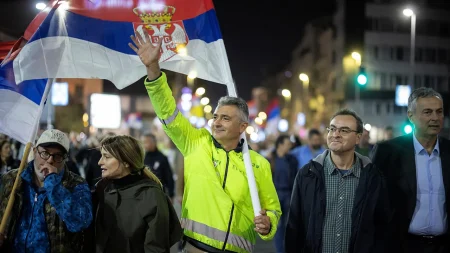
On the ground, the protests have taken on a ferocity that is both inspiring and unsettling. What began with students demanding better education and transparent leadership has exploded into a nationwide movement calling for Rama’s resignation. Two weeks ago, demonstrations in Tirana turned violent, with protesters lobbing Molotov cocktails at the Education Ministry and clashing with police. The rioters targeted Rama’s Socialist Party headquarters, forcing riot police to defend the building in scenes that looked more like a war zone than a European capital. Rama, in response, has refused to step down, instead offering dialogue while simultaneously accusing “foreign hands” of orchestrating the unrest. His claim that the protesters represent “organized crime itself” is a cynical deflection, one that seeks to delegitimize the genuine anger of a population weary of corruption, high unemployment, and a lack of opportunity. The prime minister’s strategy is all too familiar: paint dissidents as enemies of the state to avoid engaging with their grievances. Yet the streets are not empty of ordinary citizens. They are filled with the same faces one sees in any European city—young people with hopes, dreams, and a desperate desire for a normal life. The violence, while alarming, is a symptom of a deeper despair, a feeling that peaceful petitions and legal challenges have been met with deaf ears for years. This despair is shared across the region, and it has found a powerful echo in neighboring Serbia, where a student-backed movement recently toppled longtime leader Aleksandar Vučić after years of protests over corruption and accountability. Former Albanian ambassador to the U.N. and U.S., Agim Nesho, drew the parallel starkly: “Vučić’s defeat by a student-backed movement, following nearly two years of demonstrations over corruption and government accountability, is a striking parallel with the unrest now confronting Rama in Albania.” The lesson is clear: when a government ignores its own people, the people will eventually find a way to be heard.
For Albania, the stakes extend far beyond its borders. The country has been an official EU candidate since 2014, and its accession path has been a central pillar of its foreign policy. The 2025 European Commission report acknowledged “significant strides” in judicial reform and the fight against organized crime. But the current violence and the unabated corruption scandals threaten to unravel those gains and severely complicate Albania’s bid to join the bloc. The European Union, already wary of enlargement fatigue, will not welcome a member state whose prime minister blocks the arrest of a deputy on corruption charges while police beat students in the streets. Moreover, the United States has a vested interest in Albania’s stability as a NATO ally in a volatile region. America’s support for Albania’s justice reforms was not an act of charity; it was an investment in a strategic partner that could serve as a beacon of democracy in the Balkans. To see that investment squandered by a leader who appears more concerned with personal power than with the rule of law is a bitter pill. The letter from Wilson and Self is thus a signal that Congress is watching, that the permissiveness of the past is no longer acceptable, and that the U.S. is prepared to use its leverage—whether through visa bans, diplomatic pressure, or conditional aid—to demand better.
Yet, beyond the politics and the power plays, there is a deeply human dimension to this unfolding drama that cannot be ignored. The protesters in Tirana are not abstract symbols; they are the sons and daughters of a nation that has known hardship for generations. They are students who study in overcrowded classrooms and graduate into a job market that offers little beyond precarious gigs and emigration. They are parents who see their children leave home to seek opportunity in Germany, France, or the United States, draining the country of its youth and vitality. They are civil servants who try to do their jobs with integrity, only to be passed over or punished for refusing to play the game. The movement that has taken to the streets is a cry for dignity, a demand for a government that serves the people rather than enriches itself. The fact that these protests have persisted for over 150 days—through violence, intimidation, and government dismissal—speaks to a resolve that cannot be easily broken. Rama’s offer to sit down and talk is a start, but it must be accompanied by concrete actions: the lifting of Balluku’s immunity, the protection of journalists and protesters, and a genuine commitment to letting independent institutions do their work. The congressmen’s letter is a reminder that the world is watching, and that the path forward requires both courage from the people and wisdom from their leaders. Albania is at a precipice; the choices made in the coming weeks will determine whether it emerges as a thriving democracy or sinks into a new era of authoritarianism. For the sake of its citizens and the stability of the region, one can only hope that the voices of the streets will finally be heard, not with tear gas and truncheons, but with the respect and accountability they so desperately deserve.